
U.S. Completes Production of 108 Abrams Tanks to Reequip the Republic of China Army
Military Watch Magazine Editorial Staff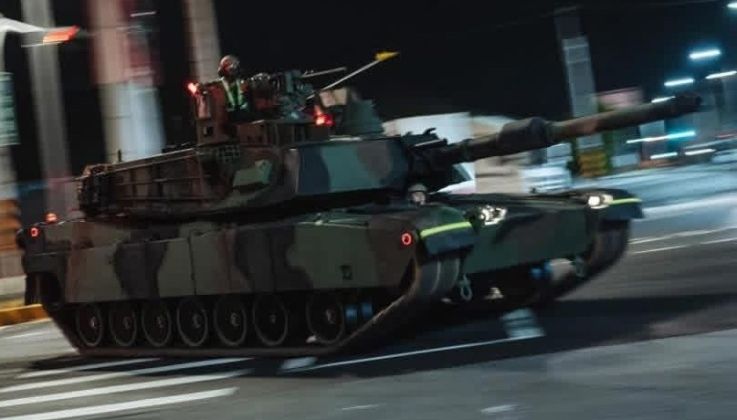
Republic of China Army M1A2 Abrams During City Warfare Exercises in December 2025
The final 28 M1A2 Abrams main battle tanks ordered for the Republic of China (RoC) Army have completed production in the United States, and are scheduled to be delivered before the end of March. The U.S. Department of State first approved the $2.2 billion sale of the tanks to the RoC in July 2019, fuelling considerable controversy due to Taipei’s lack of international recognition or of diplomatic relations with the United States. This followed the budgeting of funds by Taipei for the tank procurement in July the previous year. The M1A2 Abrams is the heaviest type of main battle tank in the world, and by many measures the most maintenance intensive, although armour protection levels of the vehicles being delivered to the Republic of China Army have been downgraded. The denser depleted uranium armour used on U.S. Army variants has not been offered.
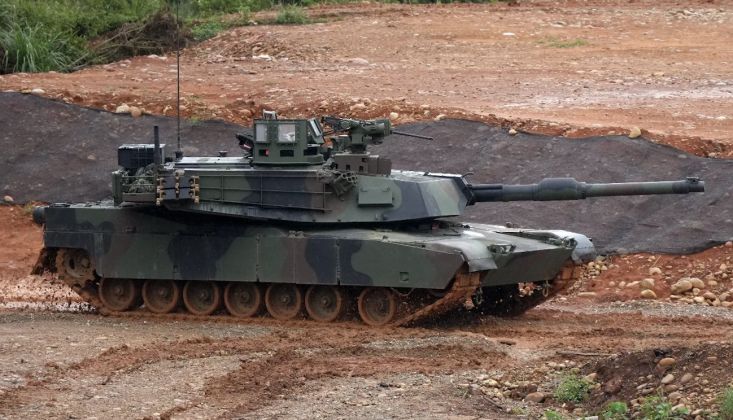
Although deliveries of U.S. military equipment to the Republic of China Armed Forces have consistently faced considerable delays, with backlogs of undelivered equipment having exceeded $21 billion in large part due to manufacturing issues, the delivery of Abrams tanks has been less affected, with 80 tanks having already been delivered in two batches. The first batch of 38 tanks was delivered in December 2024, after which a second batch of 42 tanks arrived in July 2025, allowing an armoured battalion to be formed equipped with the vehicles on October 31, 2025. The tanks have since taken part in multiple exercises. Most recently in late January the Republic of China Army 3rd Battalion, 269th Combined Arms Brigade, conducted exercises testing the targeting capabilities of the new tanks, while in late December the 584th Armoured Brigade deployed the tanks for battalion-level urban operational readiness and infrastructure protection exercises in the Hsinchu area.
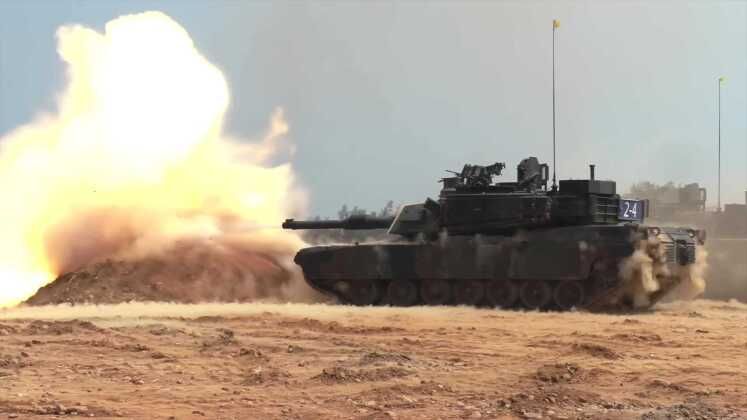
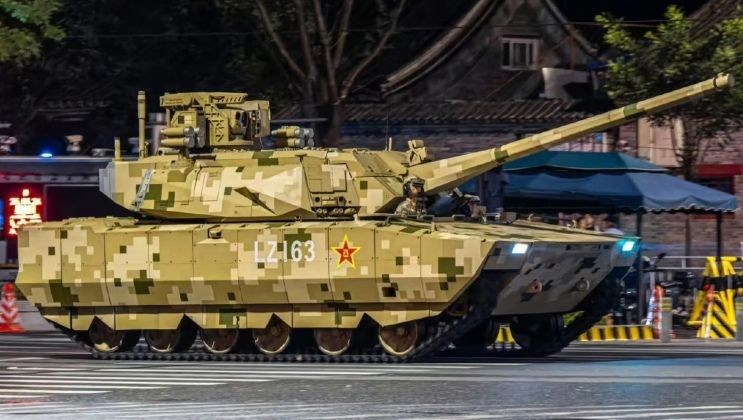
The M1A2 variant delivered to the Republic of China Army, designated the M1A2T, relies on composite armour supplemented by explosive reactive armour tiles, and lacks any kind of active protection system, leaving its survivability wholly dependant on passive protection and tactical measures such as launching smoke. This has compared poorly to the capabilities of the main battle tanks fielded by the Chinese Peoples Liberation Army (PLA), with which the Republic of China Armed Forces remain in a state of civil war. The PLA’s Type 100 main battle tank revealed in September 2025 to be in active service has widely been assessed to be the most advanced tank design in the world, and is heavily optimised for operations in an era of ground warfare centred on the use of drones and loitering munitions.
After observing the Abrams’ extreme vulnerability in the Ukrainian theatre, the U.S. Army ceased to invest in further incremental modernisation of the M1A2 design, and instead pursued a radical new tank program to develop the deeply redesigned M1E3. The program appears to have many of the same design priorities with the Type 100, including unprecedented weight reductions and greater reliance on active protection systems rather than traditional thick armour. Assessments of the performance of the Abrams and other Western tank types in the Ukrainain theatre has cemented a consensus among analysts in the Western world and in East Asia that existing U.S. and European tank designs are built around a design philosophy that is now obsolete.

Despite questions regarding the Abrams’ suitability for the Republic of China Army’s needs, Taipei’s international status and lack of international recognition has left it with no other options to procure main battle tanks from the U.S., with no other tank producing countries willing to equip its forces. With Abrams tanks having replaced only one sixth of the Republic of China Army’s approximately 650 obsolete main battle tanks, it remains uncertain whether followup orders for further Abrams tanks, and possibly eventually the M1E3, will be placed, or whether significant reductions to the tank fleet will instead be considered. The prioritisation of funding for the Republic of China Navy and Air Force may limit funding available for further tank procurements in the near future.
