
Republic of China Army’s Ageing U.S. M60 Tanks Face Growing Performance and Obsolescence Issues
Military Watch Magazine Editorial Staff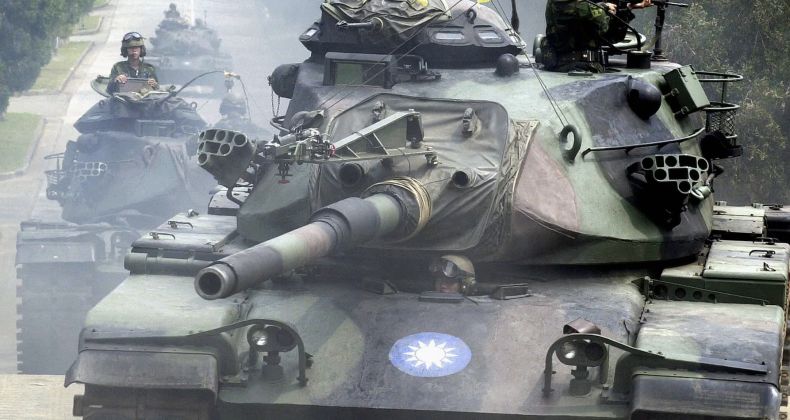
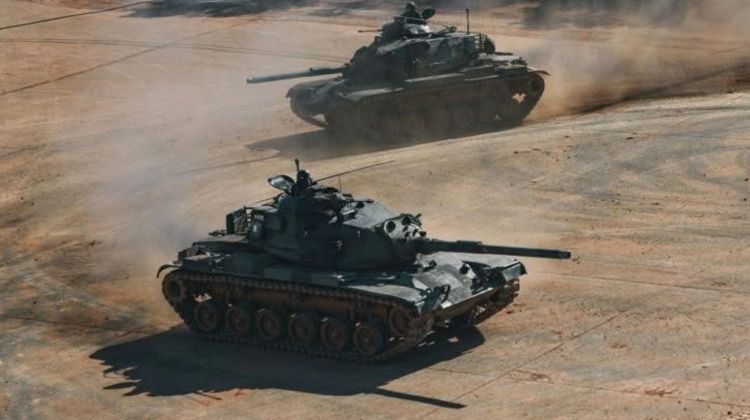
Republic of China Army M60A3 Tank
The Republic of China Army has increasingly struggled to operate its M60A3 main battle tanks, with multiple local sources reporting that the vehicles’ power systems have ben particularly problematic due to the rapid ageing of their parts and components. This has resulted in a significant increase in maintenance requirements, while significantly reducing availability rates. The Republic of China Army first acquired the M60 from the United States in 1998, after an agreement announced in August 1997 saw 480 surplus U.S. Army M60A3s transferred, the first 180 of them over the the following 12 months, for approximately $1 million per vehicle. The M60 had first entered service in 1960, and was already considered largely obsolete by that time, with the U.S. Army rapidly phasing them out of service, and retiring the last tanks from combat units in 1991. The Republic of China Army had previously relied on an estimated 450 M48H and 300 M48A5 tanks from the 1950s, meaning the M60, although considered obsolete across much of the world, was considered a major upgrade.
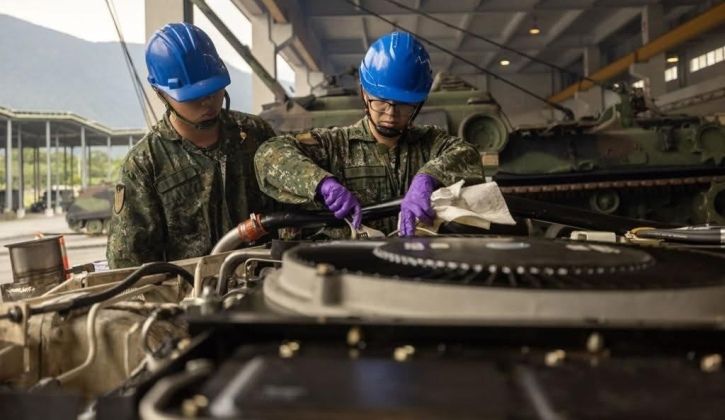
Sustaining the M60’s original power system has presented significant challenges as parts and components have aged, with the Republic of China Ministry of National Defence having responded by contractor RENK America, the original engine manufacturer, to develop an engine upgrade program. The program will see new AVDS-1790-2CAU diesel engines integrated onto 460 M60A3 tanks. The AVDS-1790-2CAU boasts a maximum output of 950 horsepower and an increased payload capacity of 5 tons, providing additional load-bearing space for future upgrades to armour, turrets, and other components. By replacing older parts, engine efficiency is improved, and the risk of failure during prolonged high-load operation is effectively reduced. The upgraded power system offers more stable acceleration response and torque output compared to the original configuration, aiding the vehicle in performing missions in complex terrain.
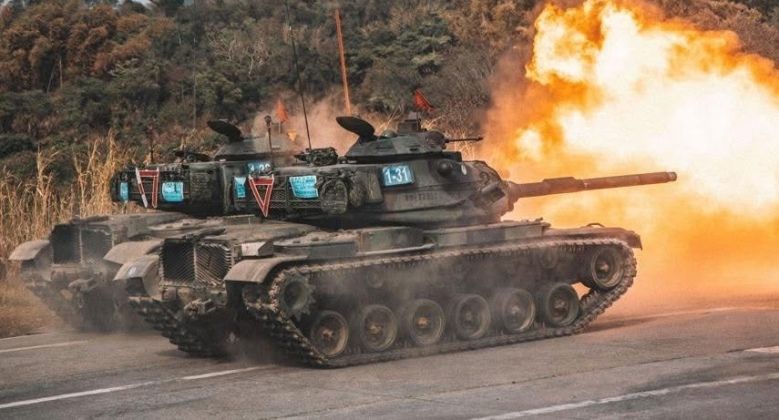
Improvements to the M60’s engine performance directly translates to enhanced mobility, while also stabilising power output, and reducing movement limitations caused by mechanical factors. This is expected to enhance armoured units’ mobility efficiency and their flexibility of rapid deployment and battlefield response. It is expected that the engine upgrade program will be complete by 2028. Although the upgrade will improve mobility and reduce maintenance issues, obsolescence issues affecting the M60 design are expected to worsen. The tanks were evaluated as far inferior to peer level Soviet armour during the Cold War, including during the Iran-Iraq War where they lost overwhelmingly to the T-62 and T-72, and previously during the Yom Kippur War when only the superior training of Israeli crews allowed them to engage Egyptian Army T-62s, and face far more extreme disadvantages today.
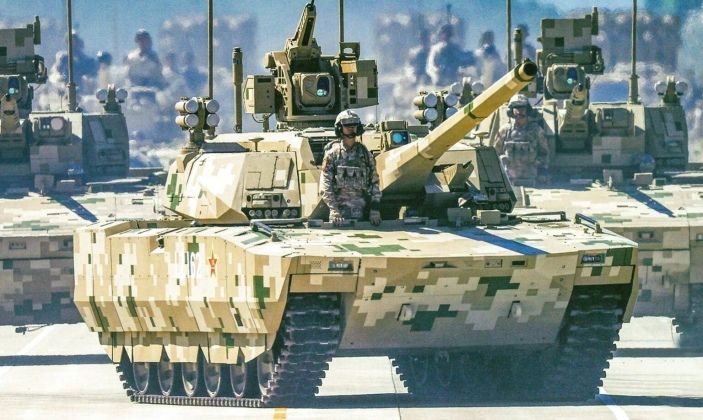
Facing the Republic of China Army’s tank units across the Taiwan Strait, the Chinese Peoples Liberation Army (PLA), with which the Republic of China remains in a state of civil war, has introduced multiple generations of overwhelmingly superior tanks into service. The new PLA Type 100 main battle tank was revealed in September 2025 to be in active service, and has widely been assessed to be the most advanced tank design in the world. It is heavily optimised for operations in an era of ground warfare centred on the use of drones and loitering munitions. The M60’s crew protection levels are considered very poor by 21st century standards, with efforts to address this by integrating explosive reactive armour having failed, while new threats from top attack missiles and loitering munitions have strengthened the consensus that the vehicles would be very far from survivable in a high intensity conflict.
Although the Republic of China Army is scheduled to receive 108 M1A2 Abrams tanks, a successor to the M60, with the first of these having entered service in 2025, these are also considered to have limited suitability for conditions in the Taiwan Strait, and to be technologically far behind new Peoples Liberation Army tanks such as the Type 100. After observing the Abrams’ extreme vulnerability in the Ukrainian theatre, the U.S. Army itself ceased to invest in further incremental modernisation of the M1A2 design, and instead pursued a radical new tank program to develop the deeply redesigned M1E3, which has many of the same design priorities as the Type 100. Sufficient Abrams tanks were procured to replace only a small portion of the Republic of China Army’s armour, meaning that the older M60A3 will likely remain in service into the late 2030s, and possibly significantly longer.
