
Soviet vs. NATO Tanks: How Russian Armour Proved its Superiority on Middle Eastern Battlefields
Military Watch Magazine Editorial Staff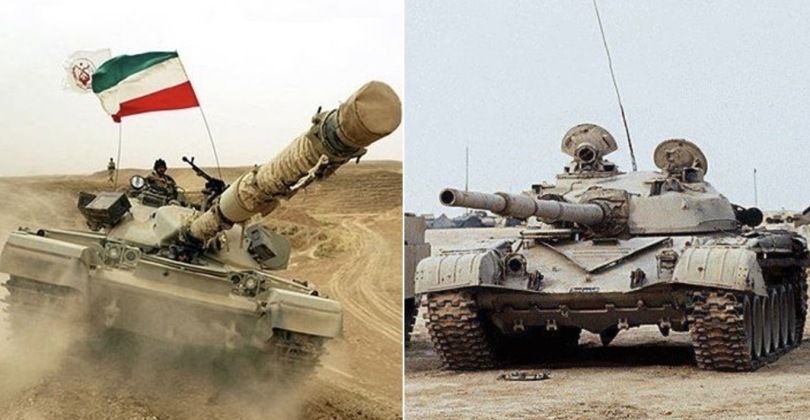
Iranian Chieftain Tank and Iraqi T-72 Tank
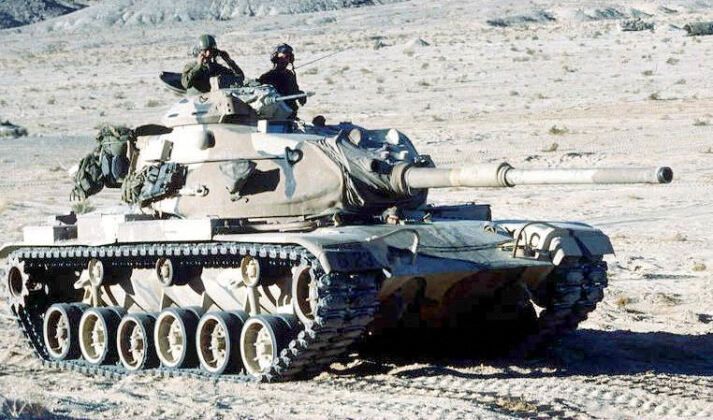
During the Cold War the lack of a large scale open conflict between the NATO and Warsaw Pact alliances, despite high tensions and an intense arms race between the lasting over 40 years, meant that most comparisons of Soviet and Western hardware were made on paper rather than on the battlefield. Although conflict saw both sides claim to field the more capable battle tanks, actual engagements between tanks of the same generation were relatively few and far between - with the major wars in Korea and Vietnam seeing few major tank battles and neither of the Soviet defence clients equipped with modern armour. It was primarily in the Middle East, where terrain favoured armoured engagements, that major engagements between equivalent Soviet and Western tank designs took place. The first major example instance of this was the Yom Kippur War of 1973 - Israel’s first major war where it could boast modern American-supplied armour - which saw Israeli M60 tanks go head to head with Egyptian and Syrian Soviet-supplied T-55 and T-62s. Overall although Arab armoured units took heavy losses to Israeli air strikes due to insufficient provision of air cover, and eventually lost the war, the performance of the T-62 was considered superior to that of the M60 leading Israel to begin that same year with the development of an indigenous battle tank to avoid a further reliance on U.S. armour. While the M60 was the leading American tank at the time, the T-62 was considered the third best Soviet tank meaning the need for Israel to develop more competitive armour on its own was urgent.
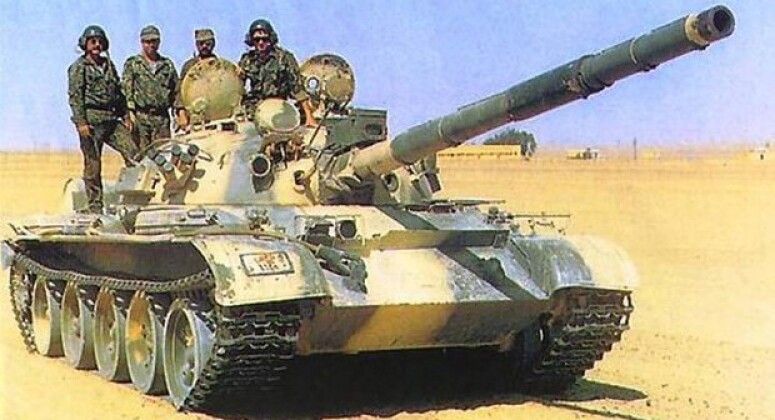
While the Yom Kippur War lasted only 19 days, a far longer and more protracted war in the Middle East saw Western and Soviet tank designs engage one another in much larger battles which demonstrated more clearly the performance advantages of the latter over the former. The Iran-Iraq War saw both sides deploy the most capable export available tanks of their time, with the Iranian Army deploying 460 M60 tanks from the U.S. alongside an elite of 870 British Chieftain tanks. The Chieftain was the only Western tank thought to rival the M60 at the time, and Iran notably fielded hundreds more of these than the British Army itself. Iraq at the start of the war fielded approximately 1000 T-62 tanks alongside an elite of around 50 T-72s, with the T-72 design having entered service in the Soviet military from 1973 and the Middle East having been its first export destination. The new Soviet tank was considered the third most capable in the country’s inventory, and was developed as a lighter and cheaper derivative of the T-64 design, the country's number two tank, with the elite of Soviet armoured units now formed by T-80 tanks which were considered the most capable.
The performance of the third and fourth rate Soviet tank designs, the T-72 and T-64, against the most capable Western armour of its time, highlighted the extent to which the USSR had achieved a major advantage in armoured warfare technologies. Both Iraqi and Iranian forces highlighted that the T-72 was undoubtedly the most capable tank of the war, and despite participating in many major battles it suffered few losses and was almost totally invulnerable in combat against the Chieftain and M60, while inflicting very heavy losses on Iranian armour. As one Iranian officers observed in June 1981, the British Chieftain "do not go to any comparison with it [T-72]. Iran has no effective means of dealing with the T-72. " Following ground battles at Basra in July 1982, Iranian officers highlighted that not only was the T-72 superior, but those captured from Iraq had also proven much more reliable and easier to maintain than their own American and British supplied armour.
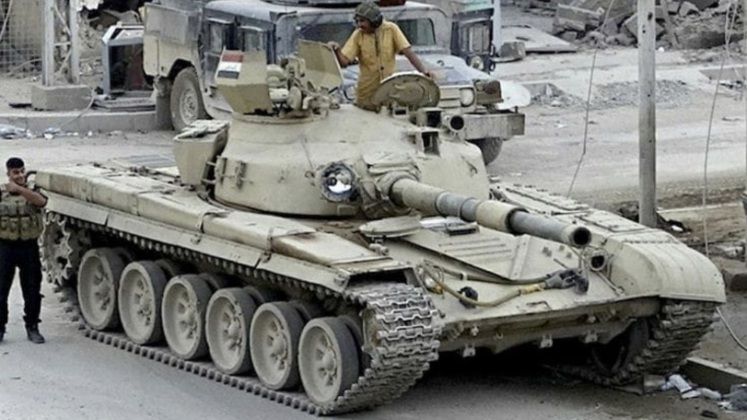
Iranian tank company commander Adar Forouzan recalled during the war Iranian tank crews had little good to say about the Chieftain, writing: "The more I learned about the tank ‘Chieftain,’ the more I agree with them." He further referred to the T-72 as the most dangerous weapon in the Iraqi inventory, stating: "the Iraqis were partially equipped with the new T-72 tanks. They had good speed and firepower, and their armour protects against RPGs of our infantry. T-72 was a very dangerous threat to us." Regarding one of Iran’s first clashes T-72s in the spring of 1982 in the region near the Dasht Abbas Dizful, the commander highlighted that following the appearance of T-72s Iranian Chieftains immediately started taking losses with his own tank being hit, stating: "In my tank hit the MTO exploded fuel vapours, the shock wave blew off the headset. We all jumped out of the tank and fled on foot." In the opening stages of the war an Iraqi tank battalions equipped with T-72s neutralised Iranian armour in multiple engagements reportedly suffered no losses at all, with even M68 anti tank guns and TOW anti tank missiles proving wholly ineffective. At least one engagement pitting T-62 and T-72 units against Iranian armour saw the Iranians lose over 100 tanks with Iraqi losses limited to around a dozen - most of them T-62s.
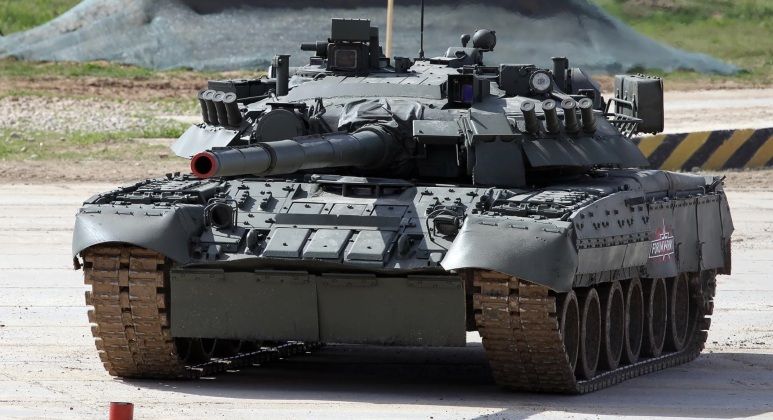
Both Iran and Iraq would place orders for further armour during the war, with Iraq receiving approximately 1000 T-72 tanks. Iran would purchase Type 59 and Type 69 tanks from China, derivatives of the older Soviet T-55, which were similarly overwhelmingly outmatched but was at least easier to maintain and more reliable than the complex Chieftain design. Iran’s most capable tank of the war was the Chonma Ho, a derivative of the T-62 produced in North Korea of which the country acquired around 200 along with Korean ballistic missiles, submarines, artillery and other assets. The war ultimately highlighted that had a major ground war occurred between Soviet and Western forces, Soviet armoured units would have had a significant advantage deploying the T-72 alongside the heavier and more capable T-64 and T-80 - with even the T-62 proving a match for the Chieftain and M60 despite being a fourth rate design. Iran would secure a contract shortly after the war’s end to produce the T-72 under license, which remains its most capable tank to this day with several hundred in service. Iraq meanwhile, although encouraged to purchase American M1 Abrams tanks following the overthrow of its Ba’athist government, would retire these from its elite units in favour of purchases of Russian T-90 tanks - a design derived closely from the T-72 which had entered service from the 1990s. Western interest in the T-72 and T-80 in particular was high, and multiple example of both tanks were acquired for study in the aftermath of the Cold War.
