
Russia’s T-80 Battle Tank Marks 45 Years in Service: Does This Gas Turbine Combat Monster Have a Future?
Military Watch Magazine Editorial Staff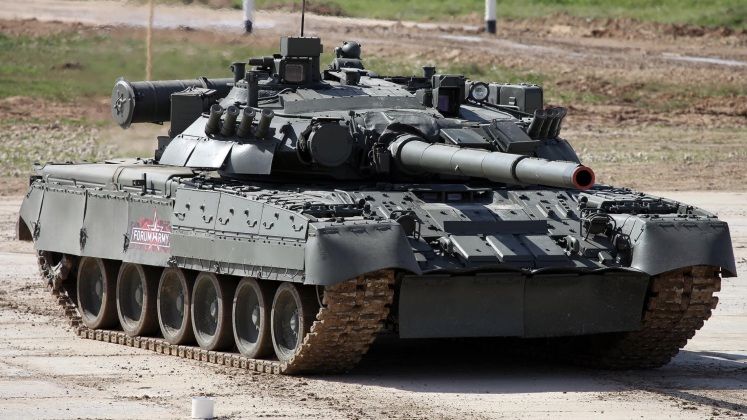
T-80U
Vitaly Kuzmin
The year 2021 marks 45 years since the T-80 battle tank entered service in the Soviet military, with the design widely considered one of the most capable of the Cold War era and fielding a number of groundbreaking new capabilities for its time. The tank was loosely based on the older T-64 design, but unlike the T-72 which was designed to be a lighter and cheaper analogue to the T-64 the T-80 was a similarly sized but more expensive design at weighed around 45 tons depending on the variant. Like the T-64, but unlike the T-72, the T-80 was notably reserved for the Soviet military alone and was never offered for export until the collapse of thee USSR. The tank was notably the first in the world to use a gas turbine engine as its primary propulsion system - which had many performance advantages particularly in colder climates but also meant that the tank’s endurance was lower due to higher fuel consumption. The tank was also one of the first after the T-64 and T-72 to use a 125mm gun, using the same 2A46 smoothbore as the T-72 which could fire both anti tank guided missiles and regular ordnance.
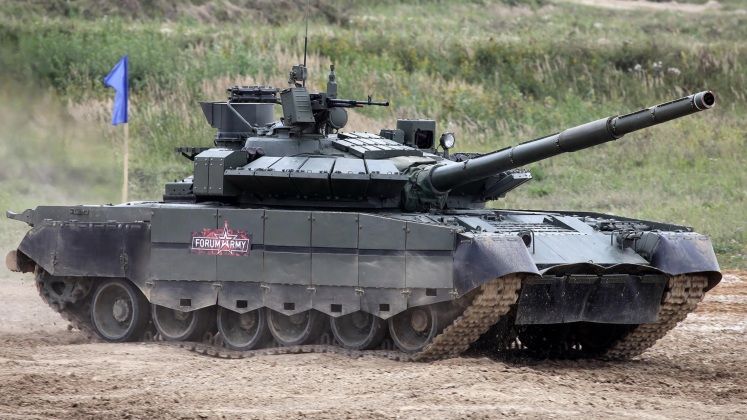
Among the T-80’s notable features were a highly reliable Korzina autoloader which reduced crew requirements to just three personnel. Features of the design would change considerably over more than four decades in service with the latest and most advanced variant the T-80BVM considered the most capable. The BVM variant boasts many features developed initially for the most advanced variant of the T-90 tank - currently the primary battle tank used by Russia. These included Relikt explosive reactive armour, an improved improved 2A46M-4 125mm gun, a new fire control system, superior composite armour, a superior engine and the PNM Sosna-U gunner sight among other considerable enhancements. Approximately 330 T-80BV and 150 T-80BVM tanks are currently in service in the Russian military, with upgrades to the BVM standard for delivery to the Army ongoing. A further 3000 T-80 tanks, many of them upgraded to the BV standard and others of the mid-1980s B variant, are currently in storage - with the sharp contraction of the Russian economy after the Soviet collapse forcing the country to make do with much smaller armoured units and place the bulk of its inventory in storage.
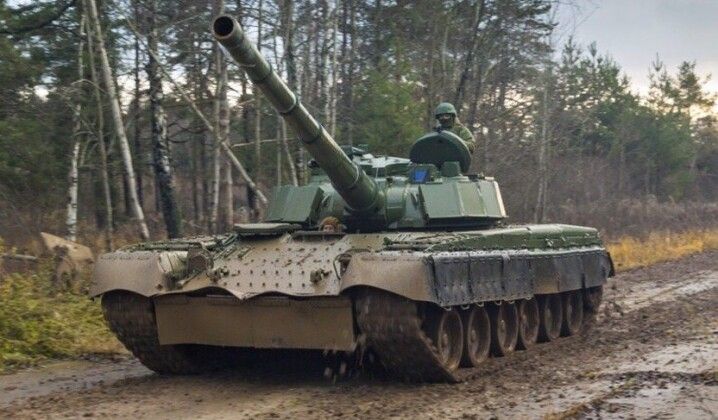
The T-80 is heavily relied on by Russian forces in the Arctic in particular due to its engine's favourable performance in such climates even relative to newer tanks. Improvements to the T-80 were notably undermined by the collapse of the Soviet Union, which resulted in a particularly ambitious program to capitalise on the tank’s powerful engine and equip it with a 152mm gun for vastly improved firepower being cancelled. The tank’s higher operational costs and maintenance requirements led Russia to instead favour acquiring more of the lighter T-90 tank - which was loosely derived from the T-72. With the country’s economy partially recovering after the turn of the century, Russia subsequently invested in a new generation of tanks - the T-14 - although these have only entered service in very small numbers. T-80 tanks have seen some export successes with South Korea, Thailand, Pakistan, Egypt and Yemen fielding them for combat purposes and China and Britain acquiring them for research purposes after the Cold War’s end. A number of Soviet successor states also rely on the tanks for their defence, with Ukraine manufacturing the tanks domestically but facing continued performance and manufacturing difficulties and ultimately being forced to rely on older T-64s for the bulk its combat operations. The T-80’s unique suitability for extreme climates means it is likely to remain in Russian service at least into the late 2040s and will continue to integrate further upgrades to its armour, sensors and weaponry during that time.
