
Ukraine Completes Production of T-84 Tanks for Thai Contract; How Capable is the Oplot and Will Thailand Aquire More?
Military Watch Magazine Editorial Staff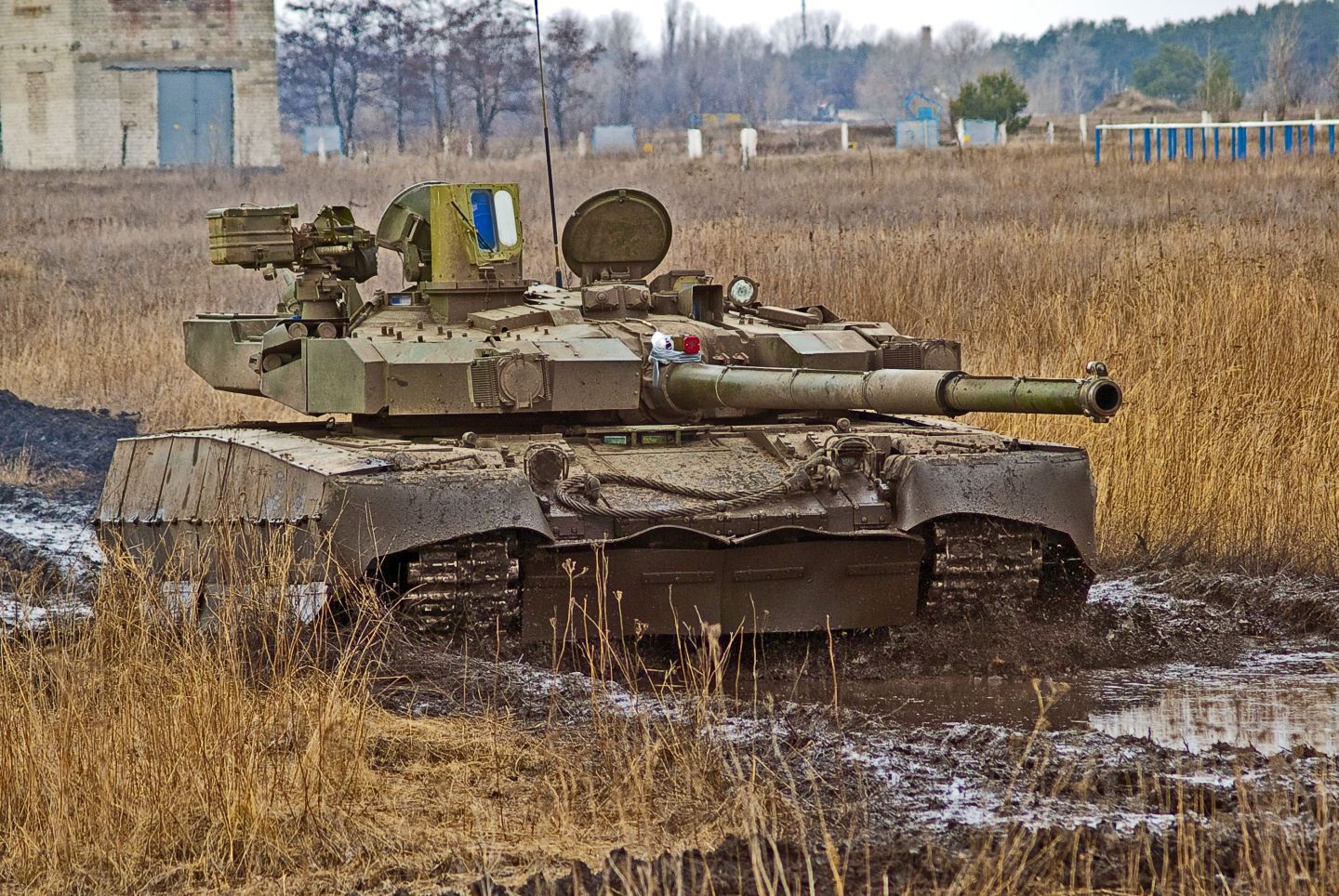
Ukrainian T-84 Battle Tank
Following the disintegration of the Soviet Union, Ukraine inherited sizeable production faculties for T-80 third generation battle tanks which it continued to modernise domestically. Kiev quickly found buyers for its T-72 tanks in its arsenal and exported them in large numbers, favouring the T-80 due to the country's ability to produce parts for and modernise the platform without foreign assistance. In 1994 Ukraine developed the T-84 based on the design of the original T-80, and the platform entered service in the Ukrainian military in 1999. The platform's primary attribute was its high performance 1,200 hp KMDB 6TD-2 6-cylinder diesel opposed piston engine which allowed the platform to travel at speeds 70km per hour - making it one of the fastest main battle tanks in the world. The platform retains a high power/weight ratio of about 26hp per tonne. Platforms also incorporated deeper sideskirts, thermal imaging sights, modified reactive armour, Kontakt-5 reactive armour, an advanced Shtora active protection system, and a small reference radar antenna near the gunner's hatch to improve combat performance and survivability. An external difference distinguishing the Ukrainian platform from its Soviet predecessor was its welded turret, which replaced the Russian cast turret. The T-84 was later developed into the Oplot, an advanced variant which entered service in 2009 with a number of new features including a new autoloader and an an armoured ammunition compartment.
While the T-80 is widely considered the least successful of modern Russian and Soviet tank designs, particularly when compared to the iconic T-72 and T-90, Ukraine has nevertheless sought to market advanced variants of the battle tank for export. Kiev has attempted to export the Oplot as a low cost alternative to other European platforms. The only foreign client for the platform so far has been the Thai military. With the Ukrainian economy having suffered considerably since 2014, the country took the unusual step of prioritising exports of its most advanced battle tanks rather than developing them for the country's own military first. Thailand is set to operate 49 Oplot tanks, and only after this contract is complete will production begin for the Ukrainian army itself. Ukraine is set to earn $241 million from providing the battle tanks to the Thai military, under a contract signed in 2011.
After missing several deadlines, Ukraine’s state run defense production company UkrOboronProm is set to finally complete its contract to supply T-84 Oplot battle tanks to Thailand. The tanks are set to serve alongside early Cold War era U.S. made M-48 and M-60 Patton tanks and recently procured advanced Chinese VT4 platforms. Pavlo Bukin, director general of UkrOboronProm, stated near the end of March 2018 that the final batch of six battle tanks had already completed produced and were successfully tested in the presence of Thai military observers. Following much internal turmoil since the violent overthrow of the country's government in 2014 and the resulting cutting of defence ties with Russia, Ukraine's military industries have notably deteriorated. The country's ability to fulfil its sole export contract for Oplot battle tanks was put to serious question.
The Oplot platforms are likely to be the last Thai purchase of Ukrainian battle tanks, possibly of European battle tanks in general, in light of recent developments in the country's defence partnership with China. The Thai military has notably expressed its discontentment with Ukraine failure to fulfil its contract obligations in time, and in 2017 sought to cancel the contract in favour of purchasing more Chinese made VT4 battle tanks having received just half of the tanks ordered. Only a plea from UkrOboronProm and a guarantee of completing the contract by April 2018, combined with the lower unit cost when acquiring more of the platforms, led the Thai military to take a more lenient stance. The last batch of battle tanks are set to be shipped to Thailand in the near future. The superior combat performance, provision of facilities for joint production and far superior cost effectiveness of the punctually delivered Chinese VT4, a far more capable and cost effective platform, largely put UkrOboronProm to shame, and Thailand is unlikely to look to Ukraine for battle tanks again in future.
