
Could Russia’s T-14 Tank Soon Be Modified to Fire Nuclear Warheads From a Larger 152mm Cannon?
Military Watch Magazine Editorial Staff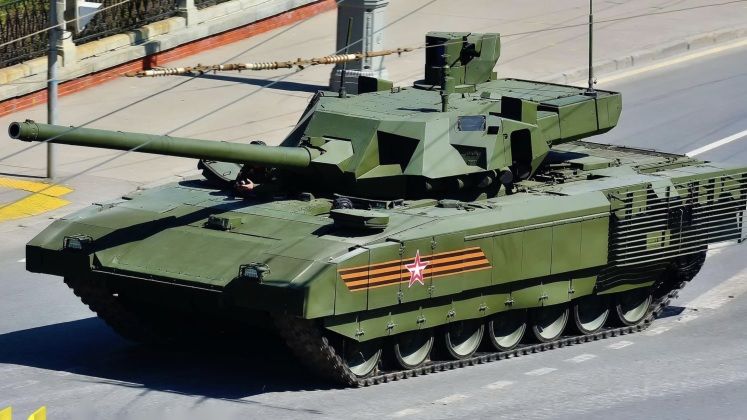
T-14 Armata Next Generation Battle Tank
First unveiled ini 2015, Russia’s T-14 Armata next generation battle tank is currently in service in limited numbers in the Russian Army, and a range of advanced technologies are currently under development to enhance its capabilities and adapt it to fill a greater number of battlefield roles. The Aramta is one of just three classes of fourth generation tank in service today, alongside the South Korean K2 and Japanese Type 10, and it was ranked the world’s second most capable tank only after the Korean platform. Roles proposed for the T-14 have included that of an anti aircraft platform and a bunker buster when equipped with specific specialised munitions, and the ambitious design has latent capacity to integrate a range of new weapons systems and other technologies in future. One leading proposal has been to equip the T-14 with a 152mm cannon - by far the heaviest on any battle tank in the world - which would provide a considerable firepower advantage over all other tanks. Such a cannon was previously integrated onto the T-80 tank, the T-14’s direct predecessor, in the final years of the Soviet Union for testing purposes, and the Armata’s larger chassis is even better suited to accommodating such a weapon.
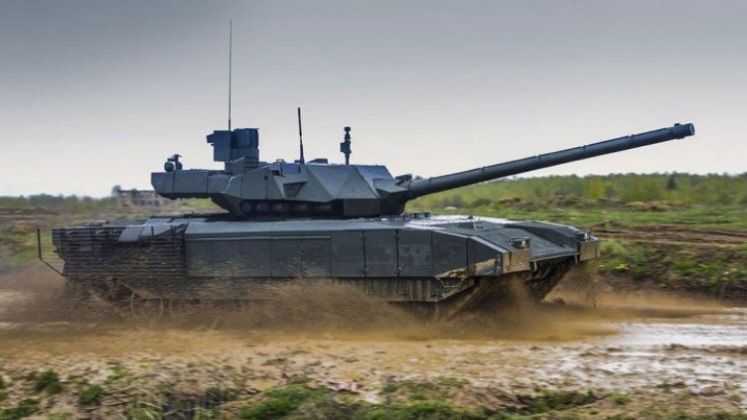
While integration of a larger cannot to replace the 2A82 125 millimetre smoothbore currently in use is likely, particularly as NATO countries move to field their own fourth generation armour possibly starting with Poland which is considering acquiring the K2, one proposition could see the T-14’s new cannon equipped with tactical nuclear warheads. This possibility has been reported by a number of Russian media outlets since 2016, although it has yet to be verified whether nuclear munitions are even being considered by the military. The USSR notably deployed a wide range of tactical nuclear weapons during the Cold War, with American soldiers carrying nuclear warheads in their backpacks when deploying near the North Korean border in the 1960s and deploying nuclear warheads from a range of artillery guns, which makes the possibility of a nuclear armed tank far from unthinkable. Cold War precedents show that a gun of around 152mm gun can be used for nuclear delivery, and this does not take into account the considerable advances Russia has made both physically miniaturising the warheads and reducing the power of their payloads to make them suitable for battlefield use.
The use of tactical nuclear weapons is not part of official Russian military doctrine, unlike the U.S., although Russia has invested in developing more advanced low yield tactical nuclear weapons in recent years. It is more likely than not, even with the U.S. risking proliferation of nuclear weapons to European states under nuclear sharing agreements and placing a greater emphasis on its own nuclear arsenal, that Russia will not equip the T-14 with nuclear weapons for the foreseeable future. As of yet such speculation remains somewhat premature, with the T-14 until recently in production only on a small scale and not yet integrating a 152mm cannon which would open up such possibilities.
