
Republic of China Army Developing Interception System Against PLA’s Superheavy Rocket Artillery
Military Watch Magazine Editorial Staff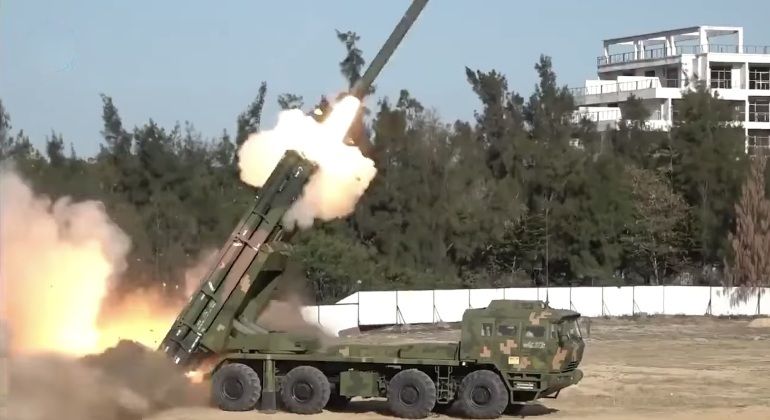
PCL-191 Rocket Artillery Launch
Head of the Taipei-based Chung-Shan Institute of Science and Technology President Lee Shih-chiang has informed the Republic of China legislature that a dedicated countermeasure plan is currently under development to provide a defence against the Chinese People’s Liberation Army’s (PLA) long-range rocket artillery systems. Live-fire testing is expected to commence in 2027. It is understood that low-cost surface-to-air missile in question is based on the Haijianling missile, which costs approximately $160,000, providing one of the cheapest NATO standard surface-to-air interceptors in the world. The missile has already passed the Navy's operational evaluation, meaning the equipment and technology are readily available, with modifications only to the body and guidance system. The program is thought to have a potential to revolutionise the Republic of China Army’s ability to defend against mass rocket artillery attacks.
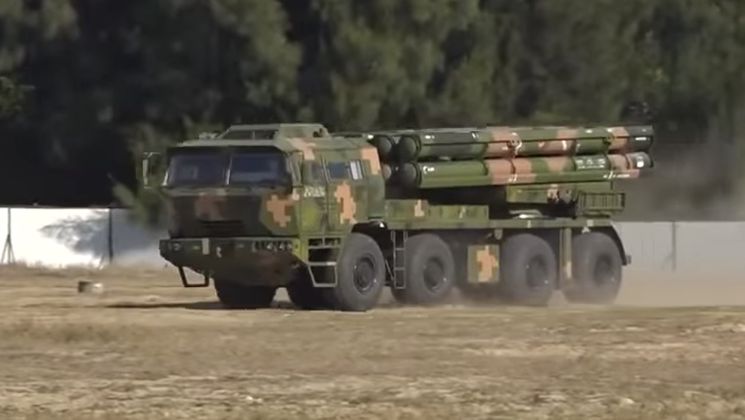
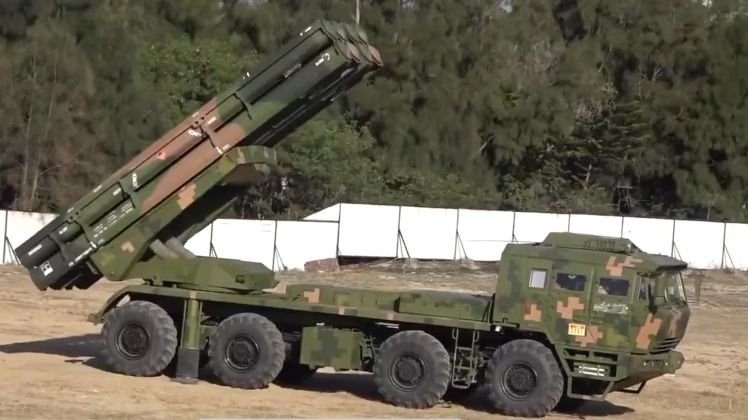
The capabilities of the People’s Liberation Army’s rocket artillery gained greater attention after the PCL-191 system participated in the Justice Mission 2025 large-scale joint military drills around Taiwan Island in December. The People’s Liberation Army and the Republic of China Army are currently in a state of civil war, with both Beijing and Taipei claiming to be the sole legitimate governments of the Chinese nation. The PCL-191 considered to be one of the world’s two longest ranged rocket artillery systems, alongside the North Korean KN-25, with its ability to bombard Republic of China Armed Forces targets across Taiwan Island with high precision and at a very low cost thought to be a game changer for a potential conflict when it was first introduced into service in the late 2010s. Footage from mainland China in December showed the system’s rockets passing over houses to strike simulated targets at sea around Taiwan Island. Although the system can fire short range ballistic missiles with ranges exceeding 500 kilometres, the use of 370 mm rockets with ranges of approximately 350 kilometres is considered more significant due to their much lower costs and greater suitability for saturation strikes.
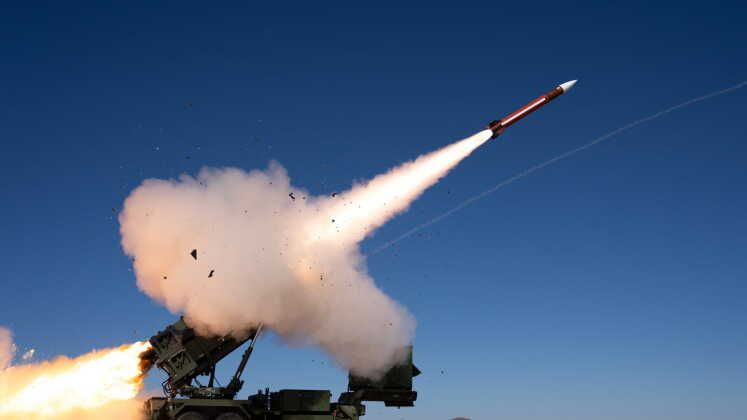
The viability of the Republic of China Armed Forces’ air defence network has repeatedly been brought to question, with their cost effectiveness against the People’s Liberation Army’s vast arsenals of missiles and rockets considered low. On March 5 Vice Chairman of the Forward Auxiliary Association Li Wenzhong warned that much of the equipment the Republic of China Defence Ministry was ordering was designed to "fight yesterday instead of tomorrow's war.” Regarding PAC-3 anti-ballistic missiles for Patriot air defence system, he observed that they had limited viability against attacks by cruise missiles, guide rockets, and unmanned aircraft, while being outstandingly expensive, particularly when considering that they were designed to be launched in pairs against targets. Such launches are wholly unaffordable and unsustainable against the Chinese mainland’s vast ballistic missile arsenal. A recent report by Defence Ministry drew strong parallels between Iranian strike capabilities, which have proven highly effective against the U.S. and its strategic partners’ air defences, and the projected "multi-wave, multi-missile" aerial threats which the PLA is expected to employ in the event of a Taiwan Strait war.
Reflecting their expected high utility in a Taiwan Strait conflict, two of the first brigades to deploy the PCL-191 in the late 2010s were located in Huzhou and Xiamen, both of which are within range of targets in Taiwan. The 72nd Group Army’s artillery brigade’s master sergeant, Wang Tanshen, previously commented shortly after the PCL-191 system was operationalised that its range exceeded that of its closest predecessor by “seven times,” elaborating: “The new generation rocket artillery system has extended our firing range to cover everywhere we want to hit.” Despite the significant cost reductions that are expected to be achieved by the new program for the Republic of China Army, new are defence systems will be far from cost-effective to intercept rocket bombardments, with precision guided artillery rockets being significantly less costly than ballistic missiles to launch.
