
Why China is Deploying H-6K Bombers with Mach 3+ Anti-Ship Cruise Missiles For Exercises Around Taiwan
Military Watch Magazine Editorial Staff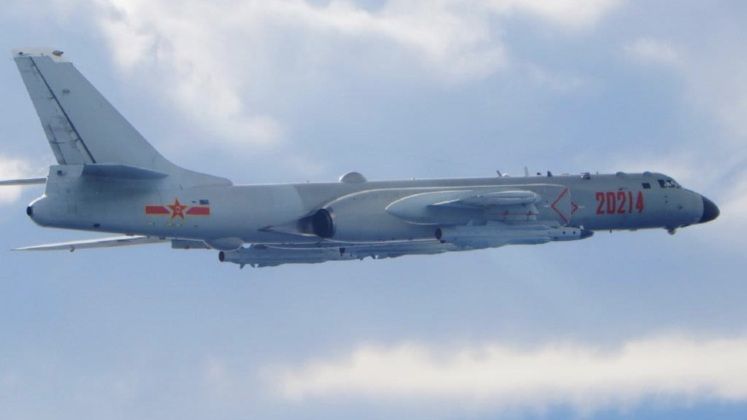
H-6K Near Taiwan with four YJ-12 Missiles
The Chinese People’s Liberation Army Eastern Theater Command on Monday began the Justice Mission 2025 large-scale joint military drills around Taiwan, which integrate ground, naval, air, and rocket forces in a major show of force in and around the contested Taiwan Strait. Exercises are focused on preparing forces for long-distance deployments, coordinated strike operations, and joint precision engagements, including testing forces’ ability to operate beyond the first island chain. The Air Force displayed H-6 long-range bombers armed with air-launched cruise missiles during the exercises around Taiwan, each of which was shown equipped with two YJ-12 air-to-surface missiles. Bomber formations conducted out long-range maritime strike training as part of the larger exercises.
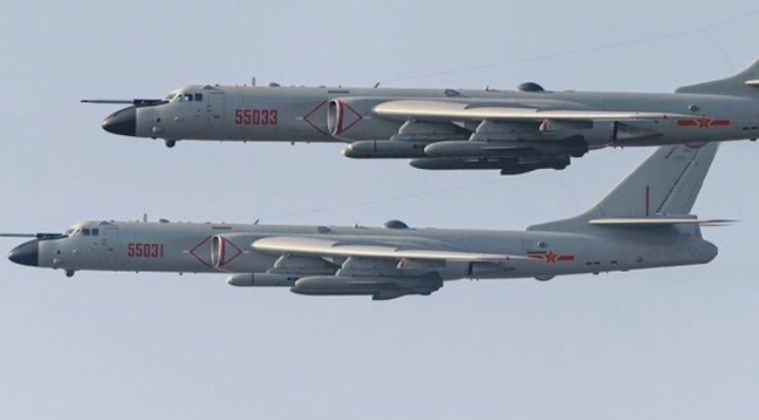
The H-6 is the most widely fielded type of bomber in the world, with approximately 270 of the aircraft estimated to currently be in service. The YJ-12 missile was developed in the 2010s for high-speed penetration of naval air defence systems, and combines a 400 kilometre engagement range with a 200 kilogram warhead and a speed exceeding Mach 3. According to a United States Naval War College Review report, it not only has a superior range than equivalent Western missile types, but can also be launched from beyond the engagement range of shipborne air defence systems. The YJ-12 is nevertheless considered far from cutting edge within the People’s Liberation Army today, and has been succeeded by two subsequent generations of primary anti-ship missile types, including the YJ-18, and more recently the YJ-21 and its ship-launched counterpart the YJ-20.
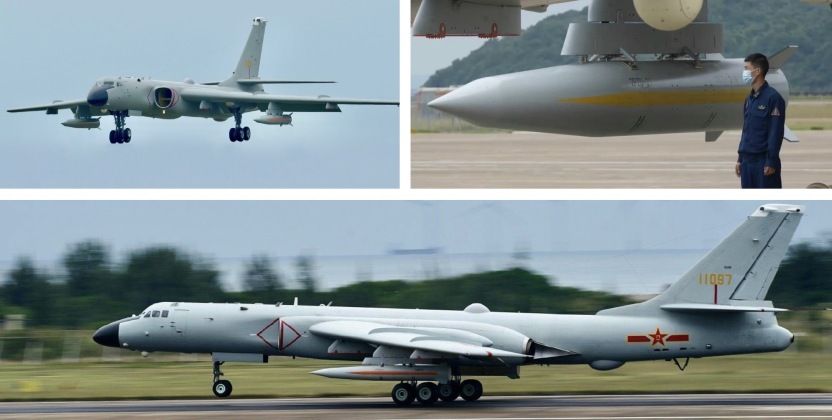
The YJ-21, was first unveiled at the 2018 Zhuhai Airshow, and is estimated to have an engagement range of approximately 2000 kilometres and Mach 8-10 speed. Cruising at speeds of over Mach 6, and with a Mach 10 terminal speed, the YJ-20 has a 1,500 kilometre range and is considered the most capable ship-launched anti-ship missile type in the world. This has revolutionised the potency of the H-6 in long range anti-shipping roles. The significant strengthening of Chines anti-ship missile capabilities was recently highlighted in a Pentagon war game showing how the People’s Liberation Army could utilise its missile, anti-space and cyber assets to engage and destroy the most advanced U.S. Navy carrier groups, during which combinations of supersonic missiles like the YJ-12, hypersonic missiles like the YJ-21, and various subsonic missiles, could all play complementary roles.
The modernisation of People’s Liberation Army anti-ship capabilities has particularly significant implications in the Taiwan Strait, as the Republic of China government based in Taipei remains in a state of civil war with the Chinese mainland. A key to potential operations to reunify China and end the Republic of China’s rival claim to leadership over the nation remains deterring, and if necessary stopping, third parties such as Japan and the United States from launching air or naval interventions. The H-6 bomber is one of the simplest of a wide range of asset types which are currently involved in Justice Mission 2025 exercises, which has seen warships and other aircraft approach Taiwan Island in close proximity from multiple directions simultaneously, while personnel from multiple services test their joint operations capabilities in simulated joint assaults.
