
Pentagon War Simulations Show How China Could Sink the U.S. Navy’s Most Advanced Supercarriers in a Taiwan Strait Conflict
Military Watch Magazine Editorial Staff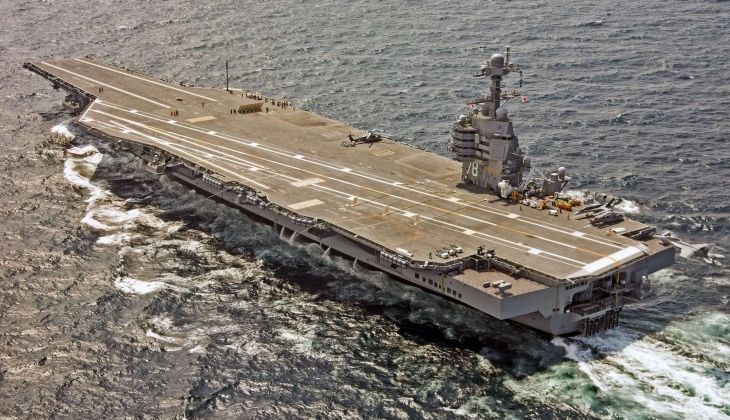
U.S. Navy Supercarrier USS Gerald Ford
A leaked U.S. wargame assessment known as the Overmatch Brief has concluded that the Chinese People’s Liberation Army could sink the U.S. Navy’s new Gerald Ford class supercarriers in a potential conflict over Taiwan. Multiple simulations showed that Chinese forces could destroy or disable the new carriers in a wide range of ways, and could do so before American air power was able to influence the course of hostilities. The People’s Liberation Army was shown conducting effective cyber operations and counter-space attacks, complementing the effectiveness of its missile salvoes to degrade U.S. defences surrounding the carrier in the opening phase of combat.
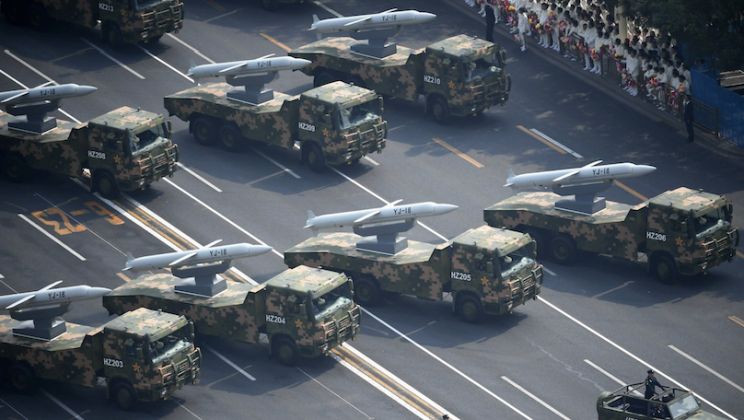
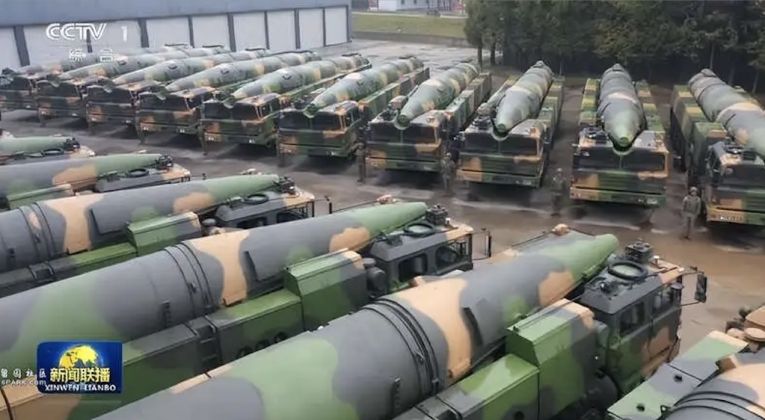
Attacks on surveillance and navigation satellites vital to the U.S. Armed Forces’ ability to carry out targeting, routing, and battle management played a key role in the success of Chinese attacks, after which successive waves of anti-ship missiles were able to comfortably exceed the defensive capacity of the multi-layered defences of American carrier groups. Chinese strikes were shown to have frequently routinely neutralised the Gerald Ford class carrier in question, the USS Gerald Ford, early in the simulations, and did so by combining long-range anti-ship ballistic missiles, cruise missiles, hypersonic glide vehicles, and electronic disruption. The report highlights the fast growing anti-shipping capabilities of the Chinese People’s Liberation Army, including including DF-21D and DF-26 medium and intermediate range anti-ship ballistic missiles, and an increasingly capable bomber fleet armed with anti-ship ballistic and cruise missiles.
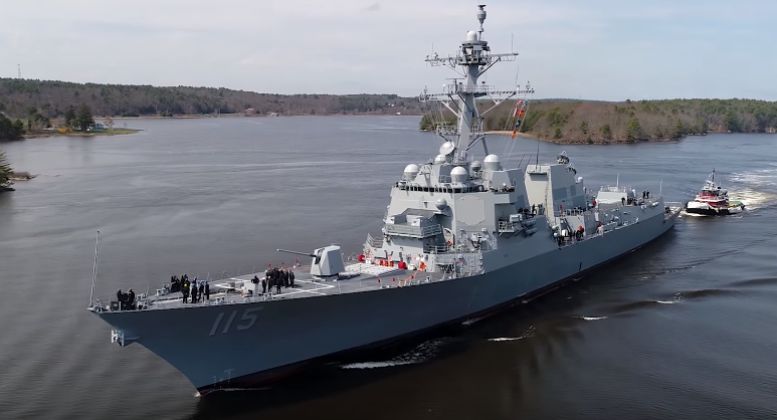
The leaking of the results of the simulations follow growing concerns regarding the survivability of American carriers, and closely coincides with a near unprecedented offensive operation by U.S. special forces in the Indian Ocean to seize and destroy Chinese civilian cargo, escalating the ongoing conflict between Beijing and Washington. Chinese simulations have similarly shown that its forces are capable of neutralising sizeable American surface fleets in East Asia, with a simulated engagement in February having demonstrated how a single Chinese Type 055 class destroyer can defeat eight U.S. Navy Arleigh Burke class destroyers when operating with support from two unmanned missile ships. Arleigh Burke class ships are relied on heavily to defend U.S. carrier groups. Chinese destroyers’ recent integration of the YJ-21 hypersonic anti-ship ballistic missile has provided them with a distinct advantage in any such potential engagements.
In July 2024 the U.S. Navy and the Chinese People’s Liberation Army Navy were reported by multiple Philippine and U.S. sources to have engaged in intensive electronic warfare battles in the South China Sea, with electronic warfare engagements reportedly having last a full twelve hours in the northern Philippines. American warships “faced an unprecedented crisis—screens full of static and a total loss of GPS signals,” with the fleet withdrawing due to the serious disruption of communication and navigation capabilities. The U.S. Navy’s electronic warfare equipment was assessed to be a full generation behind that of China, fuelling criticisms domestically. This was one of multiple developments that has pointed to an increasingly distinct advantage for Chinese forces.
