
U.S. Approves New Patriot Missile Sales to the Republic of China Air Force: Is It Cost Effective at $6.25 Million Per Interceptor?
Military Watch Magazine Editorial Staff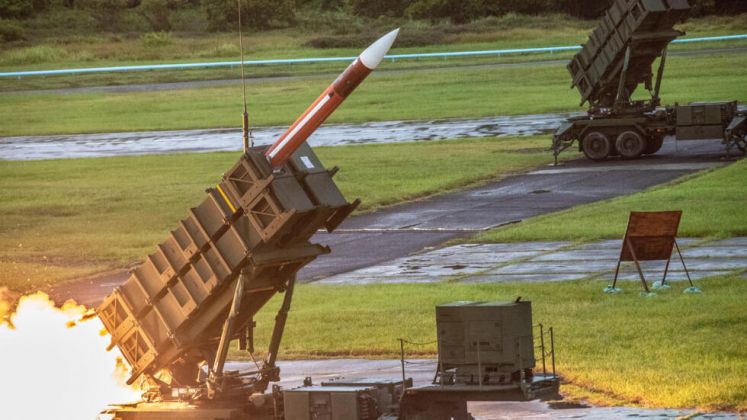
Surface-to-Air Missile Launch From Patriot System
The United States is preparing a large sale of PAC-3 MSE interceptors for the MIM-104 Patriot long range air defence systems to equip the Republic of China Air Force, which are expected to be used to support the formation of at least one new Patriot battalion. According to sources in Taipei, the missiles are part of a package that includes IBCS command systems, NASAMS short range air defence systems, LTAMDS sensors, and vehicle-mounted counter-drone systems. The prospective package is reported by sources in Taipei to be part of a broader arms procurement plan valued at up to $20 billion. The Republic of China Air Force has already procured 102 PAC-3 MSE interceptors at a cost of approximately $637 million, with initial deliveries having begun in early January 2026.
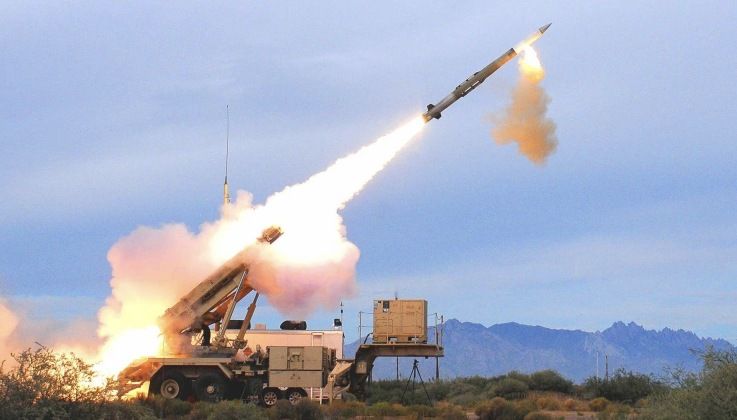
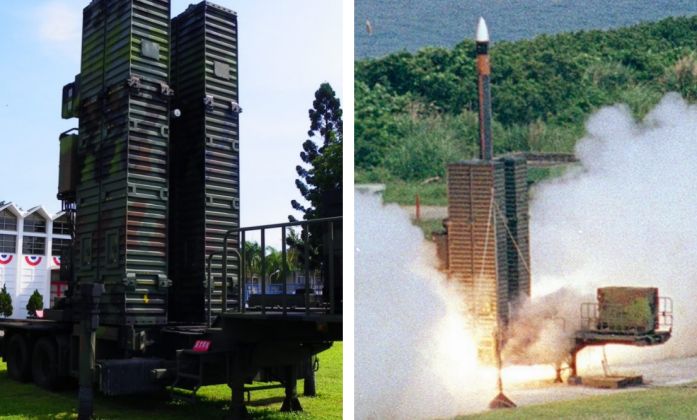
The Republic of China Air Force currently deploys one of the densest ground-based air defence networks in the world on Taiwan Island, which is rivalled only by those of Israel and North Korea, as part of an asymmetric strategy aimed at tackling the much larger and more advanced Chinese People’s Liberation Army (PLA), in which it remains in a state of civil war. PAC-3 MSE interceptors provide complementary capabilities to the Tien Kung III and Tien Kung IV systems, the latter which is specialised in ballistic missile defence roles. Unlike prior missile types developed for the Patriot system, the PAC-3 MSE employs hit-to-kill technology that destroys targets through direct kinetic impact, and as such does not carry a blast-fragmentation warhead.
Hit-to-kill interceptor were previously integrated onto both the THAAD anti-ballistic missile system and the multirole David’s Sling system, and require significantly higher precision levels, but allow for a lighter vehicle with a superior flight performance. The PAC-3 MSE can engage targets at altitudes up to 60 kilometres, although it is restricted to a range of just 120 kilometres. To place this in perspective, PLA HQ-9 air defence systems on the Chinese mainland have a 300 kilometre engagement range, while the the combat proven 40N6 missile in PLA service has a 400 kilometre range, and the new HQ-29 anti-ballistic missile system is estimated to have a 600 kilometre range. The PAC-3 MSE was designed to be able to reach higher intercept altitudes to increase available reaction time and engagement space against tactical ballistic missiles. Its extreme cost, however, has raised serious questions regarding its cost effectiveness against the PLA, which has a far greater defence budget and quantities of ballistic missiles orders of magnitude greater than the Republic of China Air Force’s anti-missile arsenal.
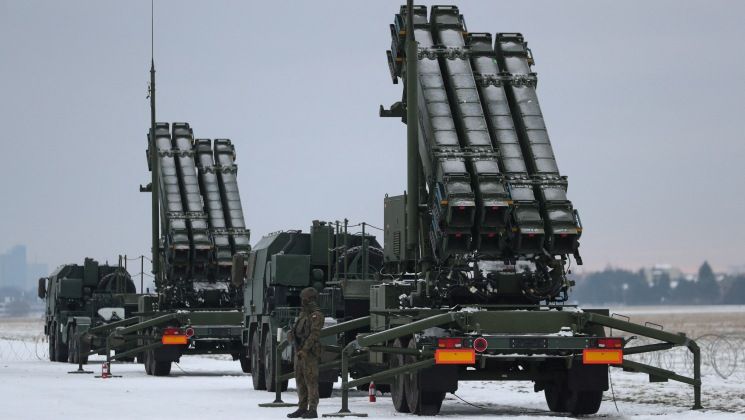
It remains highly uncertain how quickly the United States will be able to deliver new interceptors to the Republic of China Air Force, with the U.S. Army having heavily depleted its own stockpiles of surface-to-air missiles for the Patriot system. These were in July 2025 confirmed to have fallen to just 25 percent of the volume deemed necessary by the Pentagon. The missiles are being procured at a significantly lower cost for U.S. Army use, with each PAC-3 MSE interjector costing approximately $3.9 million, compared to around $6.25 million per missile when procured for Republic of China Air Force use. Delays to U.S. arms deliveries have caused a major scandal in Taipei, with outstanding backlogs of arms sales having reached over $21.45 billion by late 2025.
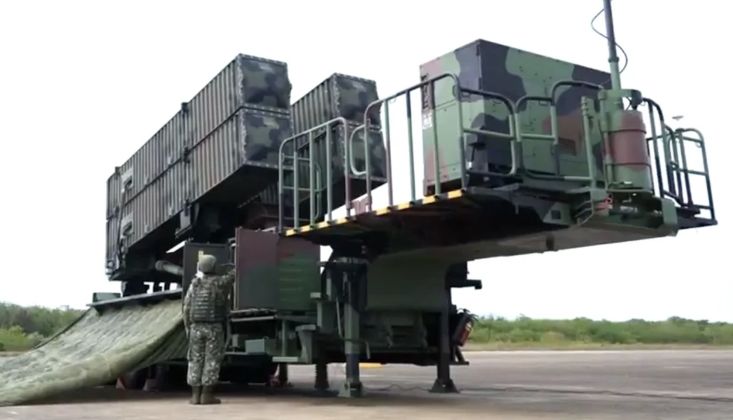
The Patriot system has seen by far the most intensive combat use in its history in the Ukrainain theatre from May 2023, with its effectiveness having been widely questioned by both Western and Ukrainian officials, particularly during recent combat testing in Ukraine. Beyond Eastern Europe, the system was recently confirmed to have struggled to intercept a very small scale Iranian ballistic missile attack on Al Udeid Air Base in Qatar in June 2025, despite prior warning of the attack having been given, with U.S. officials having confirmed this the following month only after satellite imagery showing damage to the facility undermined prior claims of a total success. The U.S. Army in December 2025 confirmed plans to develop a new variant of the Patriot, which will gain a 360 degree targeting capability that Russian, Chinese and North Korean systems have long had. This appears poised to be the most revolutionary upgrade since the system first entered service in 1981, and has been widely assessed to be intended to address many of its recently demonstrated shortcomings.
