
Putin: Russian Developing Powerful Countermeasures to Upcoming Western Hypersonic Missiles
Military Watch Magazine Editorial Staff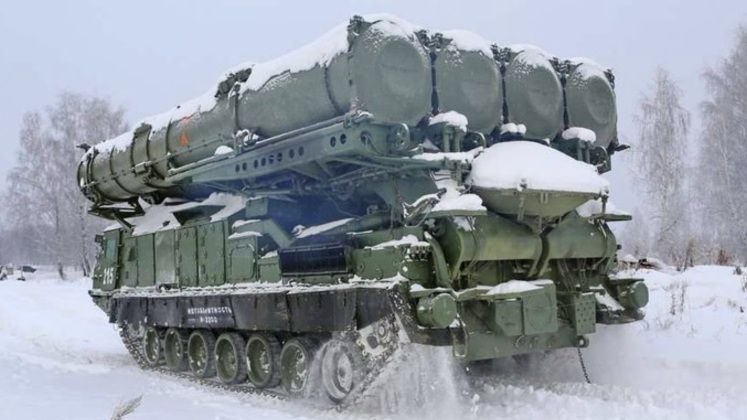
S-400V4 Missile Battery
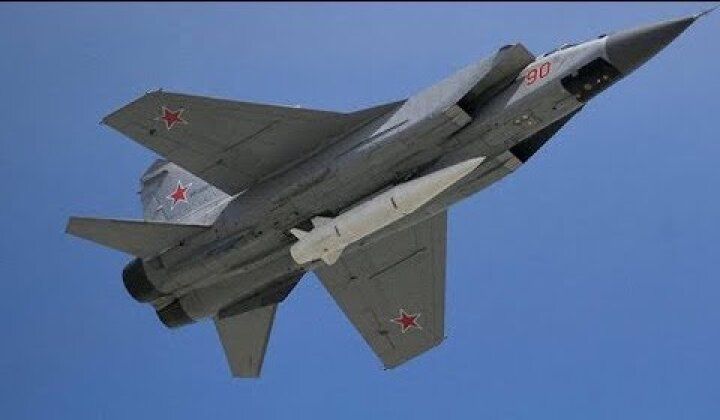
Russian President Vladimir Putin highlighted that the country was developing a number of advanced countermeasures to hypersonic missiles, in response to the emerging threat of likely deployments of such weapons by NATO member states later in the 2020s. Russia is currently considered a leader in hypersonic weapons technologies, fielding a number of advanced missile platforms for both tactical and strategic purposes such as the Avangard intercontinental range hypersonic glide vehicle, the Zircon ship launched anti-ship cruise missile and the Kh-47M2 Kinzhal air launched hypersonic ballistic missile. The U.S. for its part has invested heavily in closing the technological gap, and is expected to begin to deploy hypersonic cruise missiles in the latter half of the decade. The President Putin drew attention to the fact that the United States had worked with the concept of a quick disarming strike by precision weapons on enemy command posts, which meant hypersonic weapons in American hands could pose a serious threat to Russian security threat if not properly countered.
Regarding Russia’s development of advanced ‘anti-hypersonic’ countermeasures, Putin stated: “Precision weapons are available but there are no hypersonic weapons yet. They will create them, of course. This is absolutely obvious and, as I have already said, we are preparing for this. You have now asked about what we are working on. We are working, among other things, on the ‘antidote’ against future hypersonic weapons in other countries, in the world’s other leading armies. I am confident that we will do that and we are on the right way.” Russia is already a leader in the field, with its S-400 long range air defence system having demonstrated the capability to shoot down hypersonic missiles multiple times when tested both in Russia and by foreign clients. Chief of Russia’s Air Defense Forces Lieutenant-General Alexander Leonov claimed shortly before Putin’s statement that the S-300 air defence system had also proven capable of destroying hypersonic targets during military-technical experiments, although whether this referred only to the most advanced S-300V4, or also to older variants, is uncertain.
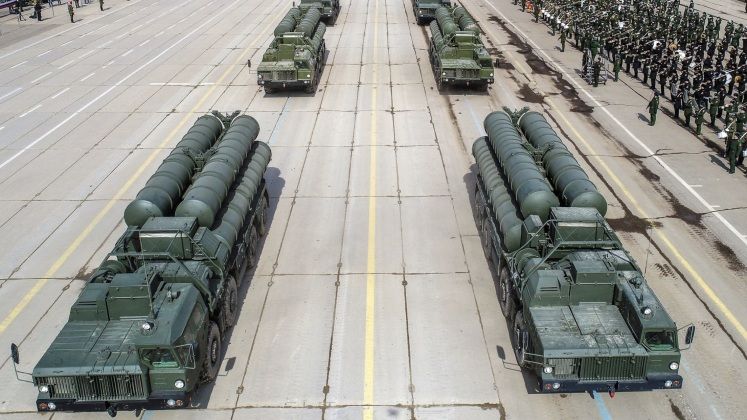
Expanding on these capabilities considerably, thee S-500 air defence system will be able to intercept targets at high hypersonic speeds - according to some reporters including speeds of over Mach 15. The delayed air defence system is currently undergoing state trials, and will reportedly enter service in 2021. The system is without parallel worldwide in terms of combat performance, and has a 600km engagement range. Few Western air defence systems designed to engage tactical targets are capable of engaging at even 200km ranges, while China has yet to unveil a similar system with a range of over 300km. The S-500 has been highlighted as the ideal complement to Russia’s growing arsenal of hypersonic weapons, and the possibility of integrating it onto heavier warships has also been discussed. This would not be unprecedented, with the S-400 system currently being integrated for the first time onto a surface combat ship - a Kirov Class heavy cruiser. Other systems are likely to be unveiled in future to complement the S-500’s missile defence capabilities, likely including modernised variants of the cheaper and shorter ranged S-400 which use some S-500 technologies.
