
Revolutionising Naval Warfare: Russia’s New Zircon Hypersonic Cruise Missile Sees First Test From Surface Ship
Military Watch Magazine Editorial Staff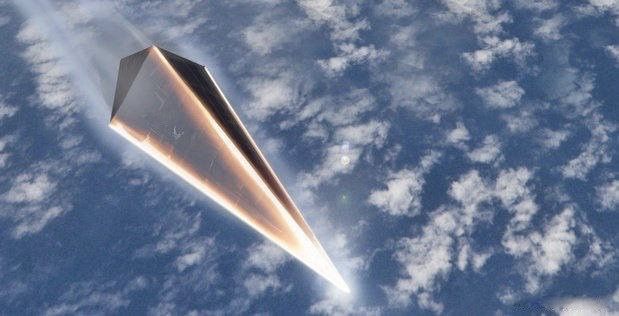
Hypersonic Glide Vehicle - artwork
Following its entry into service in the Russian Navy in December 2019, the service has carried out the first test of the new Zircon hypersonic anti ship cruise missile - which was launched from the frigate Admiral Gorshkov. The launch was reported on February 27th, with a source cited by Russian news agency TASS stating: “In accordance with the program of the Tsirkon’s state trials, the Admiral Gorshkov test-launched this missile from the Barents Sea against a ground target at one of military testing ranges of the Northern Urals in early January.” A second source confirmed that the test was successful, with the missile striking a target over 500km away. The Russian Navy is reported planning further tests for the missile - with tests from submarines expected this year.
It remains uncertain whether the missile has yet been integrated onto any of Russia’s submarines, but its integration onto Russian corvettes and frigates its confirmed. Russia’s Kirov Class battlecruisers are also set to integrate the missiles after extensive refitting, with the Zircon alongside other missile classes such as the P-800 set to replace the cruisers’ older and much heavier P-700 ‘Granit’ carrier killer missiles. The new missiles are not only far more capable, but due to their smaller size they can be carried in four times the numbers.
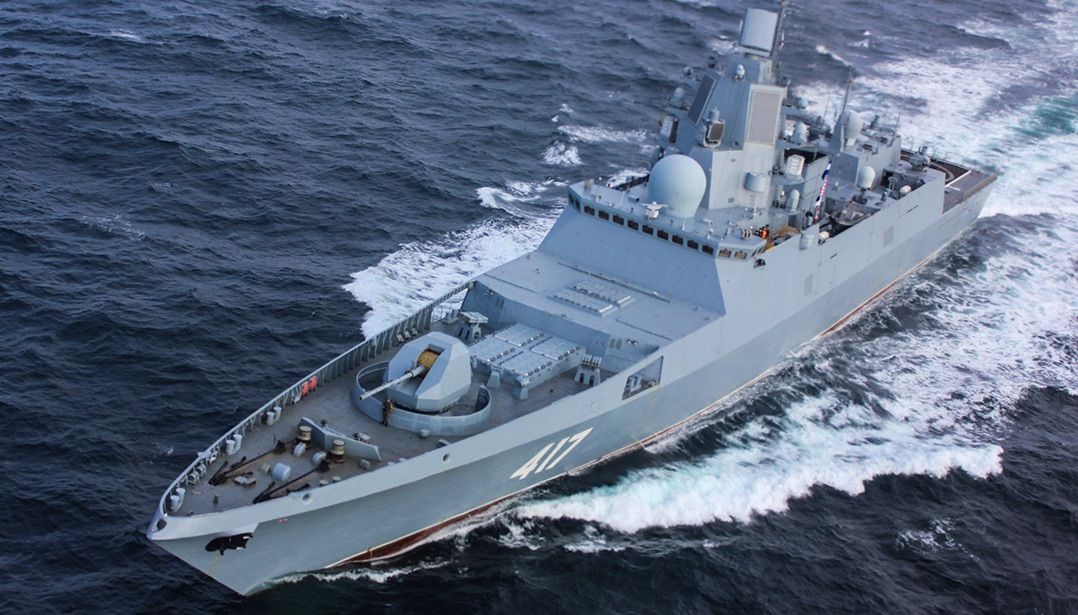
The Admiral Gorshkov is the only frigate of its class currently in service, with at least eight more planned, and represents the heaviest surface combat ship built by Russia since the Soviet collapse. The ships can accommodate 48 vertical launch cells, and while much smaller and lighter than warships fielded by rival platforms the Zircon missiles are expected to serve as a major force multiplier for their capabilities. The Zircon is capable of striking targets over 1000km away with high precision, and has an impact speed of Mach 9 allowing it fully disable even larger warships with a single well placed hit. Its combination of speed, manoeuvrability, stealth and state of the art elecctronic warfare countermeasures make the Zircon nearly impossible to intercept.
The Zircon’s capabilities far exceed those fielded by rival powers as well as older Russian anti ship missile classes such as the Kalibr, with its closest competitor today being the Chinese YJ-18 which restricted to speeds of just Mach 3 and a 550km range. With over triple the range of its most sophisticated Western analogue, the ageing subsonic Harpoon missile, the Zircon will provide Russian warships with an overwhelming performance advantage for the foreseeable future - faacilititaing attacks on enemy ships several hundred kilometres beyond their retaliation range.
