
All the Hypersonic Missile Types Russia’s Massive Kirov Class Cruisers Will Deploy After Refurbishment
Military Watch Magazine Editorial Staff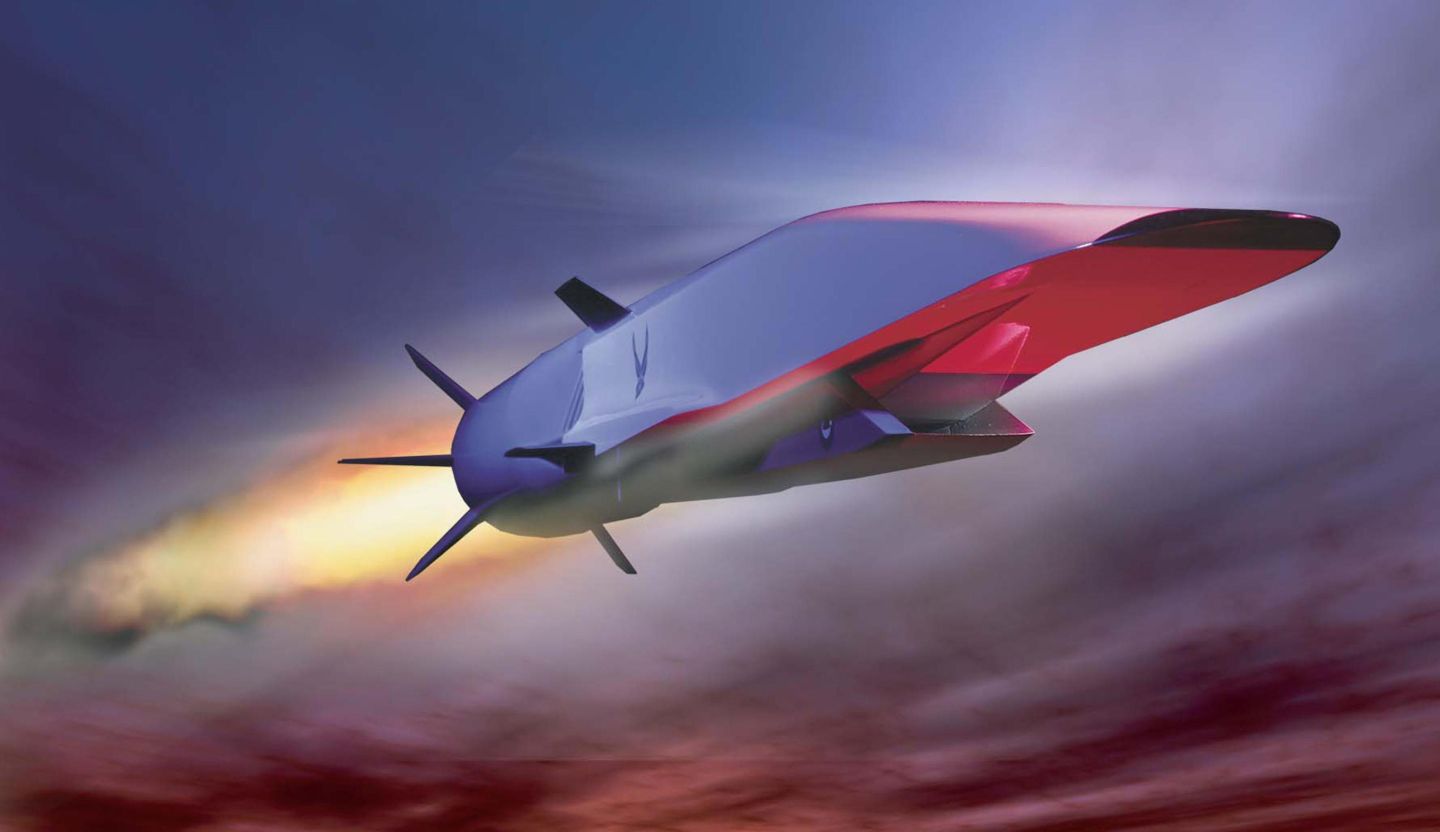
Cruise Missile - artwork
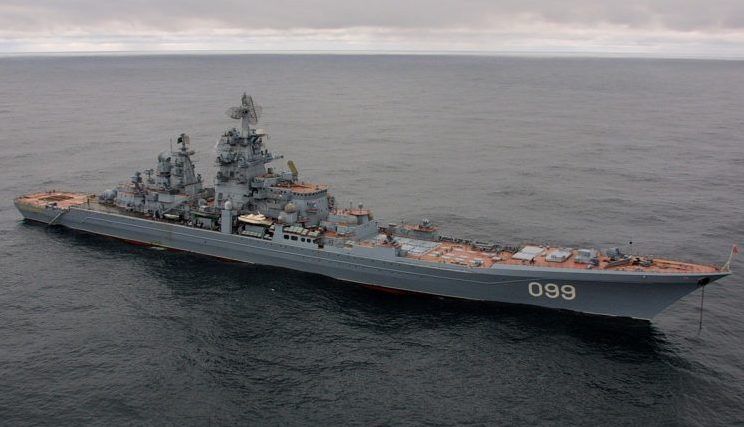
A Russian Kirov Class cruiser, the world’s largest class of surface combat ship, is currently undergoing a comprehensive refit and modernisation and is scheduled to enter service in the Russian Navy in the year 2021. The warship Admiral Nakhimov was commissioned by the Soviet Navy in 1988, and while initially deploying a sizeable arsenal of P-700 ‘carrier killer’ long range cruise missiles and an S-300F surface to air missile system as its primary armaments, these are being replaced by a sizeable arsenal of lighter, faster and more modern cruise missiles and a navalised variant of the more advanced S-400 air defence system. These upgrades are complemented by the integration of new sensors and electronic warfare systems, deployment of six Kashtan close in weapons systems and replacement of the cruiser’s 44 4K33 ‘OSA-M’ surface to air missiles with the new Redut system - a navalised variant of the S-350 Vityaz. Once its refitting its complete, the Admiral Nakhimov is likely to deploy more hypersonic missiles than any other class of surface warship - measured both in the number of hypersonic missile classes deployed and the quantities of missiles carried. The classes of hypersonic missile are listed below:
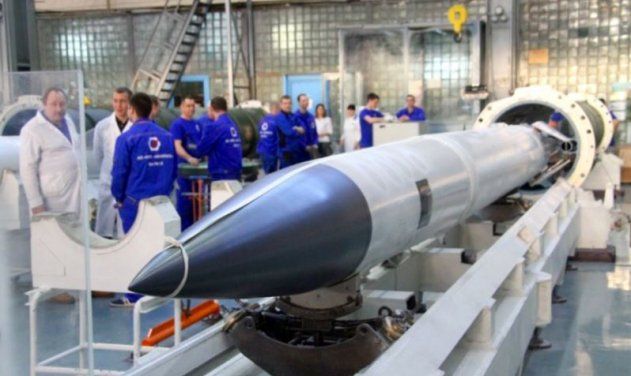
40N6E
The longest ranged missile deployed by the S-400 system, the 40N6E can impact targets at speeds of over Mach 14 and retains a 400km engagement range. Some reports indicate the missile can surpass Mach 15. The missile notably provides unique over the horizon attack capabilities, and even at extreme ranges it is capable of striking targets at altitudes as low as 5 meters off the ground. It does so by following a two stage flight path, first climbing to a designated altitude of 30km or more - near space - before switching to semi-active radar homing and striking its target from above. The platform was designed to heavily compensate for a key weakness faced by land and ship based surface to air missiles, and can threaten fighters, transports, bombers, AWACS and all manner of other military aircraft from very long ranges below the horizon. Some reports also indicate that the 40N6E has an anti-missile capability, and can intercept projectiles travelling at high supersonic or low hypersonic speeds.
48N6E3/48N6DM
This missile retains a 250km engagement range, but unlike the 40N6E it is a single stage platform and lacks an over the horizon capability meaning it cannot engage low altitude targets at range. The missile is considerably lighter, and is capable of reaching speeds of around Mach 14 which gives the target a relatively short response time. While low flying targets have considerably greater survivability near the limits of the missile’s range, at closer ranges of under 150km the missile is highly reliable against fighter sized targets.
48N6E2
Able to reach speeds of approximately Mach 8, the 48N6E2 provides a robust anti aircraft capability at long and medium ranges.
3M22 Zircon
The Zircon will replace the P-700 Granit as the primary anti-ship weapon deployed by the Admiral Nakhimov, and due to the munition's smaller size the warship will be able to house four times as many launch tubes. Due to its high cost, it is expected that the Zircon will not occupy all of the cruiser’s cruise missile launch tubes with the older and less costly Kalibr and Oniks platforms occupying some similarly sized launch tubes. The scramjet powered missile will be able to strike targets at speeds of between Mach 8 and Mach 10, and will have a very considerable engagement range of up to 1000km - matching that of the current record holder China’s subsonic YJ-100. This range will allow the Russian cruiser to comfortably outrange the 130km range Harpoon - the staple of the U.S. fleet’s anti ship capabilities, and the upcoming the 310km range Harpoon Next Generation. Like the YJ-100, these American missile systems are both subsonic. The Zircon was first successfully tested in 2016 and as seen multiple tests since, with the platform set to enter service in the early 2020s. The Admiral Nakhimov is expected to deploy several dozen of these missiles at the very least. The Zircon’s speed is considered sufficient to disable any surface warship with a single direct hit - with missiles a third of its speed having demonstrated the ability to tear large warships in half upon impact.
Able to accommodate over 100 hypersonic missiles for both air defence and anti shipping, complemented by powerful new sensor and electronic warfare technologies, the Kirov Class cruisers will be provide a highly formidable asset for the Russian Navy to project power overseas. While recent Russian warship designs such as the Gorshkov Class have been designed with a low endurance, the Kirov benefits from a uniquely high endurance due to its nuclear propulsion systems meaning it can operate in blue waters far from Russian coasts for extended periods. The warship's ability to threaten high value enemy targets with hypersonic missiles at extreme ranges - 400km for aircraft and 1000km for ships - makes the Kirov Class a highly potent threat wherever it is deployed - and arguably the most dangerous surface warship fielded by the Russian Navy including its current and upcoming aircraft carriers. Whether Russia will move to commission new high endurance surface warships, possibly under the ambitious Shkval Class destroyer program, remains to be seen - but if pursued these ships could complement the Kirov Class to form blue water strike groups for power projection. Like the Kirov Class, the lighter Shkval Class will also be equipped with a large arsenal of hypersonic missiles including Zircon cruise missiles.
