
S-300V4 Watching Over Japan: Russia Deploys Most Advanced Air Defence System on Tokyo-Claimed Kuril Islands
Military Watch Magazine Editorial Staff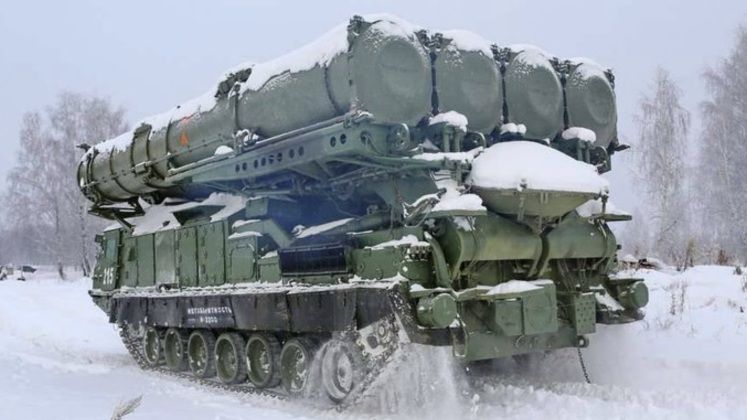
S-300V4 Surface to Air Missile Battery
Russia’s latest and most capable long range surface to air missile system the S-300V4 has been deployed to the Kuril Islands closely bordering Japan by sea, with the press service of the Russian Eastern Military District announcing that the systems had entered combat duty on November 1st. The islands are notably claimed by Japan and were previously possessions of the Japanese Empire, but were seized by the Soviet Red Army in the final days of the Second World War. Despite significant pressure from Tokyo, fears that the strategically located islands would be used as a base for the U.S. and other Western militaries to threaten Russia means their return to Japan is unlikely so long as the East Asian country remains a forward staging ground for Western military operations in the region. The S-300V4 deployment comes as part of a wider focus on modernisation of Russian forces in the area, and its announcement came just a day before one of Russia’s most sophisticated surface warships, the Aldar Tsydenzhapov corvette, demonstrated its capabilities in the Sea of Japan.
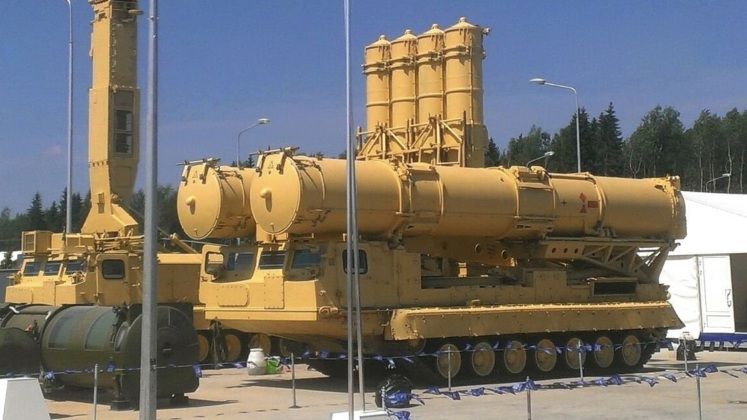
The S-300V4 integrates many of the same technologies as the older but better known S-400, and entered service in the early 2010s. The system is notably more costly than the S-400 and is operated only by Russia and Egypt. It benefits from higher mobility and a shorter set-up time, and can engage up to 64 targets simultaneously. The S-300V4 inherits the S-400’s advanced sensor capabilities and high performance against stealth aircraft, which is particularly critical as Japan moves to rapidly expand its fleet of F-35 fighters as the largest export client for the American stealth jets. Like the S-400, the S-300V4 has access to a range of advanced missiles including the 40N6E which has a 400km range and a speed exceeding Mach 14. This provides S-300V4 units deployed to the Kuril Islands with significant coverage over Japanese territory, and the system’s detection range against large aircraft is estimated at around 600km. With Japan remaining firmly in the Western sphere of influence, and rapidly expanding its military capabilities under the pretext of responding to the military modernisation of China an North Korea, Russia is likely to be forced to allocate more forces to protect its Far Eastern regions.
