
World’s Top Multirole Air Defence Systems: From Russia’s S-400 to Israel’s David’s Sling
Military Watch Magazine Editorial Staff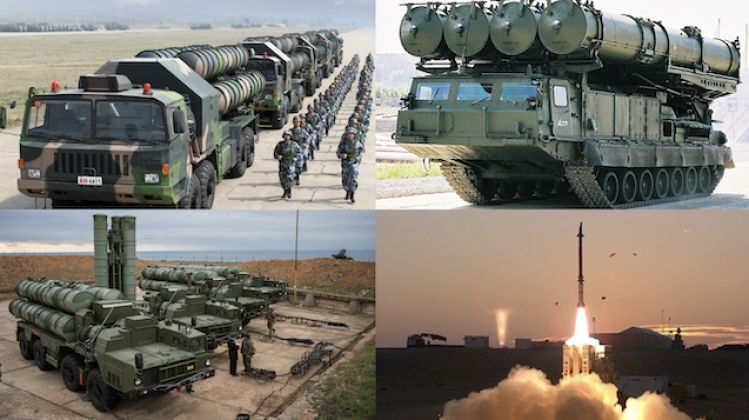
(clockwise from top left) HQ-9B, S-300V, David
Surface to air missile systems began to enter service in the early Cold War years as part of the arms race between the Soviet and Western Blocs, with the Soviet Union being the first to deploy such as system with a S-25 long ranged anti aircraft missile network built around Moscow. Such weapons platforms would play crucial roles in many major conflicts such as the Vietnam War and the Yom Kippur War, usually on the side of Soviet defence clients, with the USSR investing far more heavily in these technologies. Long range surface to air missile systems have come a long way since the Cold War, with many today attaining hypersonic speeds and introducing technologies such as cold launch systems to improve effectiveness. While some surface to air missile systems such as the Russian A-235 and American GMD have only a single role - these two designed exclusively to intercept enemy long ranged ballistic missiles - the majority are capable of engaging a range of targets including cruise missiles, aircraft and ballistic missiles. An assessment and ranking of the five most advanced and capable multirole surface to air missile systems is given below:
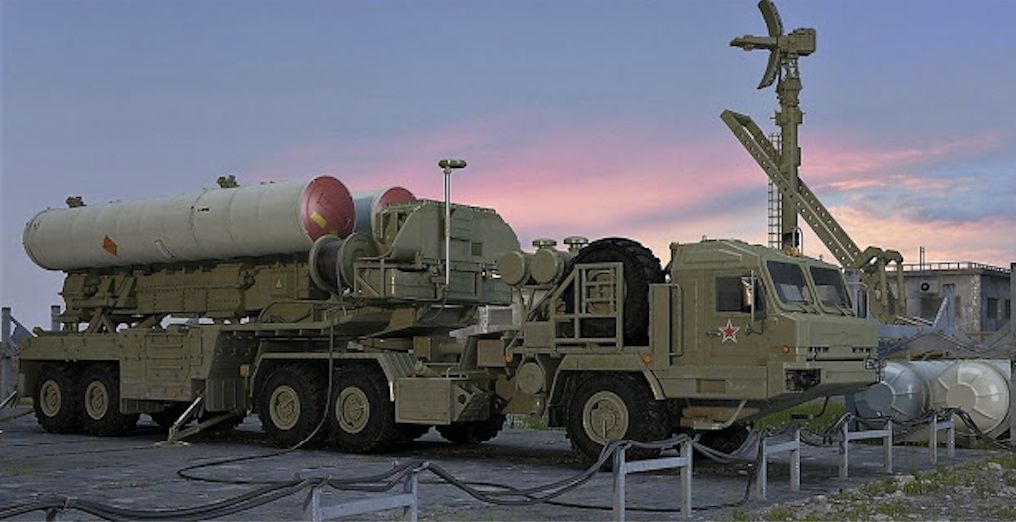
S-500
Beginning production in 2019, the S-500 is Russia’s most sophisticated air defence system yet and the first in the world designed to counter space planes and high speed hypersonic weapons. Unlike the S-400 and the S-300 series, the S-500 is was designed primarily to engage high value targets rather than large numbers of small cruise missiles or fighter jets, and targets it is optimised to neutralise include satellites, ballistic missiles and heavyweight support aircraft such as E-3 Sentry AWACS platforms. The S-500 is able to track enemy aircraft at ranges of up to 800km, and can engage targets at ranges of up to 600km and at high hypersonic speeds exceeding Mach 14. The platform is far ahead of any competition globally, despite delays getting it ready for frontline service, and like the S-400 before it its range is likely to be extended as newer missiles are developed in future.
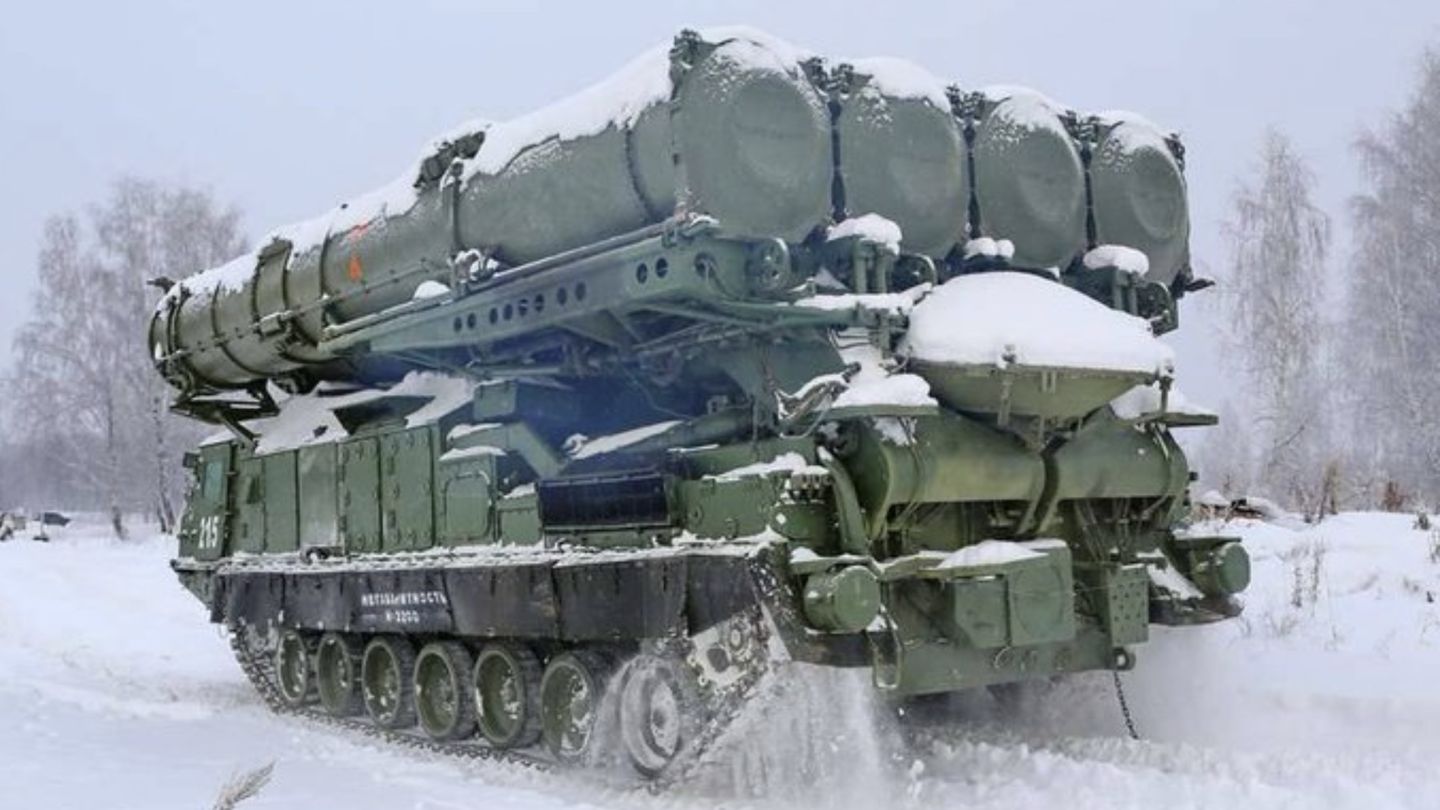
S-300V4
The final member of the S-300V family of air defence systems, entering service in the early 2010s over five years after the better known S-400, the S-300V4 was developed as a more mobile platform with a shorter redeployment time and a tracked launch vehicle - with the intention of accompanying frontline ground units. The platform can deploy the S-400’s 40N6E hypersonic missile and integrates many of the same technologies as the older platform, which make it highly resilient to electronic attacks and provide excellent situational awareness including the ability to engage stealth aircraft at range. The 40N6E retains a 400km range and can impact targets at hypersonic speeds exceeding Mach 14. It makes use of a trajectory unique for surface to air missiles, ascending to altitudes as high as 30km before making a sharp descent. The missile uses an active radar homing head to climb to a designated altitude before switching to search and destroy mode, which is key to allowing the missile to strike low altitude targets at extreme ranges beyond the horizon. The missile can thus strike targets operating at altitudes as low as 5 meters even at extreme ranges, where surface to air missiles following conventional trajectories can only strike targets at very high altitudes when over 150km away. The S-300V4 is thought to bee able to engage up to 64 targets simultaneously with up to 128 missiles, which is one area where it is at a slight disadvantage to the S-400.
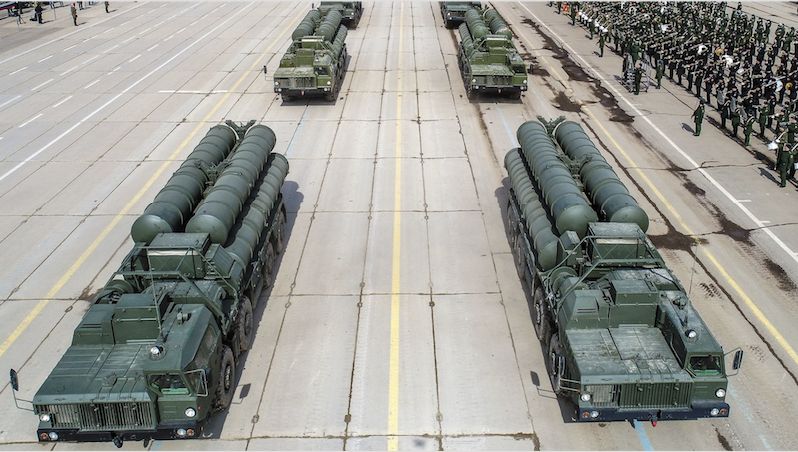
S-400
Russia’s best known air defence system, the S-400 first entered service in 2007 and is well equipped to engage all manner of targets at almost all ranges. The system was developed as a successor to the S-300PMU-2 platform which joined the Russian military ten years prior, and was widely seen as a response to America's deployment of the F-22 Raptor stealth fighter which was designed to be particularly difficult to track for older air defence systems. The S-400 is capable of deploying over half a dozen different missile types, from the 40km range 9M96E to the 400km range hypersonic 40N6E, which makes it extremely versatile. It is prized for its situational awareness and its ability to target stealth aircraft at range, and it is capable of guiding up to 160 missiles and engaging up to 80 targets simultaneously - more than double the number of its competitors. The missile system has demonstrated its ability to neutralise hypersonic missiles at long range travelling at speeds exceeding Mach 8, and is expected to be deployed as a ship based variant on Russian heavy cruisers before 2025..
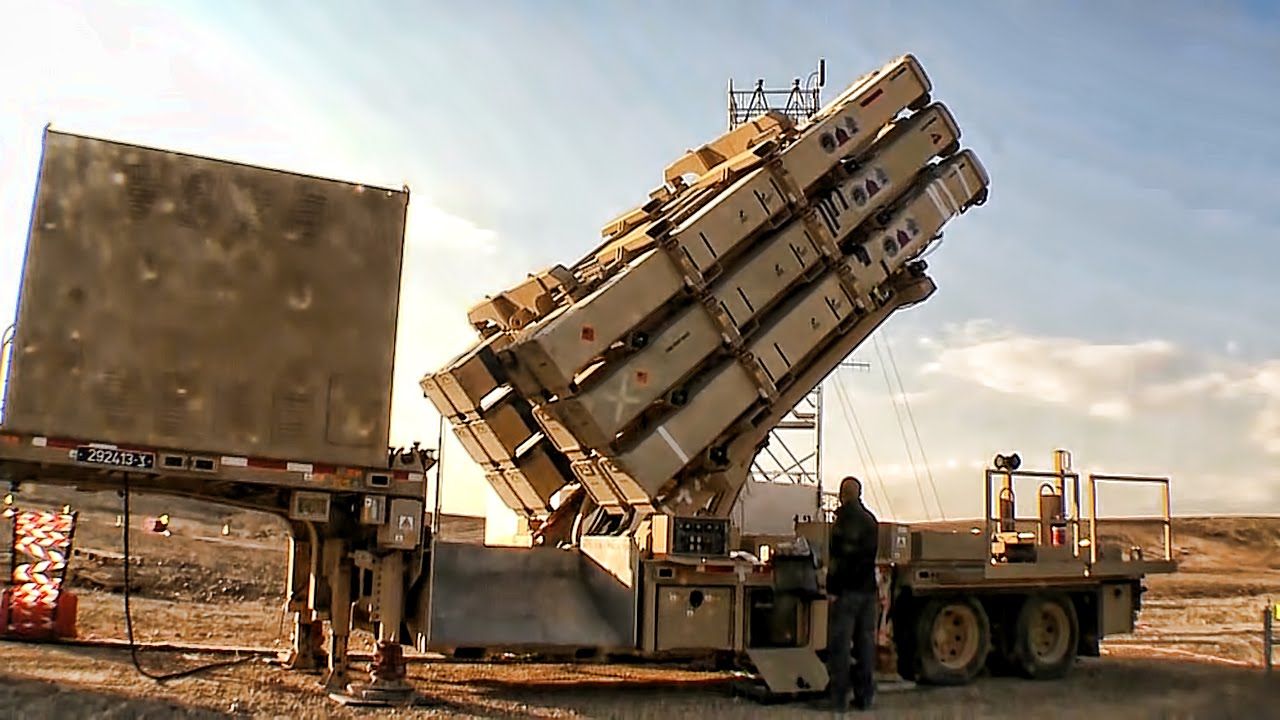
David’s Sling
Jointly developed by America’s Raytheon and Israel’s own defence sector, the David’s Sling was designed to replace the Patriot missile defence systems currently in service in the Israeli Defence Force, and was generously funded due to the serious threat perceived from Iranian and allied missile forces. While lacking the mobility and versatility of the Russian S-300 series, it retains some advantages over most S-300 variants. The platform’s most unique feature of is its use of dual-mode terminal homing on its missiles, meaning each will deploy two seekers - one using an active electronically scanned array radar and the other using imaging infra red. Either can guide the missile towards its target, and by using both the chance for targets to decoy or jam it on approach are drastically reduced. The platform's 'Stunner' missiles make use of miniaturised subsystems including a data link fully networked with the ground based sensors, compact and powerful engines which provide high manoeuvrability, and a design built around a ‘hit to kill’ system allowing the missiles to function without a warhead. Despite its sophistication, the David's Sling's lack of mobility makes it vulnerable to attacks by enemy anti-radiation missiles, and its low rate of fire combined with the extremely high cost of its missiles limits its usefulness in large scale engagements.
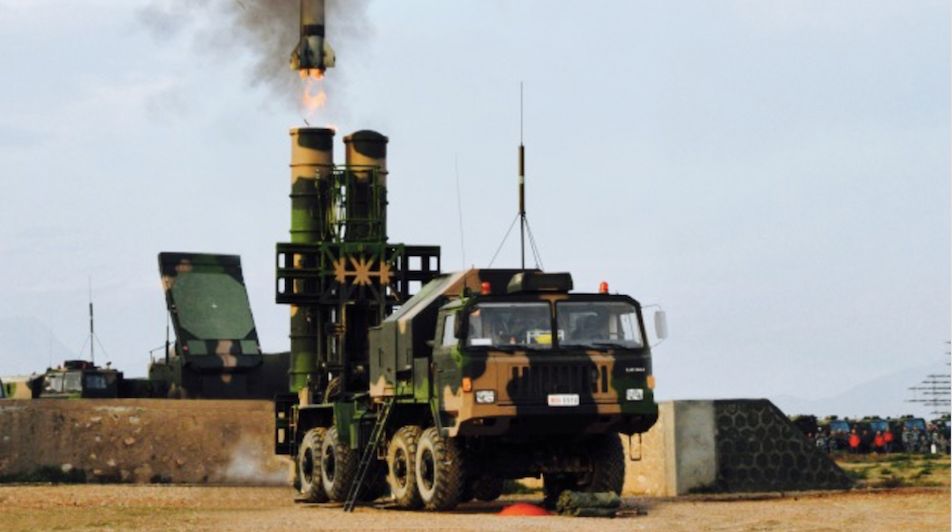
HQ-9B
The Chinese HQ-9B surface to air missile system deploys two-stage long range missiles with a reported maximum engagement range of up to 250km. While less is known. regarding this platform's capabilities than its Russian counterparts such as the S-300PMU-2, the HQ-9B is considered to be a more modern and sophisticated design relied on heavily in a frontline role by China in regions of high tension. The surface to air missiles deployed by the system are restricted to lower speeds of around Mach 4.2 relative to the S-400 and other new Russian designs, but are guided by a combination of inertial guidance, mid course uplink and active radar terminal guidance systems for high precision. The weapons system is thought to be a world leader in electronic warfare countermeasures and sensor technologies, and benefits from a veery high mobility similar to that of its Russian counterparts.
