
Putin Announces Russian Arms Exports Crossed $15 Billion in 2025: Can the Defence Sector Retain is Position?
Military Watch Magazine Editorial Staff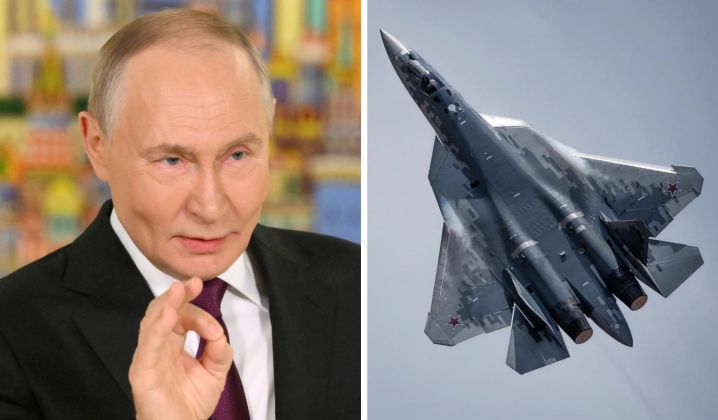
Russian President Putin and Su-57 Fighter
Russian President Vladimir Putin has commented on the export performance of his country’s military-industrial complex, observing that despite considerable Western pressure, markets and development prospects have continued to expand. Speaking at a military-technical cooperation meeting at the Kremlin, the president stated that defence products had been exported to more than 30 countries in 2025, and generated over $15 billion in foreign exchange revenue. This follows confirmation in December from Russian Defence Minister Andrey Belousov that efforts to reverse the wartime decline in Russian defence exports had been successful, with revenues having risen considerably in 2025. "We have transitioned to a new system for promoting Russian weapons to our allies and partners. Demonstrations of the weapons' combat capabilities are held for foreign delegations, in conjunction with foreign armies’ modernisation programs,” the minister stated at the time, in reference to the value of combat testing in the Ukrainian theatre.
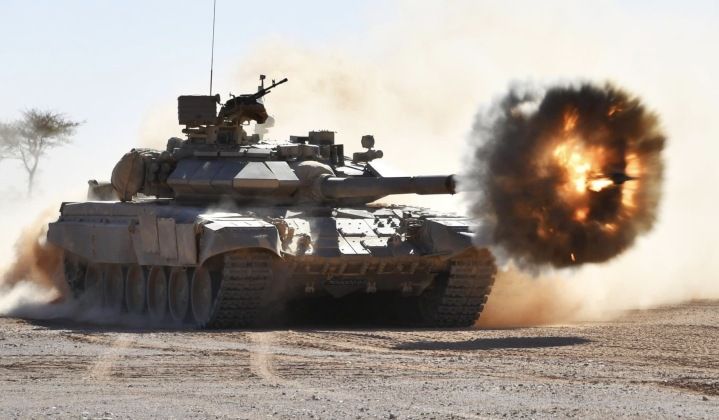
Days prior to President Putin’s statement, CEO of Russia’s arms export conglomerate Rosoboronexport Alexander Mikheev highlighted the combat testing of Russian military equipment had been a primary factor increasing its appeal to overseas clients, singling out the Su-35 and Su-57 fighters, a wide range of air defence equipment, T-90 tanks, and thermobaric artillery systems as assets which have gained particular interest. President Putin notably particularly singled out sales to Africa as a leading driver of the rise in defence export revenues, with the Algerian Defence Ministry having emerged by a growing margin as a leading client. The president’s statement closely coincided with the publication of the first footage showing the Su-57 in service in the Algerian Air Force, its first foreign operator, after the new fifth generation aircraft was confirmed in November 2024 to have been made operational in the service.
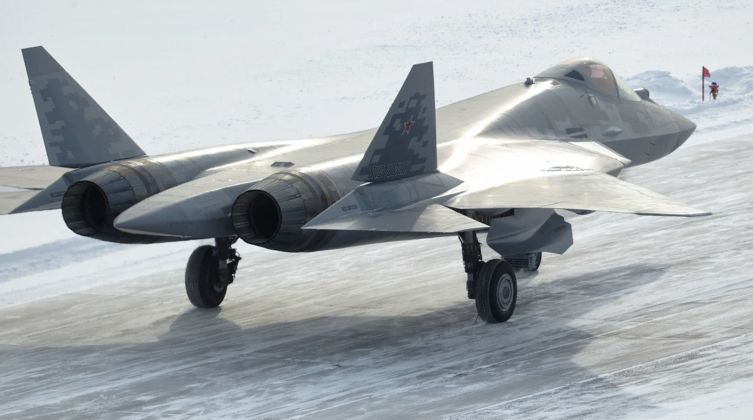
Beyond Algeria, there has been speculation that other African states are set to place significant orders for Russian defence equipment. Libya has been a leading client for Russian main battle tanks and armoured vehicles over the past three years, as Libyan National Army forces face continued threats from Turkish-backed jihadist groups in the country. On February 8, Russian Industry and Trade Minister Anton Alikhanov stated that contracts have already been signed in the Middle East region for the export of the Su-57, fuelling speculation that Egypt may be the intended client as the country faces ongoing tensions with neighbouring Israel over ongoing Israeli military operations in the Gaza Strip. Although the Su-57 has been produced in smaller numbers than its Chinese rivals or than the American F-35, and lacks a number of their more advanced technologies, the aircraft has seen far higher levels of combat testing under high intensity conditions, including air defence suppression, air-to-air combat, and operations in heavily defended enemy airspace.
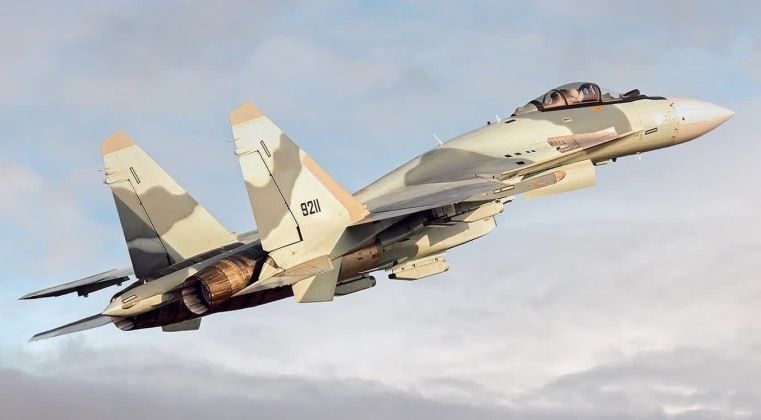
Although exports of Su-35 fighters have been credited with playing a major role in allowing the Russian defence sector to increase total export revenues in 2025, Russia’s future as a major fighter exporter has increasingly been brought to question due to a number of geopolitical and technological trends. For countries outside the Western sphere of influence, China’s defence sector has emerged by an increasingly distinct margin as the supplier offering the most sophisticated aircraft, with the J-20 and J-35 having clear performance advantages over the Su-57 particularly in terms of stealth and avionics. The J-10C meanwhile combines lower operational costs and a comfortable technological advantage over the rival MiG-29M and MiG-35. An annual report by the U.S. Department of Defense to Congress on Chinese military capabilities in December 2025 highlighted that China’s increasingly capable new fighters being offered for export appear poised to gain more dominant positions on global markets, specifically singling out the J-35 and J-10C.
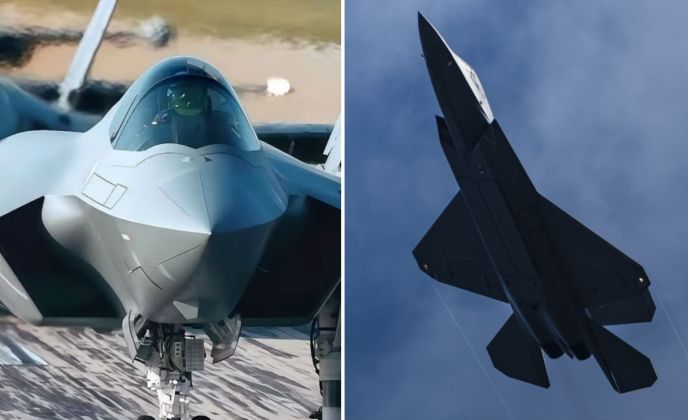
Despite struggling to compete against Chinese products, multiple factors could improve Russian defence exports in the following years. The Su-57 is currently the only fifth generation fighter to have gained foreign orders other than the American F-35, and as production further increases, and the aircraft’s capabilities continue to improve, it is expected to become the most successful product on foreign markets. The fact that the Chinese J-20 was never offered for export, and is estimated to be significantly more costly and complex to operate, is considered a likely factor in this. The Indian Defence Ministry is currently holding talks to procure in large numbers of Su-57s under a license production deal, which reportedly will include a minimum of 140 aircraft, but could reach well over 250 particularly as the country’s indigenous AMCA fifth generation fighter faces mounting delays.
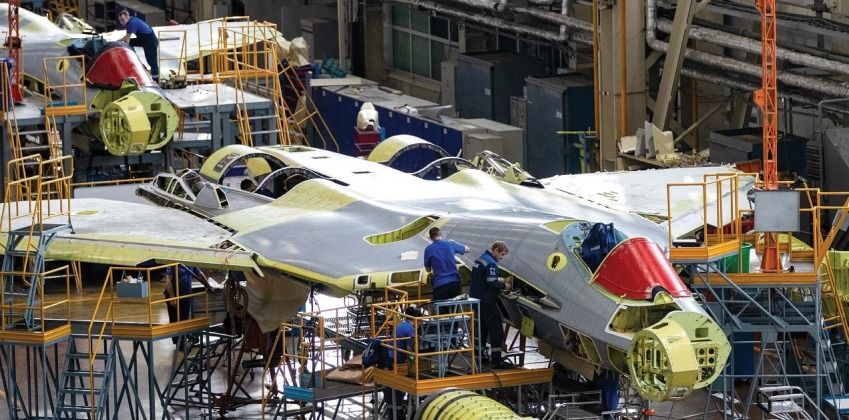
As China and the United States are both poised to begin fielding sixth generation fighters in the early and mid 2030s respectively, it is likely that continued reliance on ‘4+ generation’ fighters will not be seen as viable, and that acquiring a fifth generation fighter, particularly one with potential to be upgraded to a ‘5+ generation’ standard, will be seen as a minimum requirement, furthering the Su-57’s appeal. A primary constraint on Russian arms exports has been the consistent efforts by countries in the Western world to place political and economic pressure on potential clients, with the growing trend towards non-Western countries ‘sanctions proofing’ their economies potentially significantly increasing their ability to weather such threats. Russia’s economy remains far more heavily reliant on defence exports than those of China and the United States, meaning Western Bloc states are likely to seek to prioritise sustaining pressure to limit such exports.
