
Russia Arms Export Chief Claims Su-35 and Su-57 Fighters Gaining Major Interest From Export Clients: Are New Sales Expected?
Military Watch Magazine Editorial Staff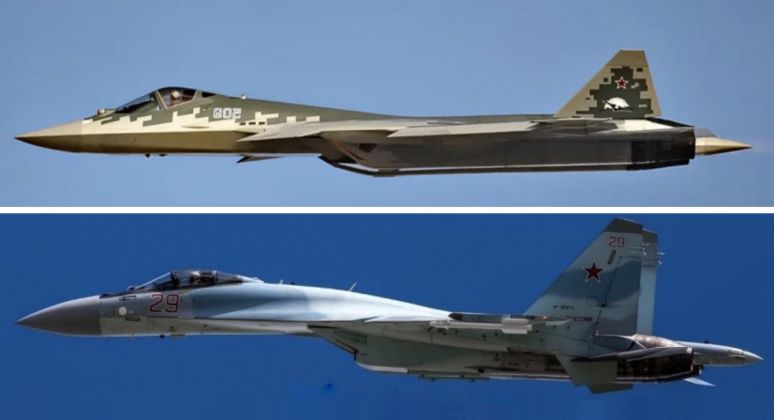
Russian Su-57 (top) and Su-35 Fighters
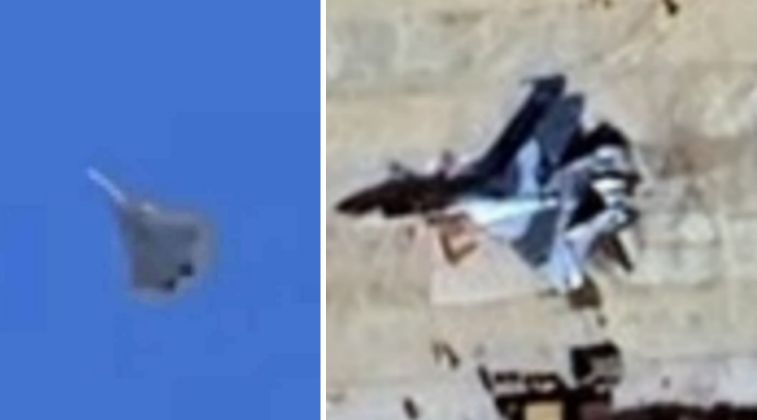
CEO of Russia’s arms export conglomerate Rosoboronexport Alexander Mikheev has claimed that the Su-57 and Su-35 fighters have continued to receive considerable interest among potential clients. This statement closely coincided with the release of the first footage showing the Su-57 in service with a foreign operator, namely the Algerian Air Force, after the new fifth generation aircraft was confirmed in November 2024 to have been brought into service. Mikheev observed:
"Our partners are interested in the latest high-tech models that meet the latest global market trends. Naturally, the greatest interest is generated by products that have been tested in combat conditions. Leaders in their segments include the Su-57E and Su-35 fighter jets, which have gained combat experience, the Ka-52E combat reconnaissance and attack helicopter, the T-90MS tank, the Sarma and Tornado MLRS, the TOS-1A and TOS-2 Tosochka heavy flamethrower systems, the Tigr and Typhoon armoured vehicles, [and] the S-400.”
Mikheev added that the Viking, Tor, Pantsir, Verba and Igla-S air defence systems have also gained considerable interest from prospective clients.
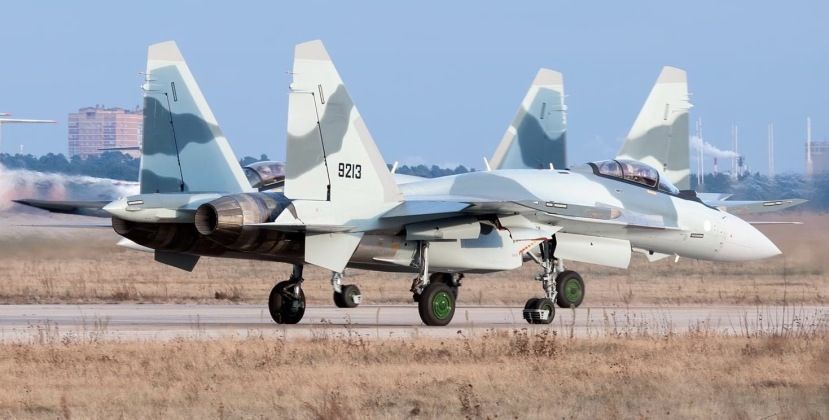
Exports of Su-35 fighters have been credited with allowing the Russian defence sector to reverse the trend that began in 2022 towards a yearly decline in exports, with three new foreign clients for the aircraft having bee confirmed that year. In February 2025 Russia began unexpected deliveries of the Su-35 to Algeria, which is estimated to have procured 18 of the fighters under a deal valued at approximately $1.5 billion. Leaked Russian government documents subsequently showed that 48 Su-35 fighters had been ordered to equip the Iranian Air Force, and six more for the Ethiopian Air Force. This has marked a major breakthrough for the program, and brought total exports to 96 fighters, up from just 24 before the beginning of the year.
The future of the Su-35 program beyond sales to its four existing clients remains uncertain, and while the aircraft capabilities have continue to be improved, potential clients have consistently been threatened with Western economic sanctions and other forms of pressure. Both Indonesia and Egypt cancelled plans to procure Su-35s due to such threats, despite both already having signed contracts to do so. Both Ethiopia and Iran are considered likely potential clients for further Su-35s, although Algeria is expected to focus funding on Su-57 procurements and on potential modernisation of its Su-30MKA fleet. A potential major breakthrough for the Russian fighter aviation industry may come from a Su-57 export deal to India, with talks regarding a license production deal for at least 140 aircraft recently confirmed to have reached advanced technical stages. The Indian Defence Ministry is reportedly considering the joint development of a heavily customised variant to meet its requirements.
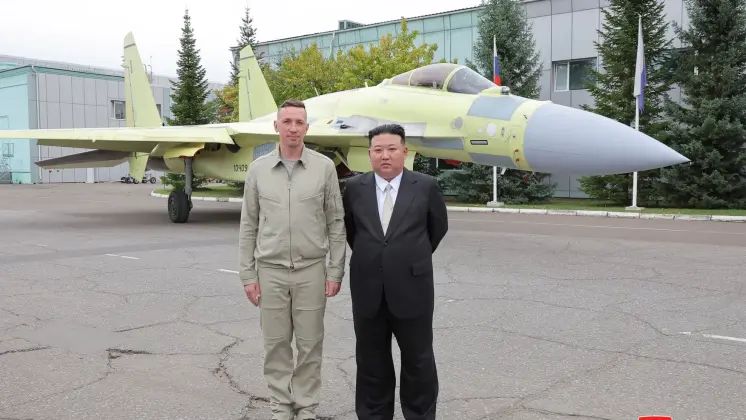
Speaking at the Innoprom exhibition in Saudi Arabia, Russian Industry and Trade Minister Anton Alikhanov recently announced that contracts have already been signed in the Middle East region for the export of the Su-57, fuelling speculation that Iran may be the client in question. While threats of Western sanctions and other forms of pressure have proven capable of significantly constraining the market share of Russian fighter aircraft, growing numbers of countries have succeeded in ‘sanctions proofing’ their economies, with Indonesia being a leading example, which could potentially widen the pool of prospective clients. The Su-57 has gained interest from a significant number of potential clients, with Vietnam, Kazakhstan and North Korea considered among the most likely buyers. Russia’s imports of tens of billions of dollars’ worth of North Korean armaments has fuelled speculation that the fighters may be offered to cover the costs of some of these imports, while at the same time strengthens the air defences of a key strategic partner.
