
U.S. Considers Economic Warfare Measures Against Algeria Over Su-57 Fighter Procurements
Military Watch Magazine Editorial Staff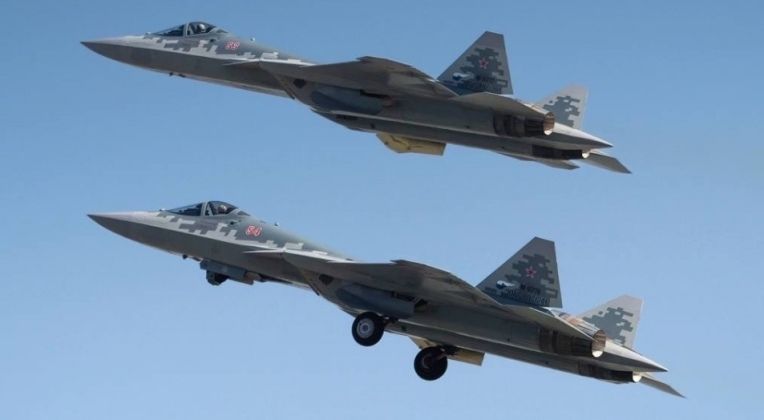
Su-57 Fighters From Early Production Batches in Russian Aerospace Forces Service
Head of the United States Department of State’s Bureau of Near Eastern Affairs Robert Palladino has indicated that Washington may initiate economic warfare efforts against Algeria, as part of a broader policy of placing sanctions on any major clients for Russian military equipment. "We also have seen those media reports, and they're concerning," he told the Senate Foreign Affairs Committee regarding reported procurements of high value Russian armaments by the Russian Defence Ministry. “The Department of State is committed to upholding the Countering America's Adversaries through Sanctions Act [CAATSA], and transactions like those that you have described may trigger that determination,” he added, elaborating: "We use the leverage that we have, often in private, to advance our interests and stop behaviour which is not acceptable.” He noted that he may hold a more detailed discussion on the subject with senators behind closed doors.
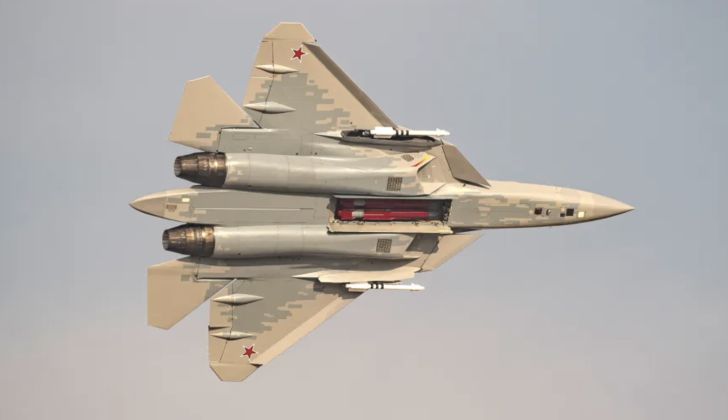
Algeria has long been a leading client for Russian armaments, surpassed only by India in its orders, and reportedly signed a major deal to receive $7 billion worth of new Russian armaments sometime in 2021. This was confirmed on September 15 the following year in a report from the office of U.S. Senator Marco Rubio calling for American economic sanctions on the African state. Although countries across the Western world have for decades placed pressure on countries not to procure Russian armaments, the signing into law of the Countering American Adversaries Through Sanctions Act (CAATSA) in the United States in 2017 formalised the obligation for Washington to sanction on any major client for Russian armaments.
Multiple potential clients for high value Russian armaments are reported to have been deterred from going ahead with major procurement deals due to threats of Western sanctions, while both Indonesia and Egypt cancelled plans to procure Su-35 fighters despite already having signed contracts to do so. Algeria has remained one of the few states which has been willing to ignore such threats. In February 2025 Russia began deliveries of the Su-35 to the North African state, affirming unexpected reports that had first emerged in November 2024 that procurements of the aircraft were planned. The made Algeria the second foreign client to receive the Su-35. It was subsequently confirmed in November 2025 that Algeria had operationalised the Su-57, with the first footage showing the fifth generation fighter in service having subsequently emerged on February 6, 2026.
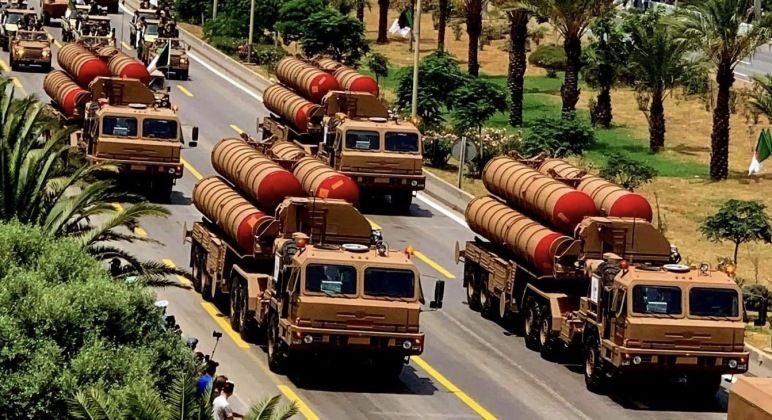
The United States previously offered a waiver to India over its purchase of Russian S-400 long range air defence systems, and appears to have ignored Algeria’s own procurements of the same systems. Nevertheless, India was threatened specifically over possible procurements of Su-35 and Su-57 fighters, the latter which it is currently holding talks to procure in large numbers, with Algeria’s receipt of both of these fighter types fuelling demands in the Western world for some kind of attack on its economy, even if symbolic to set an example to future potential Russian defence clients. The fact that Algeria is expected to receive further high value Russian equipment, including Su-34M strike fighters, in 2026, is a expected to further strengthen such calls.
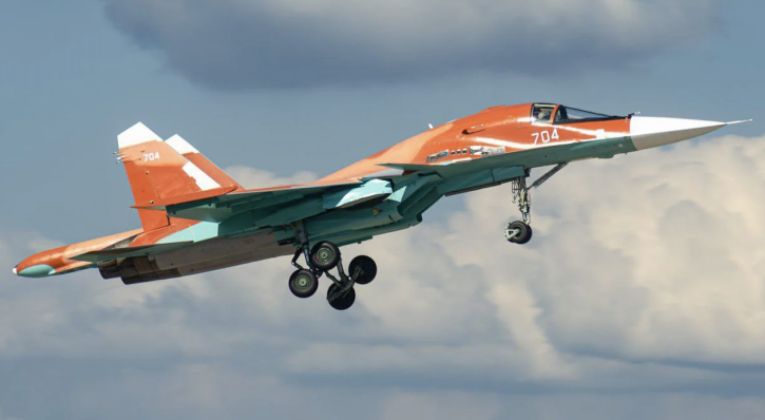
A factor in Algeria’s favour which may be used to argue against sanctions is that it has reduced its reliance on Russian armaments considerably, and increasingly begun to procure Chinese alternatives which often offer more advanced performances. The Chinese VT-4 main battle tank is reported to have recently been evaluated to replace Soviet-origin tanks, while the HQ-9 long range air defence system and various drone, cruise missile and electronic warfare systems have all been purchased, as have Chinese warships such as the Type 056 class corvette. While the future of U.S.-Algerian relations remains uncertain, the possibility of a deterioration in ties due to economic warfare efforts cannot be ruled out, particularly at a time when multiple European states which have been particularly hostile to Algiers are reported to be lobbying Washington to escalate against the country.
