
Reported Algerian Su-35 Order Raises Questions Regarding its Fighter Fleet’s Future
Military Watch Magazine Editorial Staff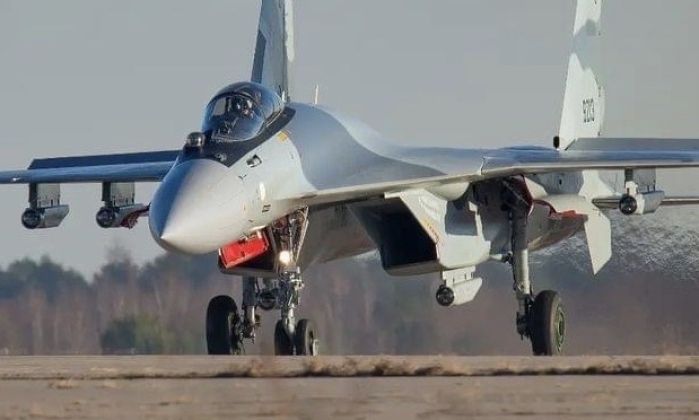
Su-35 Built For Export to Egypt
A number of reports from Algerian sources have indicated that the Algerian Air Force is set to begin receiving Russian Su-35 fighter aircraft, which would make the country the third operator of the class after China and Russia. The African state has long been the second largest client for Russian armaments after India, despite the success of Chinese systems and gaining a growing market share. The Su-35s in question are reportedly the two dozen or so models originally built for the Egyptian Air Force to satisfy an order placed in 2018, before Cairo pulled out of the deal due to Western economic warfare threats. The fighters were subsequently expected to be supplied to Iran as part of a deal exchanging them for Iranian ballistic missiles and drones, although unconfirmed report indicated that the deal has collapsed as the Middle Eastern country continues to focus in investments on assets with asymmetric value such as ground based air defence systems. Algeria was previously not expected to acquire Su-35s, with the next fighter class expected to be introduced into its fleet being the more advanced and far more capable fifth generation Su-57 Felon.
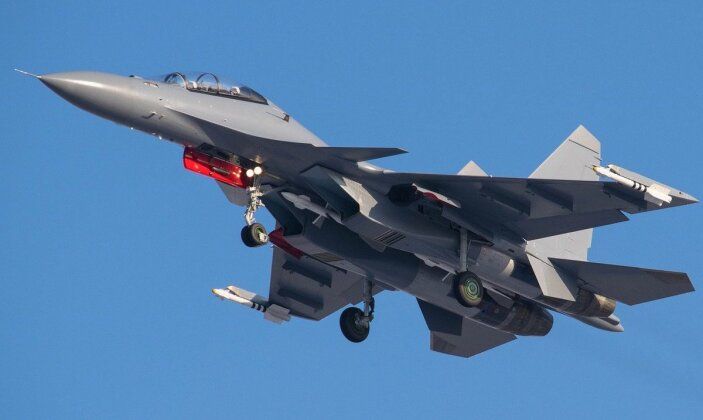
Beyond the Su-57’s superiority, a key factor that was thought to be dissuading Algeria from acquiring the Su-35 was that the backbone of its fleet was already formed by a closely related fighter the Su-30MKA. Both are considered heavily enhanced ‘4+ generation’ derivatives of the Soviet Su-27 Flanker fourth generation fighter, which when it entered service in 1984 was generally considered the most capable in the world in terms of air to air performance in its time. Over 70 Su-30MKAs form the backbone of the fleet today, and integrate technologies from the cancelled Su-27M and Su-37 air superiority fighters including thrust vectoring engines for extreme manoeuvrability and a N011M phased array radar. This made the fighters among the world’s most formidable at the time when they were first ordered in 2006, with Algeria being several years ahead of any other African state, or any Arab state with the exception of the United Arab Emirates, to field fighters with phased array radars. While the Su-35 is more capable than the Su-30MKA, most notably due to its superior engines and radar and secondary wing root AESA radars, Russia has offered Su-30 clients the option to enhance their aircraft with the same AL-41F-1S engines and Irbis-E radar from the Su-35 for several years. Introducing a small number of Su-35s alongside the Su-30MKA could complicate maintenance requirements for the Algerian fleet, while introducing no revolutionary new capabilities.
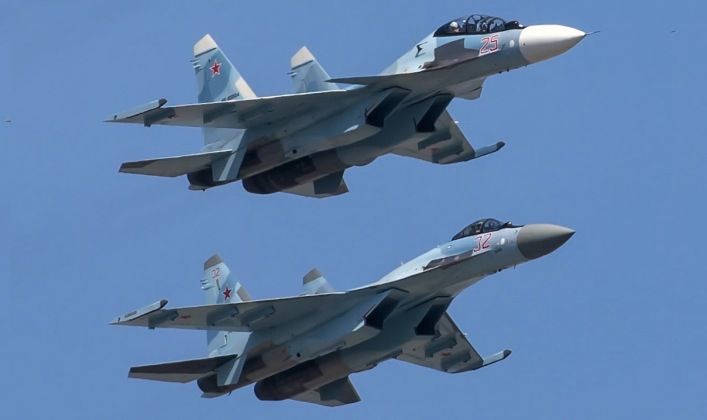
Should reports of Algerian orders for the Su-35 be confirmed, there are a number of possible explanations for the deal. One significant possibility is that the country has leased the fighters until Su-57s can be delivered, potentially due to delays in the production of the next generation aircraft or because the Russian Defence Ministry has sought to expedite its own acquisitions. Another possibility is that the Algerian Air Force is intending to modernise its Su-30 fleet with AL-41F-1S engines, which would reduce operational costs and improve range and flight performance, with this providing commonality with the Su-35’s own powerplants. Another significant possibility is that Russia has sought to export the fighters at all costs after cancelled deals with Egypt and Iran and an indefinitely frozen deal with Indonesia, and has offered the aircraft on highly favourable terms. Production costs for Russian fighter aircraft are notably very low, with the cost of producing a Su-35 having been quoted as low as $18 million depending on exchange rates. This figure is still over 50 percent more than a Su-30SM’s cost but less than half the cost of a Su-57. Russia thus retains significant room to supply the fighters at well below the prices offered to Egypt and China of over $83 million including spare parts, training and weaponry.
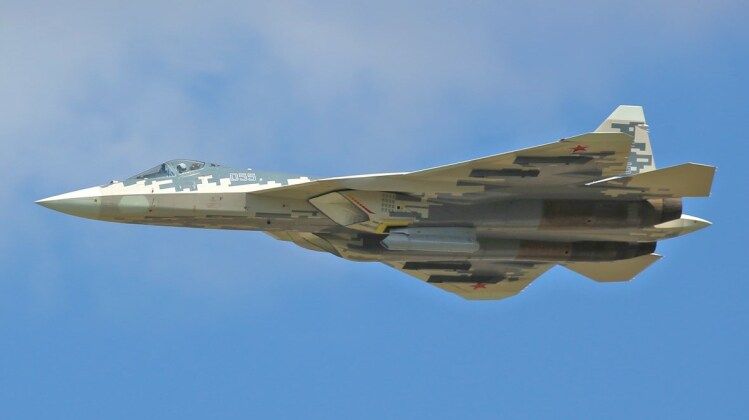
Supplying Su-35s at a below market price could provide a means for Russia to maintain by far its most important defence relationship other than China and India, and compensate for its other shortcomings as a supplier including its inability to meet orders for tanks and other ground forces equipment due to the requirements of the war in Ukraine. For the Algerian Air Force, acquiring Su-35s at below market prices, and fielding the new aircraft with relatively low operational costs and long service lives, thus may have presented an attractive offer, despite the disadvantages that come with diversifying the fleet to field Su-30s, Su-35s and expected deliveries of Su-57s alongside each other. Nevertheless, it remains uncertain how Su-35s would fit into the Algerian fleet. Some local sources have stated that the aircraft could replace some of its early Su-30MKAs, although this appears questionable as the fighters are relatively new. The county’s oldest Su-30MKAs are still significantly newer than China and India’s own Su-30s, with neither country considered close to retiring their aircraft despite China in particular using its fleet very intensively. Another possibility is that the fighters could replace Algeria’s recently retired MiG-25 interceptors, although Su-57s were expected to take over this role. A further option is that they could replace some of the country’s Su-24M strike fighters - the oldest fighters in the fleet - although as an air superiority fighter the Su-35 is far from ideal for such a role. Should reports of Su-35 acquisitions be correct, the future of the Algerian fighter fleet would appear highly uncertain.
