
Russia's Su-37 'Terminator' Next Generation Fighter Marks 25 Years Since First Flight
Military Watch Magazine Editorial Staff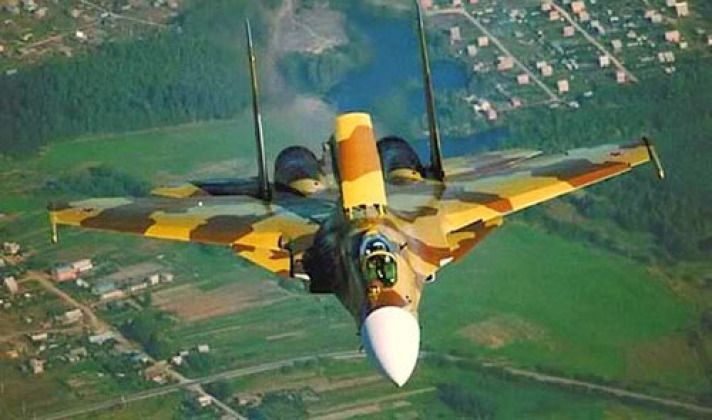
Su-37
April 2, 2021, marks 25 years since the first flight of Russia’s Su-37 ‘Terminator’ heavyweight air superiority fighter - which was developed as part of an ambitious program to heavily enhance the Su-27 Flanker fourth generation airframe for next generation combat. The Soviet Union had inducted the Su-27 into service from 1985, and the Su-37 prototype was intended to serve as a technology demonstrator for a range of new features which would facilitate the development of the ‘Su-27M’ - the ‘M’ used to denote enhanced versions of various Russian weapons systems. The Su-27M would eventually enter service, albeit several years behind schedule due to the post-Soviet deterioration of the Russian defence sector, with the aircraft joining the Russian Air Force in 2014 and re-designated as the Su-35. The first flight of the Su-37 was notable because it came at a time when ambitious post-Soviet military aviation programs were being cancelled in rapid succession. The production of several classes of combat jets were terminated in 1994, a year of political and economic crisis, with the more ambitious MiG-31M Foxhound heavy interceptor cancelled at an advanced prototype stage and the MiG 1.44 stealth fighter delayed and later cancelled. The Su-27M was the least ambitious and least costly of these programs, and as such could still be pursued. The fact that the Su-27 itself, and its successor the Su-30, were popular on export markets is thought to have been a major factor influencing the decision to continue with the Su-27M program. The next generation fighter was expected to be much less costly than the MiG-31M or MiG 1.44 would have been - providing a greater opportunity for export sales and for domestic acquisition despite the cancelled aircraft having in many ways been superior.
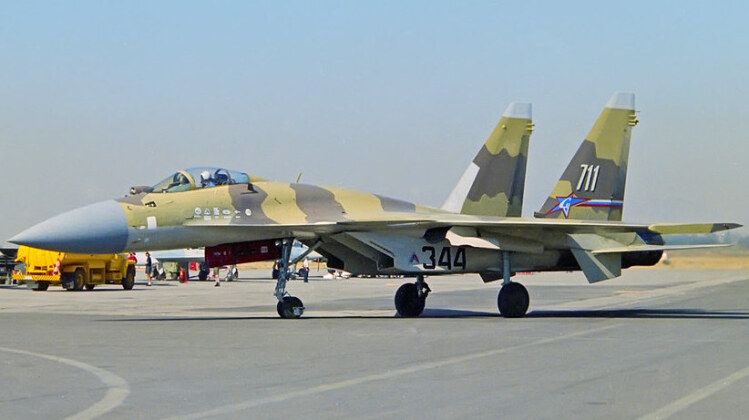
The most notably feature of the Su-37 and Su-27M was their three dimensional thrust vectoring engines - a technology which had been under development in the Soviet Union from the early 1980s. This seriously enhanced their manoeuvrability, and is currently used on just three production aircraft in the world including the Su-35, Su-57 and China’s J-10C. Russia had also been a pioneer in less ambitious two dimensional thrust vectoring engines, which the Su-30 was the world’s first operational aircraft to integrate, and also improved manoeuvrability substantially. The Su-37 airframe was competed early in 1995 and delivered to the Sukhoi design bureau's experimental plant near Moscow for installation of thrust vectoring nozzles. Due to a slowing down of engine development after the Soviet collapse, plans to equip the fighter with powerful new AL-37FU engines were cancelled - and the less powerful AL-31FP engine was used. This was the same as the AL-31F engine used on the Su-27, but had thrust vectoring nozzles to enhance it. Another notable feature of the aircraft was its use of a digital rather than an analogue fly-by-wire flight control system, which was directly linked to its thrust-vectoring control system. This allowed it to manoeuvre better at high angles of attack and at low speeds.
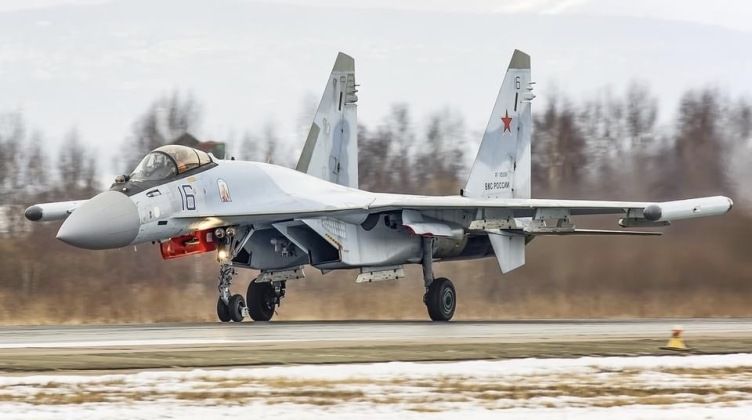
The Su-37 had a more potent sensor suite than any other Russian fighter - although it was still far less powerful than that used by the MiG-31M interceptor. The N011M Bars pulse doppler phased array radar provided the ability to track twenty aerial targets simultaneously and to direct missiles towards eight of them. By contrast the Su-27M's N011 could only track fifteen targets and engage six of them. The new radar also had a simultaneous air-to-air and air-to-ground capability - which compared highly favourably with older Flanker models which had only very limited air to ground capabilities. With a lack of support from the Russian government, Sukhoi notably financed the Su-37’s development with export revenues from Su-27 sales to China and Vietnam - an indication of the highly export reliant state of the Russian defence sector at the time. The Su-37 program ultimately helped to facilitate the development of the Su-35 by allowing Sukhoi to refine many key technologies, and although it was initially speculated that the ‘Terminator’ would itself enter serial production and active service only one aircraft was ever built. The fighter crashed in December 2002 due to structural failure, with the Su-35 later using more advanced composite materials which made it more durable and less likely to experience similar issues when making extreme manoeuvres. Although little known today, the Su-37 was an important and prolific aircraft in the immediate post-Soviet years which symbolised continued improvement in Russia’s military aviation sector at a time when the large majority of projects were being cancelled. Its reaching a stage where it could be deemed flyable was largely a result of the immense momentum the Soviet defence sector had had before the collapse and the vast technological base which post-Soviet Russia inherited.
