
President Trump ‘Would Have No Problem’ Selling F-35 Fighters to Arab Emirates - Implications of a New Arms Deal
Military Watch Magazine Editorial Staff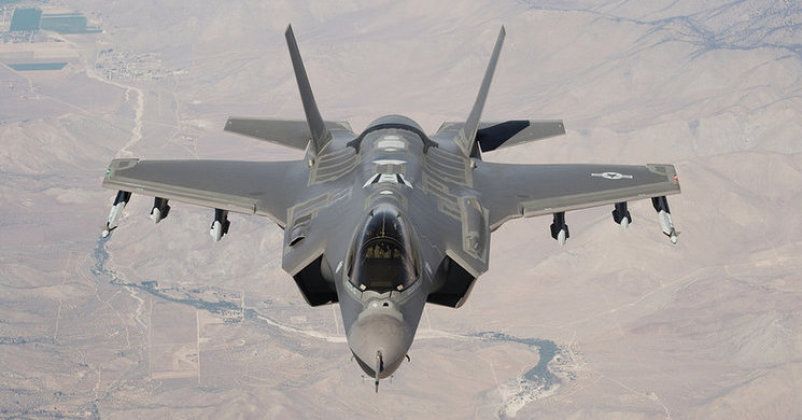
F-35 Fifth Generation Stealth Fighter
U.S. President Donald Trump has stated that he would have no issue with selling high end American weapons systems, including new F-35A stealth fighters, to the United Arab Emirates - a leading Western defence client in the Persian Gulf region. Sales to other Arab states were also a possibility. The President stated to this effect: "They're very wealthy countries for the most part. I personally would have no problem with it. Some people do, they say... maybe they go to war,” later clarifying that he had been referring to the F-35. The U.S. previously restricted F-35 sales to only a small number of countries outside the NATO alliance, namely Japan, Singapore, Australia, South Korea and Israel, but under the new administration the possibility for expanded sales to more potential clients has arisen. Sales to Arab states have seen stringent opposition in Israel, but are likely to be supported by the American defence sector which stands to sign multiple lucrative contracts if restrictions are eased. President Trump’s administration has repeatedly emphasised the importance of increasing American arms exports to support the defence sector - drawing Israel’s ire in the past by refusing it permission to re-export second hand F-16 fighter jets in order to better facilitate sales of newly built aircraft from the U.S.
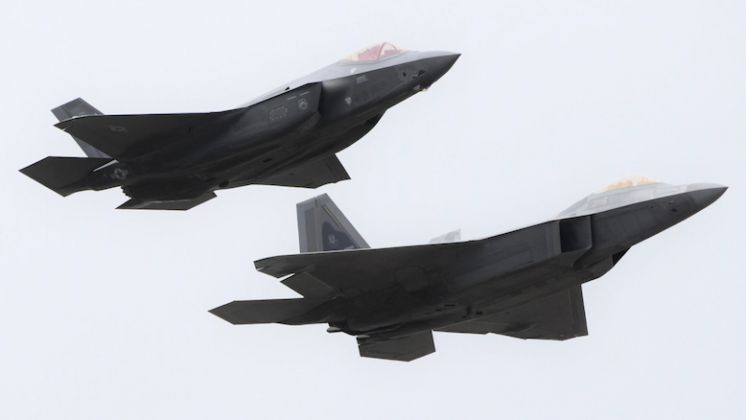
The United Arab Emirates has long shown a strong interest in the F-35, most likely to complement its existing fleet of F-16E fighter jets and replace its ageing Mirage 2000 aircraft. The F-35s could potentially be sold in downgraded form, much as the U.S. had planned to do for Turkey before ending the deal, in order to assuage Israeli concerns and at the same time appease the defence sector. The risk of the F-35 ever being used against American allies without U.S. approval is negligible, with the aircraft not only having been found to survey their operators in the past and send data back to America - but also heavily reliant on American codes and support to operate effectively. Offering the F-35 to the UAE would also reduce the possibility that the country would acquire Russian fighter jets, with Abu Dhabi having shown an interest in Russian Su-35 and Su-57 platforms. Other states which could potentially be offered the F-35 after the UAE include Indonesia, Oman and Saudi Arabia - with widespread calls in the U.S. to market the jets in India as well.
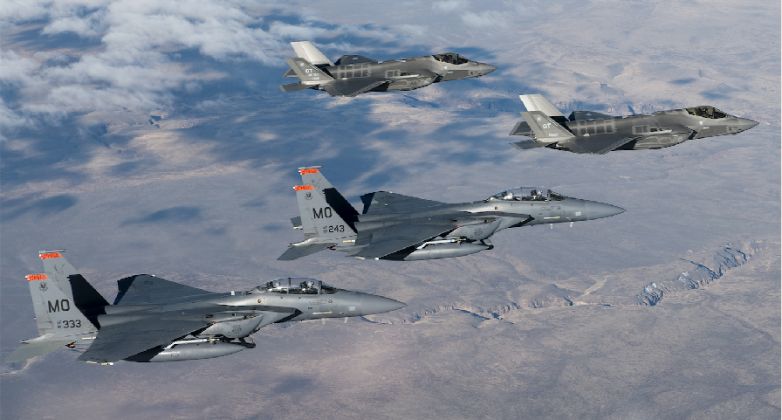
The U.S. has notably previously sold very high end aircraft to Arab states - namely Saudi Arabia and Qatar which respectively acquired the F-15SA and F-15QA fighters which integrated many of the same technologies as the F-35. These aircraft have comparable levels of situational awareness and electronic attack capabilities to the F-35, and although they lack stealth they can carry much larger weapons payloads, have much longer ranges, can climb and manoeuvre better and can fly higher. The F-35 has become something of a symbolic issue for the prestige of both the UAE and Israel as two leading American allies in the region. The stealthy new fighter was developed as a lighter and cheaper counterpart to the F-22 Raptor platform which was previously denied to Israel, and the U.S. itself is currently developing much more capable aircraft under sixth generation programs - none of which are expected to be offered to either Israel or the Arab states. As a direct successor to the F-16 fighter, the F-35 was designed from the outset to be widely exported and is not as expensive or high end as other American fighters meaning the risk of exporting it to the UAE remains relatively small. The benefits, however, are considerably, not only for economic reasons, but also by denying Russia access to a key market and strengthening a key Western client to counter potential adversaries such as Iran.
