
What Happened to the Joint Russia-UAE Next Generation Stealth Fighter Program?
Military Watch Magazine Editorial Staff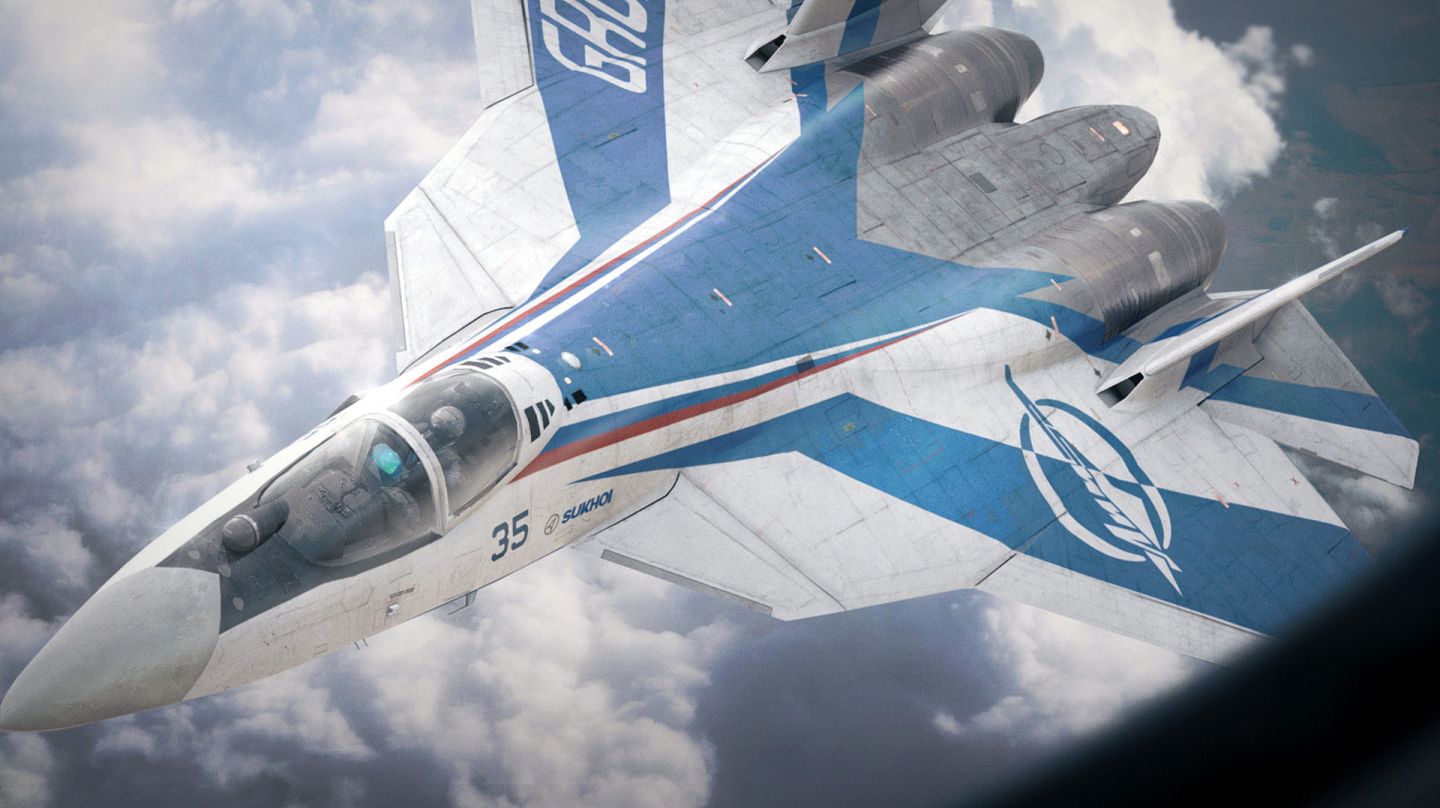
Su-57 Next Generation Air Superiority Fighter - artwork
Artwork by FIGHTERMAN
In February 2017 Russia and the United Arab Emirates (UAE) announced the initiation of a program to jointly develop a next generation fighter jet for the UAE Air Force. The fighter would integrate next generation stealth capabilities and would enter service after 2025. The announcement was made at the IDEX 2017 arms trade show in Abu Dhabi, where Russia has frequently displayed its military hardware. While the United Arab Emirates has had a longstanding interest in acquiring Russian fighter jets, in particular the Su-27 Flanker and its advanced derivatives, the country’s close defence ties with the Western Bloc have prevented such an acquisition in the past - with Abu Dhabi coming under considerable pressure to support European and American defence manufacturers despite the attractiveness of Russian platforms. The UAE Air Force currently deploys six fighter squadrons, three each of the ageing Mirage 2000 and advanced F-16E Fighting Falcon. The F-16E is a heavily enhanced version of the original Fighting Falcon with a greater use of composite materials on its airframe, higher thrust/weight ratio and state of the art avionics and electronic warfare systems. The platform integrates an AN/APG-80 AESA radar and more powerful General Electric F110-GE-132 engine - both systems developed exclusively for the Fighting Falcon. Alongside the Japanese F-2, it is the most advanced variant of the F-16 to date considerably surpassing the capabilities of the F-16V.
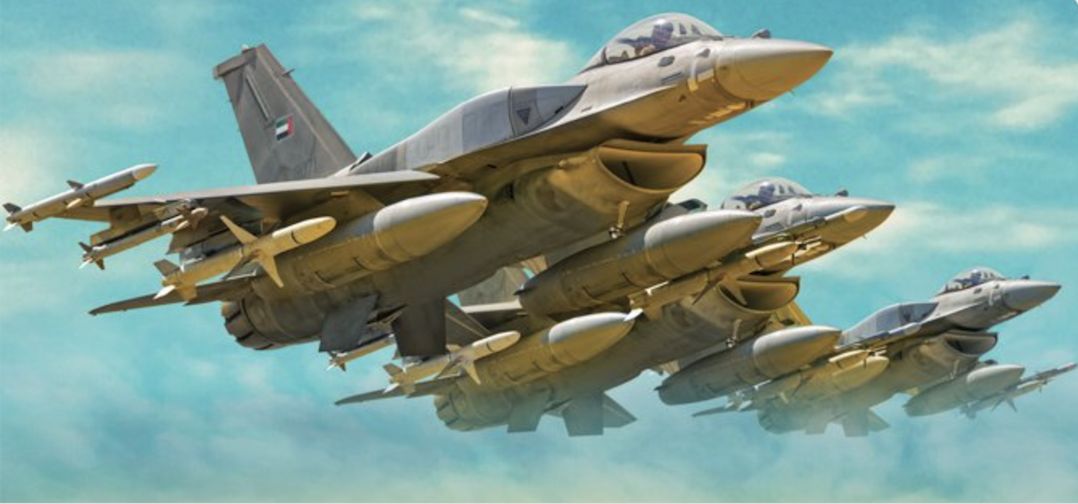
While the F-16E is a highly formable lightweight fighter, a number of advanced capabilities of next generation Russian aircraft remain beyond the UAE Air Force’s current capabilities. Foremost among these are a high manoeuvrability airframe comparable to Russian fourth and fifth generation jets, thrust vectoring engines, a high weapons payload and access to radar evading stealth capabilities and hypersonic missiles. While the fighter developed under the joint program is confirmed to be stealthy, and will integrate many of these technologies, the weight range of the platform and on what airframe it will be based remains unknown. Three major theories have emerged regarding the nature of the new fighter. The first is that it will be a medium or heavy weight fighter based on the MiG-35 or Su-35 ‘4++ generation’ fighters - but modified to integrate a radar evading stealth profile in much the same way as Boeing modified the F-15E into the stealthy F-15SE Silent Eagle for export. The MiG-35 and Su-35 fighters integrate next generation technologies surpassing the fifth generation in many fields, but are classified as ‘4++ generation’ due only to their lack of stealth capabilities. The second theory is that Russia will provide an agreement for the joint manufacture of the Su-57 fifth generation air superiority fighter - an export variant of which is set to make its debut in the UAE in November 2019. Russia has previously made a similar offer to India, and provided that the UAE intends to order substantial quantities - likely two or more squadrons - such an arrangement could be made. This would provide the Gulf state with by far the most capable air superiority capabilities in the Middle East - with no other heavy weight combat jets in service or even planned by other states in the region. A UAE acquisition could potentially lead Saudi Arabia to follow suit in considering the fighter - with no next generation equivalent to the F-15C fourth generation air superiority fighters currently on offer from Western manufacturers. The Saudi F-15C fleet was acquired from the U.S. in the 1980s.
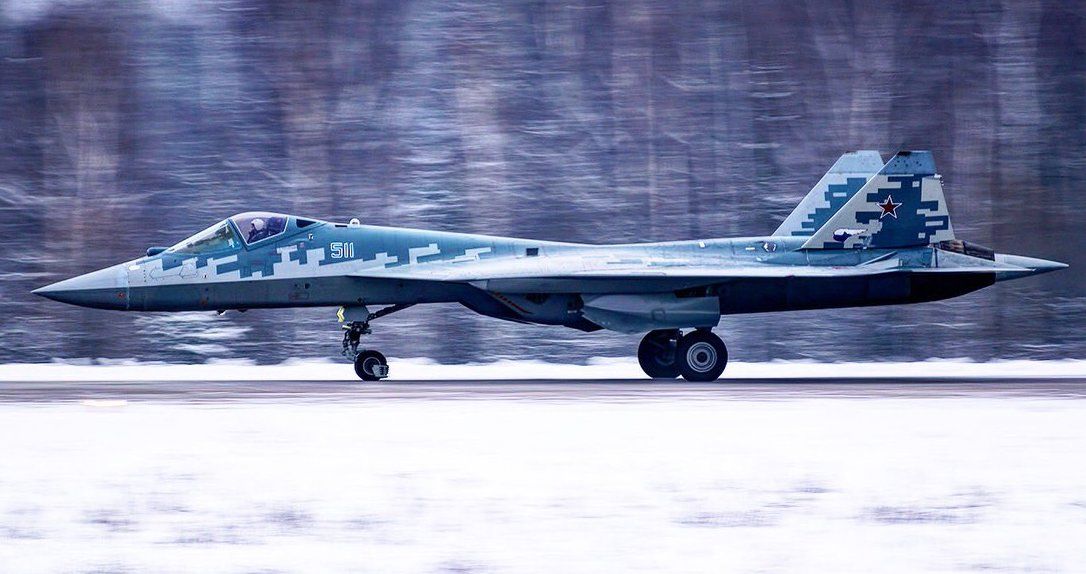
A third option is that the fighter marketed to the UAE would be an entirely new platform not directly derived from any existing airframe. This would explain the considerable time required to develop the aircraft, and would likely be a medium weight fifth generation platform with stealth capabilities developed as a lighter complement to the Su-57. Developing such a platform could potentially provide Russia with an attractive low cost fifth generation fighter for export to other countries - which could prove highly attractive to a number of export clients on four continents. Russia’s United Aircraft Corporation for its part has previously indicated that it is planning to develop such a fighter, and the fighter for the UAE could well be based on the Mikyoan Liogkiy Mnogofunktsionalniy Frontovoi Samolyet (LMFS) (Light Multi-Function Frontal Aircraft). The fighter has been rumoured to use a single engine configuration - a single Saturn izdeliye 30 - which was developed for the twin engine Su-57. Acquiring such a fighter would be in line with the UAE’s strong preference for lighter single engine aircraft, and the platform would integrate advanced next generation Russian technologies including AESA radars, three dimensional thrust vectoring engines, Directional Infrared Countermeasures, and advanced long ranged missiles such as the APAA guided K-77 and hypersonic R-37M air to air missiles. Should the joint Russian-UAE fighter program succeed, it could see Russia take a far greater share of the Middle Eastern arms market. This would follow on from the growth in interest in Russian weapons systems as a result of their performance against jihadist insurgents in Syria. For the UAE, the success of the program could provide it with very likely the most capable fighter aircraft in the Middle East, and would be a major enhancement to its domestic military aviation industry which it has invested heavily in building up.
