
North Korea Lays Out Plans For Future of its Fast Expanding Blue Water Destroyer Program
Military Watch Magazine Editorial Staff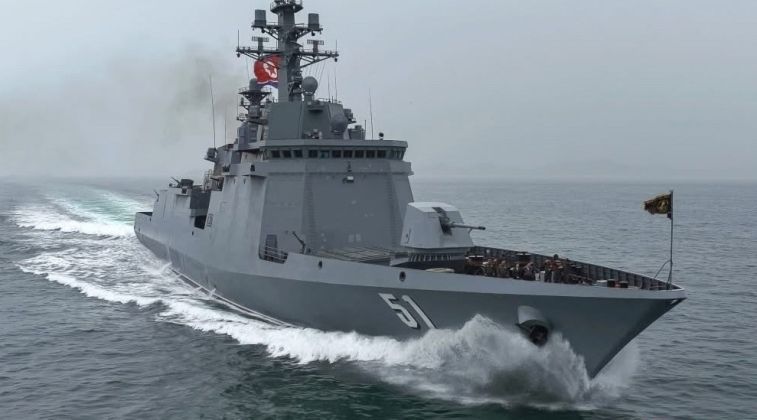
North Korean Destroyer Choe Hyon
The future of North Korea’s destroyer program intended to revolutionise the Korean People’s Liberation Army Navy’s combat capabilities has been elaborated on by the chairman of the ruling Korean Workers’ Party, Kim Jong Un, after he travelled on the country’s first destroyer, the Choe Hyon, during operations in the Yellow Sea. The operations saw the warship operate approximately 220 kilometres from the country’s coast, demonstrating growing confidence in the ability to conduct medium range operations since the Choe Hyon was launched in April 2025. A press release from the state Korean Central News Agency indicated that the ship is scheduled to enter service in June, with the second ship of the class, the Kang Kon, expected to enter service before September.
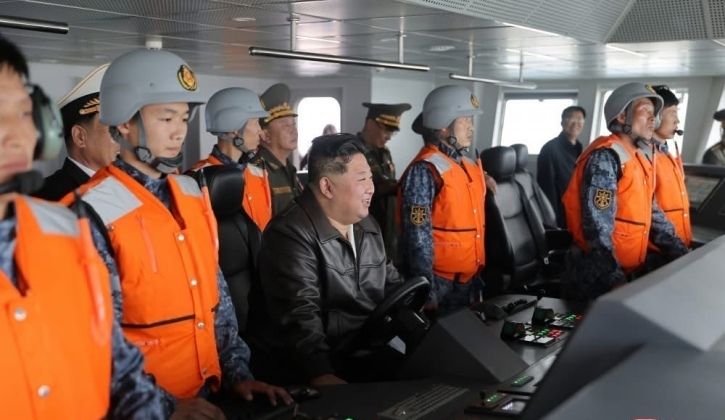
Preceding a meeting of shipbuilding officials, Chairman Kim received new reports on the design changes to the third and fourth Choe Hyon class destroyers, which are scheduled to be launched in 2026. The report elaborated on changes made to the configuration of the ships’ weapons systems compared to the first two ships of the class. The chairman emphasised the significance of the decision to revise shipbuilding plans, stating that this was of great strategic importance and would fundamentally update the Korean People's Army's strategic operational readiness, bringing about considerably changes in strengthening its war deterrence capabilities. The design changes were thought to allude to a decision announced earlier in the year to remove 127mm guns from future Choe Hyon class destroyers, replacing them with additional vertical launch cells for long range missiles.
Previously, Chairman Kim announced that shipborne high calibre guns should only be equipped on high-speed, mobile warships of under 3,000 tons, meaning they would be removed not only from the next Choe Hyon class ships, which displace approximately 5,000 tons, but also from the planned much larger 8,000 ton destroyers which are expected to begin production before 2030. The chairman’s statement that the design modification has “significant strategic importance” has fuelled speculation that their enlarged missile arsenals may see more space allocated to nuclear-tipped missiles. North Korean plans to equip its large planned destroyer fleet with nuclear weapons may serve as an indicator of the speed at which its nuclear arsenal has been expanding, with the production of fissile material assessed to have been expanded with the opening of multiple uranium-based facilities, supplementing output from the plutonium-based Yongbyon facility.

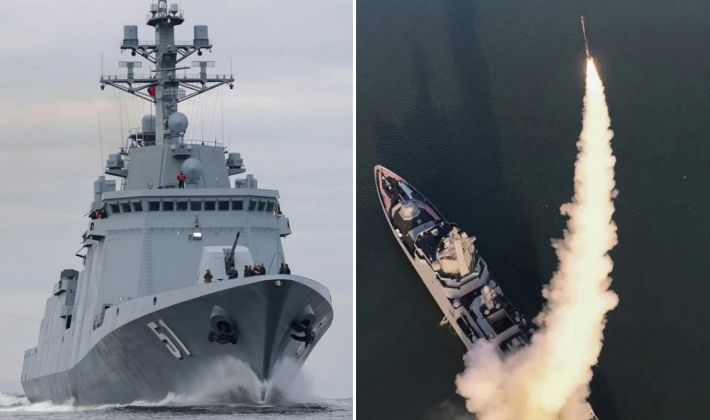
The Choe Hyon in early March conducted pre-commissioning trials that saw it carry out manoeuvrability and control tests and validate its combat systems, including live fire launches of at least four missiles from its large array of vertical launch cells. That month Chairman Kim announced that the Navy was on schedule to field 12 destroyers by the early 2030s, confirming a launch rate of two destroyers per year, and marking a major turning point for the Navy. With two Choe Hyon class destroyers launched in 2025, a sustaining of this rate would cement North Korea’s place as the world’s second largest destroyer producer, behind Chinese production of 6-10 destroyers, but ahead of U.S. production of 1.6 destroyers. A fleet of 12 destroyers, which is planned for 2032, would place the Korean People’s Army Navy ahead of India, which fields 11 destroyers, France which fields ten, Russia which fields nine, and the United Kingdom which fields six. For a country which fielded no ocean going surface combat ships before 2025, this will represent one of the most significant buildups in naval history.
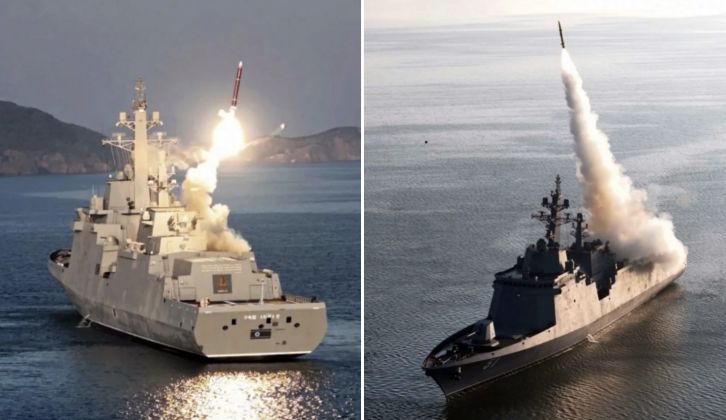
Choe Hyon class destroyers each integrate 74 vertical launch cells, compared to 96 on the U.S. Navy Alreigh Burke class, 80 on the Zumwalt class, 64 on the Chinese Type 052D class, and 64 on the Russian Udaloy class. The North Korean design is totally unrivalled in terms of missile carriage per ton of displacement. The ships’ firepower is greater than the number of missile cells alone would indicate, with 20 of their 74 cells being much larger and accommodating high diameter ballistic missiles. The destroyer program is widely speculated to have been heavily financed by North Korea’s tens of billions of dollars in defence-related exports to Russia, which have been critical to sustaining the Russian war effort against Ukraine and its NATO supporters. The program builds on major advances in cruise missile, ballistic missile, radar, and surface-to-air missile technologies, with the destroyers integrating navalised derivatives of multiple missile types that have long been deployed from ground-based launchers. The development and rapid production of cutting edge destroyers has been viewed as a considerable challenge in the United States, which remains officially in a state of war with North Korea.
