
North Korea’s New Destroyers Challenge U.S. Navy Arleigh Burke Class Ships’ Dominance
Military Watch Magazine Editorial Staff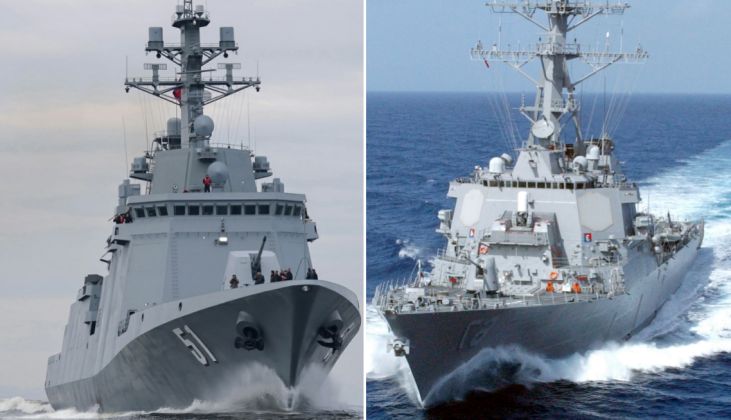
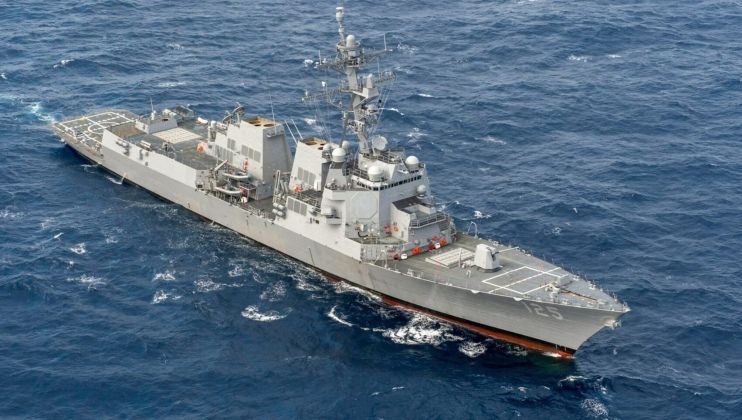
North Korean Choe Hyon Class (left) and U.S. Navy Arleigh Burke Class Destroyers
Following the unveiling of North Korea’s first ever class of destroyer, the Choe Hyon class, and after subsequent confirmation that the country’s shipyards will be launching destroyers at rates of two per year, significant questions have been raised regarding how the ships’ capabilities compare to those of U.S. Navy Alreigh Burke class destroyers. North Korea's destroyer program is scheduled to make it the world’s fifth largest operator of destroyers by 2033, overtaking, Russia, France, and the United Kingdom, and fielding ships that are in many respects much more capable than those fielded by the three countries. While French and British destroyers have very limited firepower, integrating just 48 vertical launch cells, and suffer fro an inability to launch long range cruise or ballistic missiles or perform ballistic missile defence, those of North Korea and the United States are much more versatile and better armed.
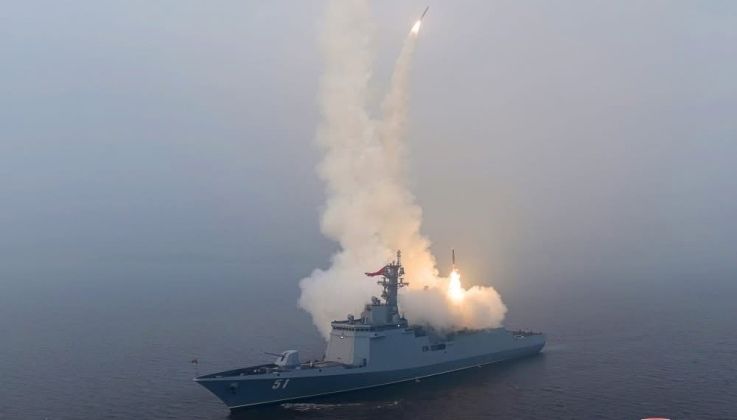
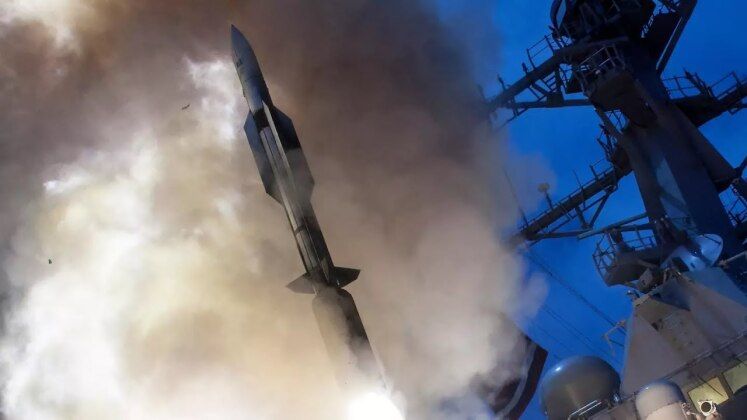
While North Korean destroyers have demonstrated highly advanced features, they are expected to remain more constrained than Arleigh Burke class ships in their anti-ballistic missile and long range ground attack capabilities, which are the primary roles for which the U.S. warships were designed. Arleigh Burke class destroyers integrate SM-2, SM-3, and SM-6 anti-ballistic missiles to provide a multi-layered defensive capability, with their fourth primary armament being the Tomahawk cruise missile. Choe Hyon class destroyers, by contrast, are thought to integrate a navalised derivative of the Pyongae-6 long range air defence system which is estimated to have a 200 kilometre engagement range, and is less specialised in missile defence, but also highly capable for anti-aircraft operations. While the SM-3 has a speed of over Mach 10, allowing it to engage faster missiles, the speeds of missiles carried by North Korean destroyers are unknown.
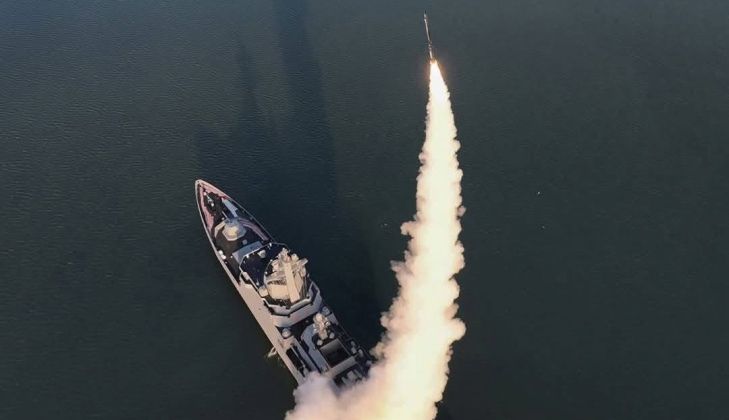
The latest variants of Arleigh Burke class destroyers are considerably larger than Choe Hyon class destroyers, at 9,600 tons, compared to around 5,000 tons. The discrepancy in firepower, however, is significantly smaller, with Arleigh Burke class ships each integrating 96 vertical launch cells, compared to 74 vertical launch cells on the Choe Hyon class, which makes the latter the most heavily armed warship class in terms of cells per ton of displacement. The discrepancy is significantly smaller still when considering that several of the Choe Hyon class’ cells are of a larger size to accommodate ballistic missiles, which are expected to be employed both for nuclear delivery and for anti-ship roles. Thus while all missiles designed for the Arleigh Burke class need to fit into the confines of a single launch cells size, North Korean destroyers can integrate missiles of two complementary sizes.
Arleigh Burke class destroyers do not integrate anti-ship missiles in their launch cells, and while the SM-6 is capable of being fired against warships, it is far from optimal for such roles with a small 64 kilogram warhead, an engagement range of just 450 kilometres, and a Mach 3.5 speed. This reflects the fact that the destroyers were designed primarily for missile defence and land attack roles, with the Tomahawk cruise missile being relied on for the latter role. Although an anti-ship variant of the Tomahawk is currently under development, the missile’s subsonic speed and lack of stealth capabilities remain major limitations.
Alongside its ballistic missile arsenal, the Choe Hyon class integrates multiple types of cruise missiles, including what appears to be a hypersonic cruise missile with a close resemblance to the Russian Zircon. This would provide an engagement range of close to 1,000 kilometres at Mach 9 speeds, making the Choe Hyon one of the world’s best equipped destroyers for anti-shipping roles. The ships have been developed to operate in seas and oceans that are dominated by larger numbers of heavier U.S. Navy destroyers, meaning anti-ship capabilities were from the outset expected to be a leading priority, in contrast to the Arleigh Burke class which was developed with a much lower emphasis on anti-shipping and a greater one on ballistic missile defence and land attack roles.
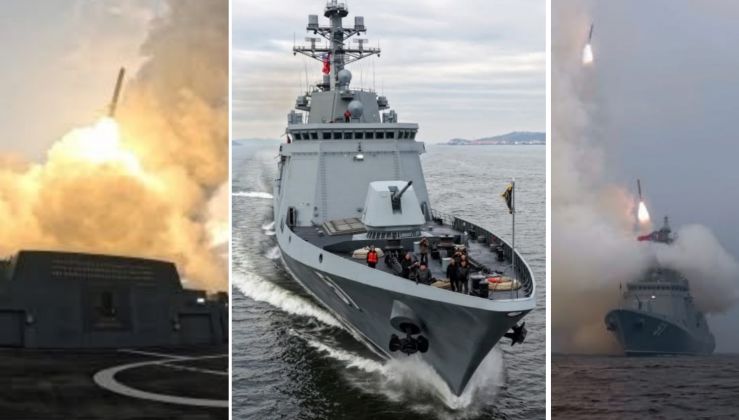
The Choe Hyon class destroyer program represents a landmark development for the Korean People’s Army Navy and for North Korea’s shipbuilding industry, providing an ocean going surface warship with capabilities that are in many respects world leading. The discrepancy in firepower between the ships and Arleigh Burke class destroyers are expected to be further narrowed as future ships of the former class are produced without main guns, and to accommodate more vertical launch cells, potentially bringing the number of cells to over 90. As a much newer type of ship, the Choe Hyon class also has a much sleeker design that appears better optimised to evade radar detection, contrasting with the distinctively Cold War era exterior of the Arleigh Burke class which began production in the 1980s. The Choe Hyon class’ development, and the rates at which the ships are expected to be built, are expected to cause considerable concerns for the U.S. and its strategic partners in the Pacific, eclipsing the Russian Navy in posing a secondary regional challenge to Western dominance in the Pacific after China.
