
New Footage Shows Russian Forces Delivering Nuclear Warheads For Fitting on Belarusian Missiles
Military Watch Magazine Editorial Staff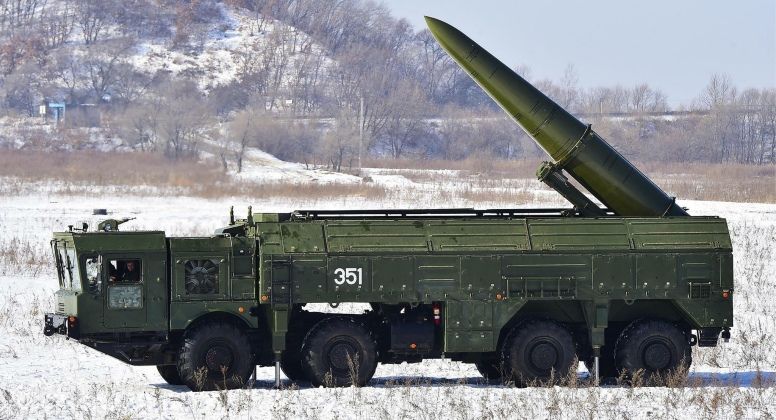
Ballistic Missile Launcher From Iskander-M System
Footage released by the Russian Defence Ministry has shown the delivery of Russian nuclear warheads to equip Belarusian Armed Forces Iskander-M tactical ballistic missile systems, as part of the nuclear-sharing arrangement between the two countries that has been in effect since 2023. State media reported that several Iskander systems have been stationed in Belarus, while “special munitions,” the Russian military term for nuclear payloads, are stored separately at a secure facility. Much like the nuclear sharing agreements which the United States maintains with Belgium, the Netherlands, Germany, Italy, Turkey and the United Kingdom, this agreement stipulates that in the event of a major war, the sharing partner will be provided access to the warheads stored on its territory. Such agreements have been highly controversial, and likened to a loophole in the nuclear proliferation regime.
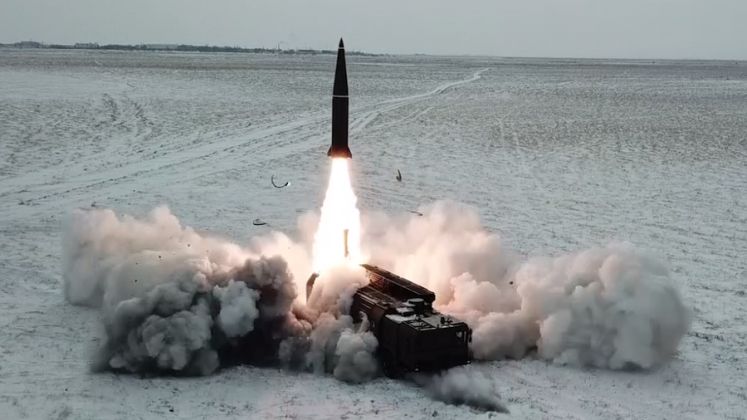
Alongside the deliveries of warheads to Belarusian Iskander-M units, separate footage showed the “delivery of nuclear munitions to field storage locations at the position of a missile brigade of the Republic of Belarus,” namely to Russian Armed Forces Iskander-K cruise missile units, according to the Defence Ministry. Exercises included both nighttime and daytime handling of a warhead. Personnel receiving the delivery proceeded to “discreetly move to an area designated for test launches.” The exercises have placed an emphasis on the interoperability of Belarusian and Russian nuclear forces for launching strikes. According to the Belarusian Defence Ministry, they also focus on practicing "stealthiness, movement to considerable distances and calculations for the use of forces and capabilities.” The drills are reported by Russian state sources to be intended to prepare Russia and Belarus to act “in the conditions of aggression” by foreign states, and are occurring at a time of high tensions with NATO member states.
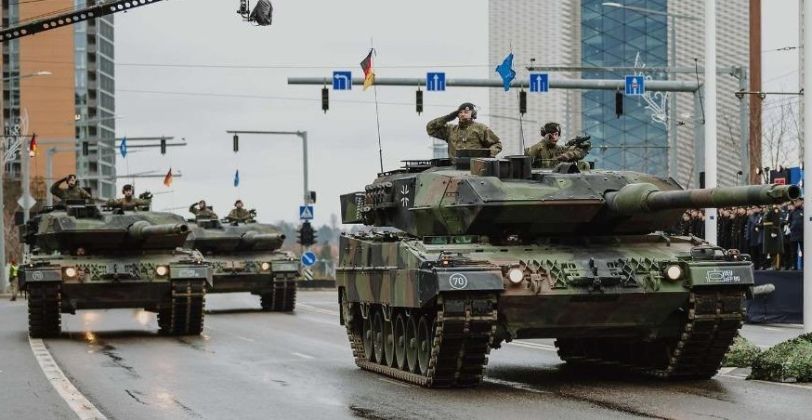
Belarus remains a key frontier between Russian and NATO forces, and has seen the NATO presence around its borders expand considerably over the past four years. A major landmark in this process occurred on May 22, 2025, when the German Army inaugurated the 45th Armoured Brigade in Vilnius, Lithuania, providing an elite forward deployed mechanised warfare capability within 150 kilometres of the Belarusian capital Minsk. More recently in April 2026 France and Poland were reported to be preparing to conduct exercises over the Baltics involving French Rafale fighter jets equipped with nuclear warheads, which would simulate strikes on targets in Russia and Belarus. While the Belarusian nuclear arsenal was previously limited due to exclusive reliance on the Iskander-M short ranged system for delivery, it was in December 2025 diversified with the service entry of the Oreshnik intermediate range hypersonic missile, which can engage targets across almost all of European territory. The advanced capabilities of the missile system have led European states to scramble to develop a similarly capable missile.
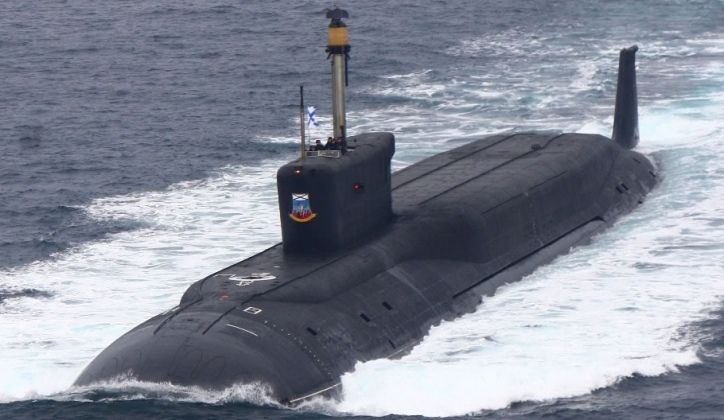
Beyond operations in Belarus, the Russian Defence Ministry has released footage showing wider nuclear war exercises simultaneously taking place across Russian territory. These have included 64,000 Russian personnel, 7,800 military vehicles, 200 missile launchers, 140 aircraft, 73 surface warships, and 13 submarines. Borei class nuclear powered ballistic missile submarines from both the Northern and Pacific fleets are reported to have played key roles. In February Russian President Vladimir Putin announced that the country would continue to treat the modernisation of its nuclear triad as an “unconditional priority” in broader efforts to strengthen the capabilities of the armed forces and tech sector. This followed confirmation in December that the new Russian Defence Ministry State Armaments Program for 2027-2036 paid specific attention to the modernisation of the country’s nuclear triad and air defences. Although Russian conventional forces have fallen behind those of NATO and China in several areas, its nuclear forces remain world leading in large part due to their prioritisation for investment.
