
Finland Moving Towards Nuclear Weapons Sharing Deal with U.S. to Arm F-35s on Russia’s Northwestern Border
Military Watch Magazine Editorial Staff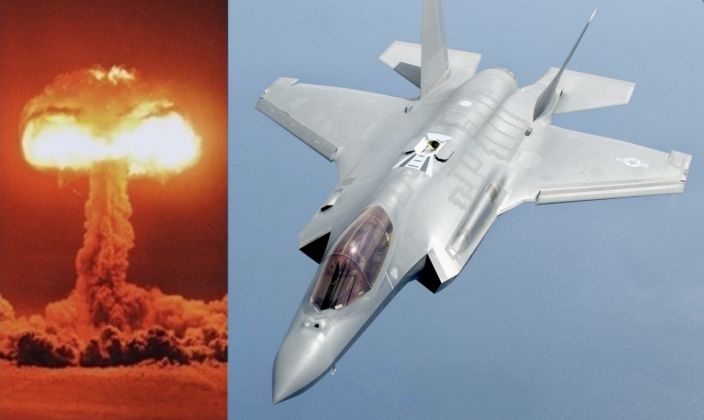
F-35 (right) and Nuclear Explosion
The Finnish Defence Ministry has reported that the government has submitted a proposal to parliament to allow the import of nuclear weapons and their storage in the country. This development follows years of speculation that the country could enter a nuclear sharing agreement with the United States, following a decision in December 2021 to procure 64 F-35A fighters, which are well optimised for nuclear delivery, and after the country joined NATO in April 2023. The Cabinet of Ministers proposed amendments to the country’s Atomic Energy Act and Criminal Code, with the Defence Ministry observing: “Legislative restrictions on the import of nuclear explosives into Finland, as well as on their transport, delivery, and storage within its territory, will be removed if such activities are related to Finland’s defence, NATO’s collective defence, or defence cooperation.” The proposal is part of a package of legislative reforms being implemented as part of Finland’s integration into NATO.
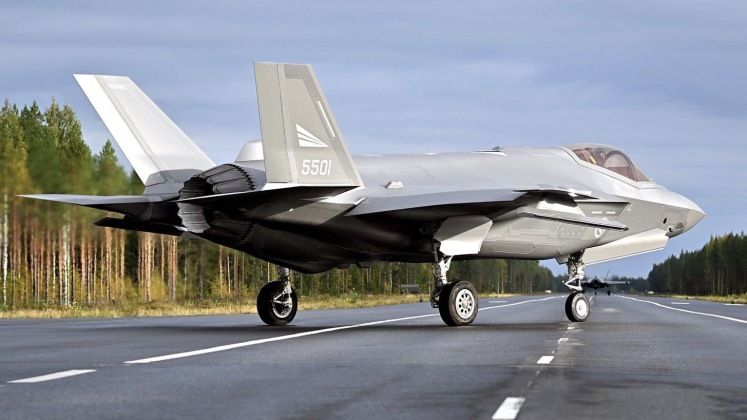
Following Finland’s accession into NATO, the alliance’s European land border with Russia more than doubled in length, with the U.S. Armed Forces having since deployed nuclear-capable assets for operations in or through Finnish territory. A notable recent example was the deployment of U.S. Air Force’s deployment of a B-52H strategic bomber from Moron Air Base in Spain for operations near the Russian Arctic in November 2025, with the aircraft receiving an escort from Finnish Air Force F-18 fighters and support from Finnish joint terminal attack controllers. The deployment of nuclear weapons in Finland, and their sharing with Finnish forces to equip its F-35 fleet, would considerably expand the nuclear threat to Russia in the region, placing further pressure on its already strained defences.
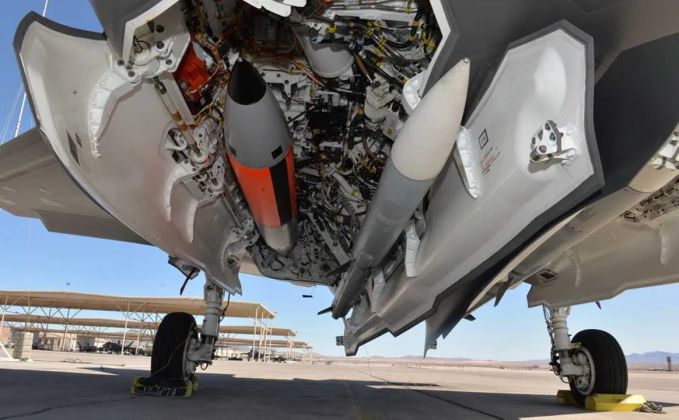
The U.S. has nuclear sharing agreements with a number of European states, and was confirmed in 2025 to have reached a similar agreement with the United Kingdom to equip its F-35A fighters. Speaking on April 1, 2025, chairman of the Joint Chiefs of Staff nominee Dan Caine stated that the U.S. was ready to consider entering into new nuclear sharing agreements with more NATO members, with Finland and Poland considered leading candidates. The F-35 is considered an optimal asset for nuclear delivery, with its weapons bays able to carry two B61 bombs, while its advanced stealth and electronic warfare capabilities provide a significant degree of survivability when launching penetration strikes deep into Russian territory.
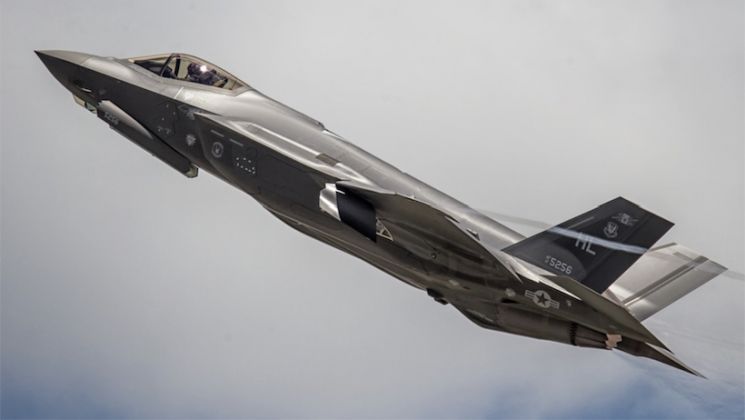
In 2023 an assessment of the capabilities of the B61-13 nuclear bomb for strategic bombardment highlighted that it allowed a single F-35 fighter to kill over 310,000 inhabitants of the Russian capital Moscow in a single strike, or 360,000 residents of St Petersburg, by dropping just one bomb. The potency of an F-35 fleet, with fighters each carrying two bombs, is thus highly significant. Russia has remained years behind NATO in expanding its own fifth generation fighter fleet, and relies heavily on ground-based air defence systems such as the S-400, as well as on missile systems capable of striking air bases hosting hostile fighters, to provide an asymmetric defence. The Russian Su-57 fifth generation fighter is expected to be relied on to deliver nuclear attacks, and may see deployments near the border with Finland to counter the particularly large number of F-35s expected to be stationed there both by the Finnish Air Force and by multiple NATO allies.
