
Poland Needs Its Own Nuclear Arsenal Aimed at Russia - President
Military Watch Magazine Editorial Staff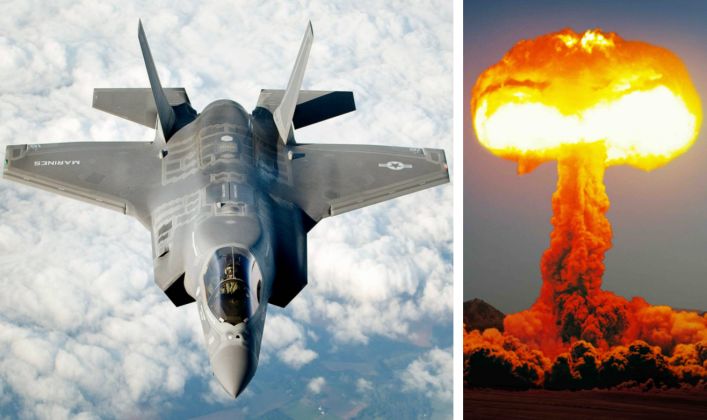
F-35 and Nuclear Explosion
Polish President Karol Navrocki has stated that his country should start developing nuclear weapons, specifying that a future nuclear arsenal would be aimed at Russia. Describing himself as "a great supporter of Poland joining the nuclear project,” he argued that Warsaw should develop its future security strategy "based on nuclear potential." “We must work towards this goal so that we can begin the work. We are a country right on the border of an armed conflict. The aggressive, imperial attitude of Russia toward Poland is well known,” he added. His statement follows multiple reported requests by Polish officials to enter into a nuclear sharing agreement with the United States, under which the Polish Air Force would be given wartime access to American warheads stored on the country’s territory.
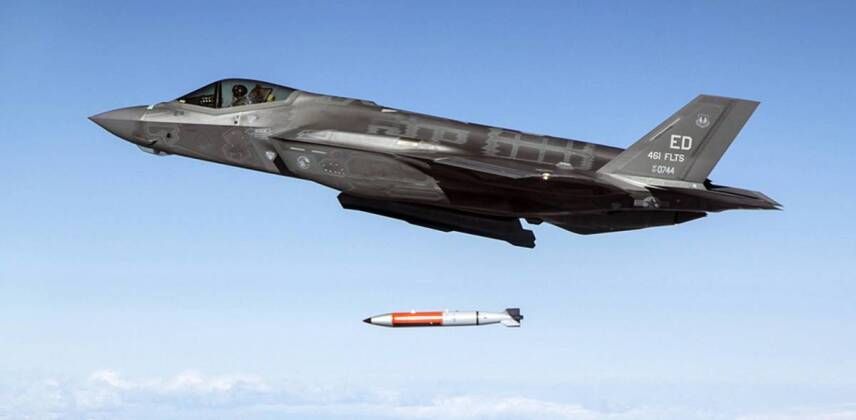
It remains uncertain whether path to fielding nuclear weapons referred to by President Navrocki entailed entering a nuclear sharing agreement, becoming a threshold nuclear weapons state like Germany and Japan, or developing an independent nuclear arsenal like France. On April 1, 2025, chairman of the U.S. Joint Chiefs of Staff nominee Dan Caine stated that the United States was ready to consider entering into nuclear sharing agreements with more of the country’s NATO allies, fuelling speculation that deals with Poland and Finland may be under consideration. A sharing agreement with the United Kingdom to equip its planned F-35A fighters with B61-12 nuclear bombs was confirmed shortly afterwards. Nuclear sharing agreements have been controversial due their de facto creation of new nuclear weapons states, with Western analysts having widely highlighted that they violate Articles I and II of the Treaty on Non-Proliferation of Nuclear Weapons.
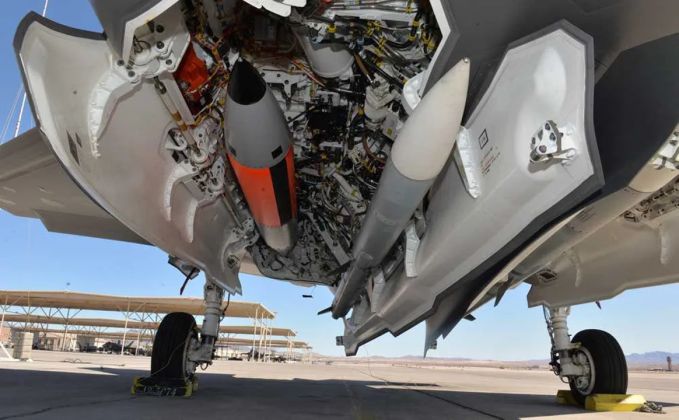
The United States currently has active sharing agreements are currently in place with NATO members Belgium, the Netherlands, Germany, Italy, and Turkey, with the air forces of these states all training to launch air strikes using B61-12 bombs. All nuclear sharing partners are clients for the F-35 fighter, with the exception of Turkey which is currently negotiating to return to the program. The Polish Air Force’s procurement of the F-35 has since the late 2010s fuelled significant speculation that this may have been intended to prepare its forces to enter a nuclear sharing agreement. The fighters are considered optimal aircraft for launching tactical nuclear attacks due to their advanced stealth capabilities, with the Royal Netherlands Air Force having in June 2024 become the first nuclear sharing partner to have them take over their nuclear strike roles, just three months after the U.S. Air Force did so in March that year.
In July 2025 one of Poland’s most influential military thinkers and president of Academy24, General (ret.) Jaroslaw Gromadzinski, advocated a major shift in the country’s defence posture aimed specifically at preparing for war with Russia. Gromadzinski argued that Poland needed to embrace an “active defence,” and be ready to operate “across the full operational depth of the opponent” by preparing to launch attacks across Russian territory. His insights echoed those made by former Polish chief of the General Staff Rajmund Andrzejczak in October 2024, who observed: “If they attack even an inch of Lithuanian territory, the response will come immediately. Not on the first day, but in the first minute. We will hit all strategic targets within a radius of 300km. We will attack St. Petersburg directly.” He further noted that Warsaw needed to “take the initiative” in deterring Moscow. “Russia must realise that an attack on Poland or the Baltic countries would also mean its end… That is the only way to deter the Kremlin from such aggression,” Andrzejczak elaborated. The obtaining of nuclear weapons would fit in with the broader consensus in Warsaw regarding the need to maximise the ability to cause devastation across Russia.
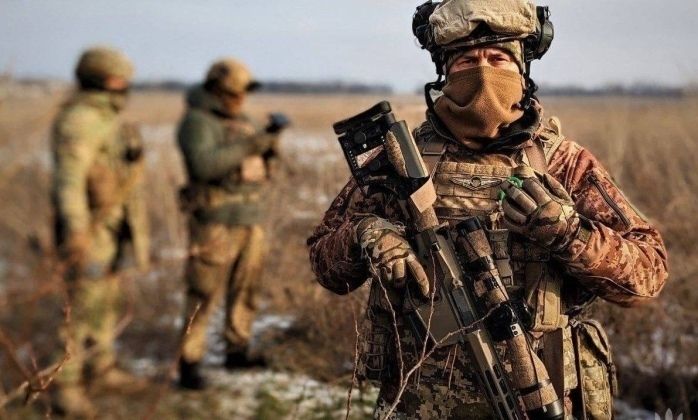
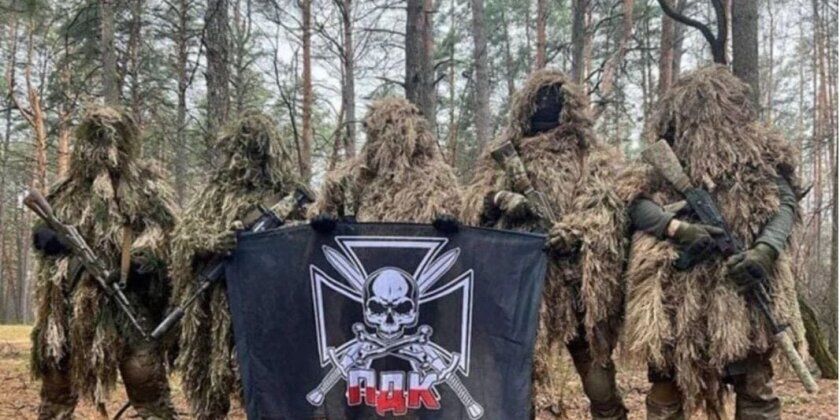
Poland has taken a particularly hard line against Moscow, with senior politicians calling for Russia’s balkanisation into separate states, while Prime Minister Mateus Morawiecki has equated moves towards dialogue with Moscow with “negotiating with Hitler, Stalin or Pol Pot,” claiming “you do not negotiate with criminals.” The country has been the leading source of foreign military contractors fighting Russia in Ukraine under units such as the Polish Volunteer Corps, with the Polish parliament earlier in February having moved to provide legal cover to such operations, indicating a possible escalation in their scale. Polish personnel on the ground operating from Ukraine have taken part in spearheading multiple assaults into Russian territory, including Belogrod and Kursk, while the country has remained a leading provider of armaments and funding to the war effort.
