
Russian Su-57 Fifth Generation Fighter Receiving Continuous Improvements to AI Capabilities
Military Watch Magazine Editorial Staff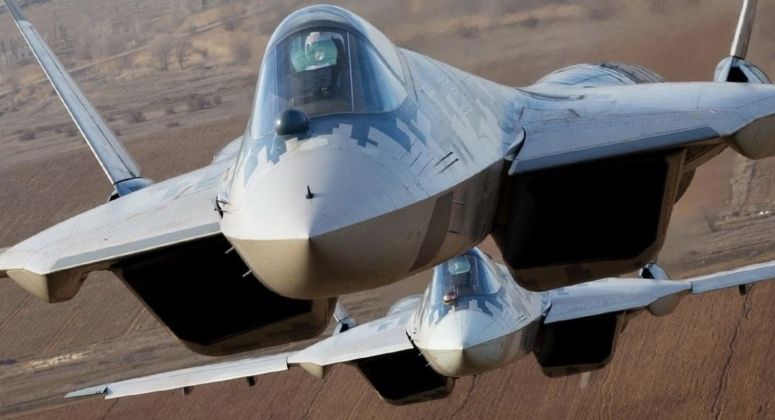
Russian Su-57 Fighters
The Russian Su-57 fifth generation fighter is benefitting from continuous improvements to its artificial intelligence related capabilities, according to a recent announcement by a spokesman for the state intermediary agency for Russian defence exports Rosoboronexport. "The Sukhoi Design Bureau is continuously working to improve the technical design of the advanced multirole Su-57E fighter, including its modern onboard equipment with AI components. These AI components enable highly automated and intelligent onboard systems, providing targeted prompts to the pilot in challenging tactical situations, enabling the fighter to realise its full potential as intended by its designers, in both wartime and peacetime operations," the spokesman noted.
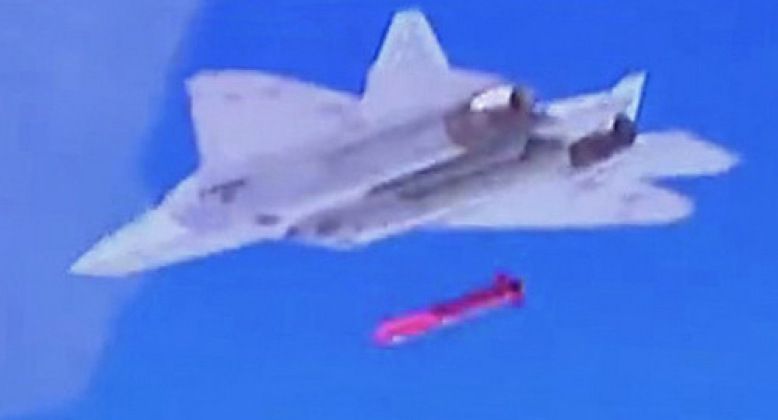
The highly intelligent onboard AI system was revealed to allow pilots to quickly receive information via two channels, both audio and visual, with specific recommendations displayed on the aircraft display. “This allows the pilot to make well-informed decisions in time-sensitive situations. Thus, we can say that the Su-57E fighter is an advanced platform that fully delivers the range of capabilities designed into it. It can engage air, ground, and surface targets at any time of day or night,” Rosoboronexport’s statement emphasised. Although Russia has been assessed to remain far behind the United States, and moreso behind China, in using artificial intelligence to modernise its combat aviation capabilities, there have been signs of considerable progress over the past decade.
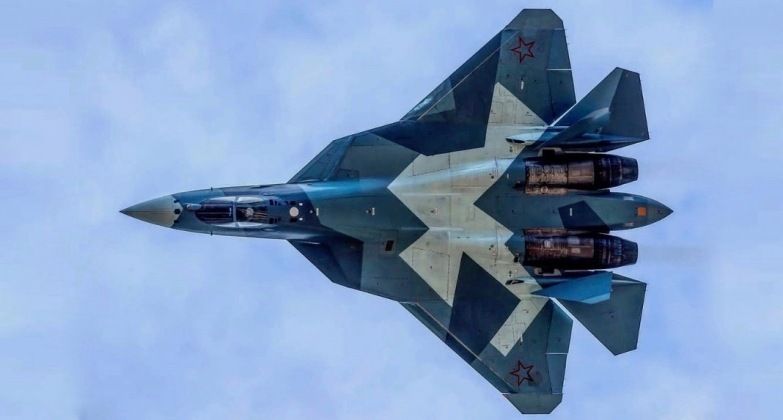
In August 2023 it was confirmed that the Su-57 had begun to integrate a new radio communications suite secured by artificial intelligence, which was designed to improve information transmission between aircraft and ground-based systems operating on very high frequency wavebands. The Russian state owned defence conglomerate Rostec reported regarding the new system: “The equipment ensures data transmission validity by means of noiseless coding, message symbol interlacing, universal time synchronisation for signal processing, simultaneous message transmission via parallel links, extending stable communication range, and using artificial intelligence technology.” The system used “cognitive radio technology” to enhance its “interference and intelligence immunity,” and included computers, interlacers and de-interlacers, high frequency band antenna tuners, digital signal processors and noiseless encoders and decoders.
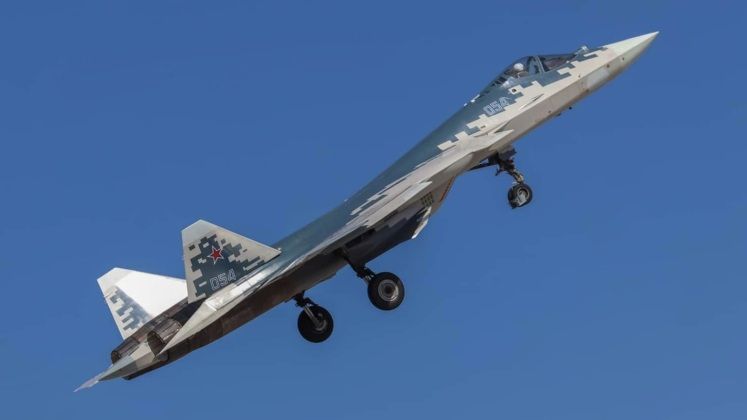
Artificial intelligence has the potential to enhance the Su-57’s performance in multiple ways, ranging from target selection and weapons guidance, to supporting design improvements to maximise the performances of future variants of the aircraft. It can also serve to increase automation and significantly reduce strain on pilots, reducing the need for a second seen accommodating a weapons systems officer. The possible applications of the technology for electronic warfare area also very considerable. The very limited scale at which Russia conducts advanced AI research and development, however, has raised questions regarding the sophistication of onboard AI which the Su-57 may integrate, particularly compared to Chinese fighters as the East Asia country leads the world in the field.
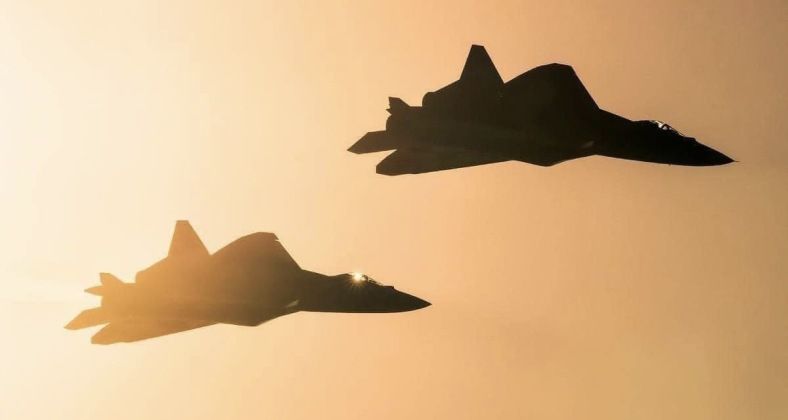
The Su-57 has benefited from continued development work on a wide range of its subsystems, ranging from its ‘Himalayas’ electronic warfare system, to a next generation active electronically scanned array radars. While Su-57 fighters which have entered service from late 2020 have been fielded with AL-41F-1 engines, the enhanced Su-57M1 variant will from around 2030 integrate the much delayed AL-51F-1, which is the first clean sheet fighter engine introduced into Russian service in over 40 years. This is expected to provide considerably greater power to onboard systems, which complement the effects of improved artificial intelligence. AI is also expected to play vital roles in allowing Su-57s to operate alongside unmanned ‘wingman’ aircraft such as S-70 Okhotnik unmanned fighter, which will be semi-autonomous and are expected to serve as force multipliers for the fleet.
