
French President Warns Europe Urgently Needs Long Range Hypersonic Missile Like Russia’s Oreshnik
Military Watch Magazine Editorial Staff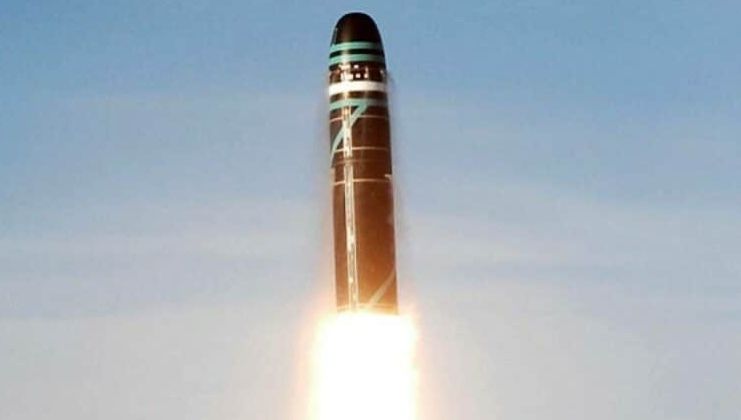
French M51 Ballistic Missile Launch
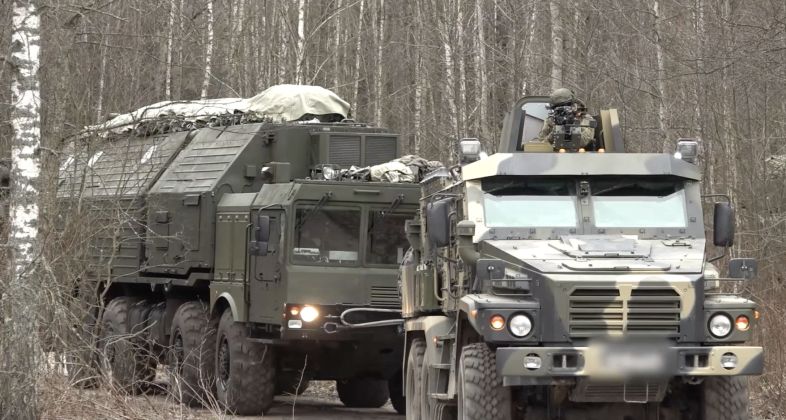
French President Emmanuel Macron pledged that his country and its European partners will work towards expedited development of new long-range weapons, highlighting the need to field a similar capability to that provided by Russia’s new Oreshnik intermediate range hypersonic ballistic missile. Recalling the use of the new Russian missile to strike a Ukrainian aviation plant in Lviv, which was servicing F-16 and MiG-29 fighters near the Polish border, Macron warned: “We are within range of these shots.” He announced that a European Long-Range Strike Approach (ELSA) initiative is intended to provide an an equivalent capability for the forces of European Union member states. “The initiative that we launched, known as ELSA, makes perfect sense when we have just observed for the second time the firing of a very long-range missile, known as Oreshnik,” Macron stated. “If we want to remain credible, we Europeans – and especially France, which has certain technologies – must acquire these new weapons that will change the situation in the short term,” he added.
Further elaborating on the program, Macron stated: “With our German and British partners in particular, we must make strong progress on these long-range strike capabilities… to increase our credibility and support our nuclear deterrence.” The ELSA program was announced 2024, and launched by France, Germany, and Poland, before being joined by Sweden, Italy, the United Kingdom, and the Netherlands. The viability of the program has been brought into question since it was announced in 2024, with the leading states involved having poor records in terms of their defence sectors’ abilities to pursue programs with complex technologies, and complete them on time without major cost overruns. Other than France, none of the countries on the continent have significant experience in ballistic missile development, with the United Kingdom’s strategic nuclear deterrent relying on Trident missiles primarily developed and produced in the United States.
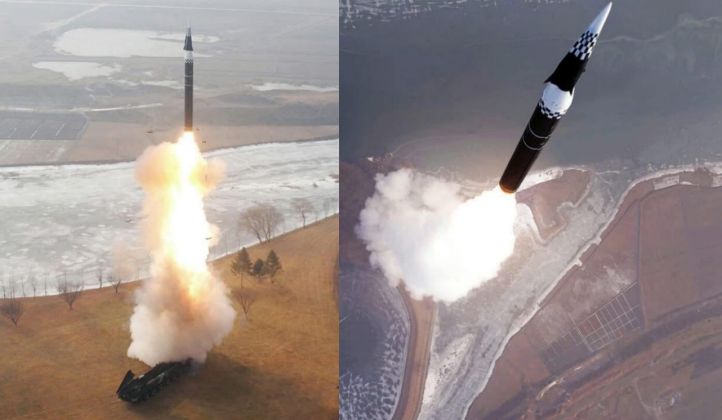
Once significant possibility is that French industry will leverage its experience developing the M51 submarine-launched intercontinental range ballistic missile to develop an intermediate range counterpart intended for ground deployment. The M51 is currently deployed from the Navy’s four Le Triomphant class strategic submarines, and has a range of 11,000 kilometres while carrying ten nuclear warheads. This compares favourably with the Oreshnik’s 5,500 kilometre range and carries of six warheads. Nevertheless, countries in the Western world have yet to field hypersonic guide vehicles comparable to those integrated onto the Oreshnik, while the Russian missile design has significantly higher requirements for precision due to its carriage of non-nuclear warheads. The record of the European defence sector and the significance technological hurdles that need to be crossed, mean that the European program is unlikely to produce a missile comparable to the Oreshnik before the mid-2030s, and if successful will likely cost several times as much. One factor in Russia’s favour is that it has continuously been producing strategic missiles on a large scale for
