
Russian Defence Ministry to Prioritise Modernising the Nuclear Triad and Air Defences For the Next Ten Years
Military Watch Magazine Editorial Staff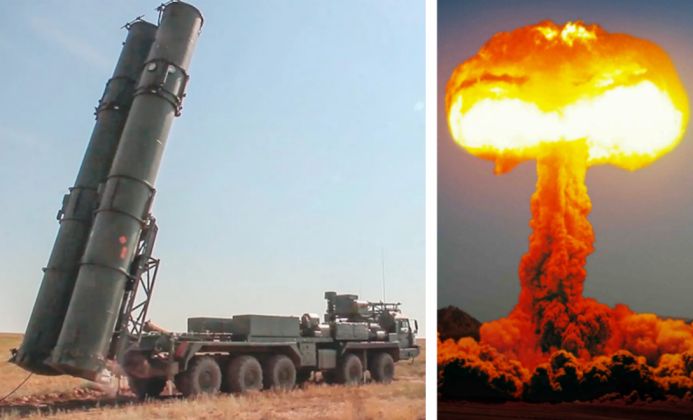
Launcher From Russian S-500 System and Nuclear Explosion
The new Russian Defence Ministry State Armaments Program for 2027-2036 has paid specific attention to the modernisation of the country’s nuclear triad and air defences, according to the Kremlin’s materials prepared for the Russian president’s meeting on the program. “Special attention is paid to building up the capabilities of land troops, maintaining and modernising the nuclear triad, creating an all-embracing air defence system and boosting the export potential of Russian armaments and equipment,” the materials were reported by state media to have stated. This notably does not reflect a significant change in Russian defence spending priorities, with air defences, nuclear forces, and the nuclear-powered submarine fleet having been particularly prioritised for funding since the disintegration of the Soviet Union, with their asymmetric value compensating for the diminishing standing of the country’s conventional forces.
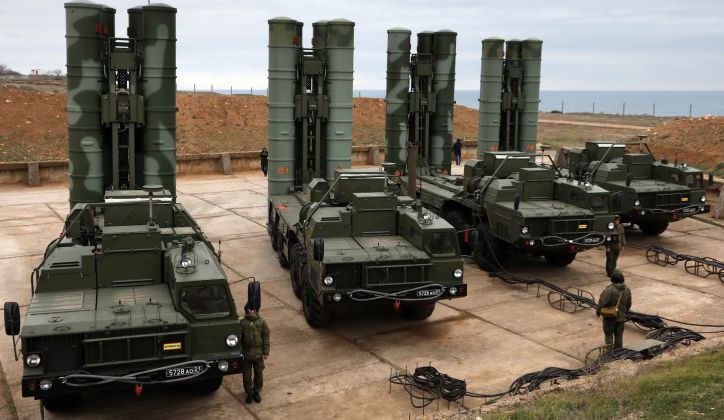
Reflecting the prioritisation of funding for ground-based air defences, the Russian Aerospace Forces have invested several times as heavily procuring S-400s long range surface-to-air missile systems over the past 20 years than they have procuring all types of fighter aircraft combined, with over 30 regiments now in service forming the backbone of the country’s air defence capabilities. Beyond an expected continuation of the production of the S-400 and its continued incremental modernisation, it remains highly uncertain how air defences are envisioned to be enhanced over the coming decade. The possibility of integrating the ground-based network with satellites allowing for guidance towards airborne targets over long ranges, and of integration with new types of aircraft including the PAK DP interceptor that is currently under development, all remain significant.
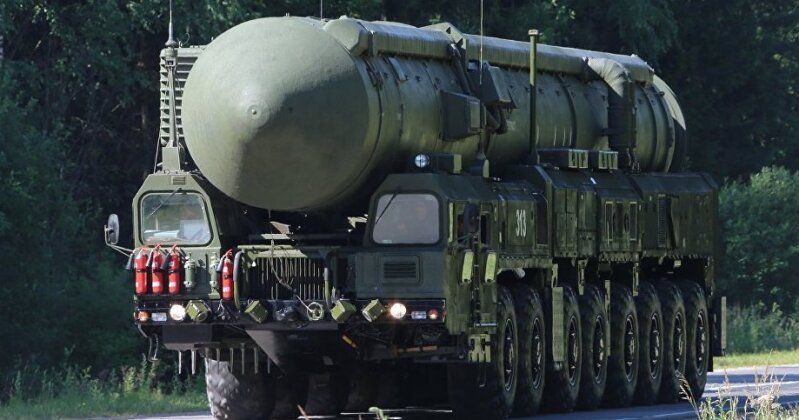
The possibility of modernisation of Russia’s nuclear forces facilitating improvements to air defence capabilities remains significant, with the Russian Aerospace Forces reported in May to have brought a nuclear-armed air-to-air missile into service, likely a variant of the R-37M missile to equip MiG-31 interceptors. Similar integration of nuclear warheads onto missiles from the S-400 system remains highly possible. The country’s nuclear deterrent has continued to be modernised rapidly at all levels, including with the continued production of the Yars and Sarmat intercontinental range ballistic missiles, the Avangard intercontinental range hypersonic glide vehicle, and the Oreshnik intermediate range ballistic missile, at the strategic level. At the tactical level, the Zircon hypersonic cruise missile and longer range 9M729 subsonic cruise missile are both beginning to be brought into service, and are thought to have both nuclear and conventionally armed variants.
Mirroring the United States and its strategic partners’ integration of B61-12 nuclear bombs onto F-35 fifth generation fighters, it is expected that new air-launched cruise missiles deployed by the Russian Su-57 fifth generation fighter could integrate nuclear warheads. Continued modernisation of the strategic bomber fleet with the procurement of the Tu-160M bomber is expected to be complemented by the development of a wider range of air-launched missile types for the aircraft. This will provide a more diverse range of means for intercontinental range nuclear delivery by air beyond the Kh-102 cruise missile currently relied on. The Russian Defence Ministry has invested in novel means of nuclear delivery not seen elsewhere in the world, most notably the 9M730 Burevestnik intercontinental range cruise missile, which uses a miniaturised onboard nuclear reactor, and the 2M39 Poseidon nuclear-armed underwater drone which is deployed from new Khabarovsk class submarines.
