
Russian Missile Units Simulate Full Scale Nuclear War: Yars ICBM Regiment Drills Intensively in Siberia
Military Watch Magazine Editorial Staff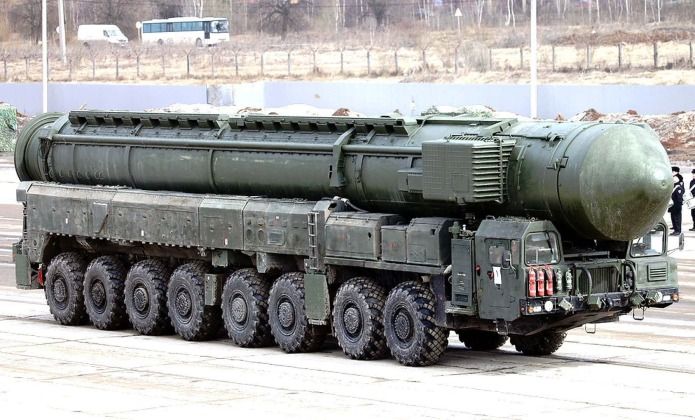
A Russian RS-24 Yars Nuclear-Armed Intercontinental Range Ballistic Missile (ICBM)
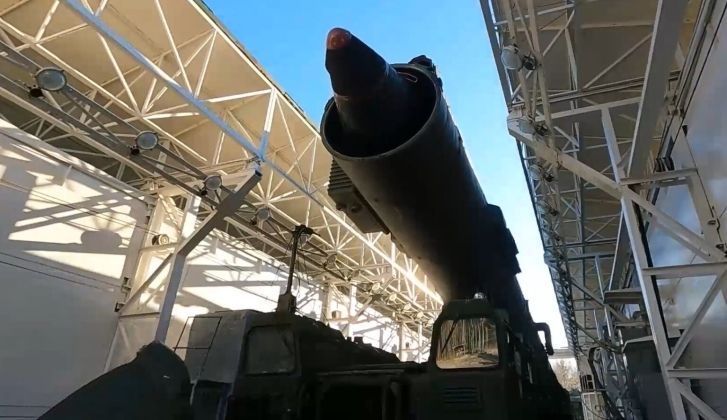
The Russian Armed Forces have deployed Yars road-mobile intercontinental ballistic missile launchers for combat patrol routes in Siberia, as part of exercises testing the capabilities of strategic nuclear assets built to wage full scale nuclear war. Reporting on the exercises, the Russian Defence Ministry stated: “Yars land-based mobile missile system crews have deployed to combat patrol routes in Siberia as part of a scheduled exercise. The large-size equipment left the designated facilities and began marching, including at night. The missile crews fulfilled several dozen tasks under various scenarios, including technical ones, during field combat training.” The exercises saw the drivers of the road-mobile launchers, accompanying vehicles, and support vehicles, jointly conduct intensive manoeuvring exercises along combat patrol routes, simulating the evasion of adversary attacks aimed at disabling Russia’s ability to launch strategic nuclear strikes.
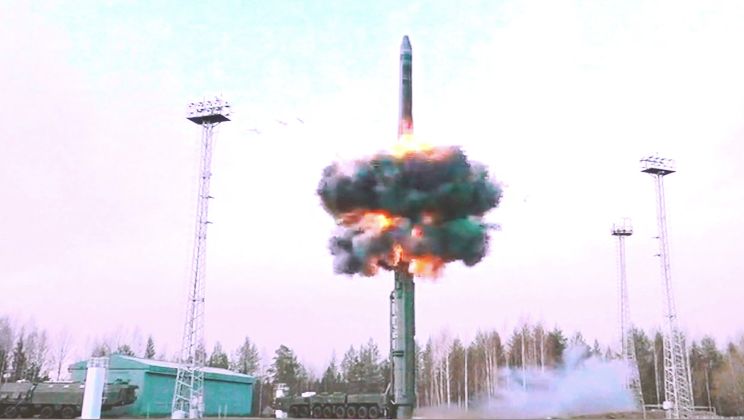
Personnel involved in the recent exercises drilled changing field positions, dispersing missile battalions, preparing field positions and camouflaging. The exercises also included a more recent addition to Yars units, namely Eleron fixed-wing unmanned aircraft, which are relied on to protect the mobile missile systems along their routes. The Yars currently forms the backbone of the Russian land-based strategic nuclear deterrent, and equips eight divisions with close to 150 missiles in service. The missile system was developed in secret as a successor to the Topol-M that entered service from 1997, with a primary difference being the newer missile’s ability to carry multiple independently targetable warheads for greatly increased firepower and reduced vulnerability to interception. The system first entered service from July 2010, with the large majority deployed from road-mobile launchers, while a smaller number are deployed from silos.
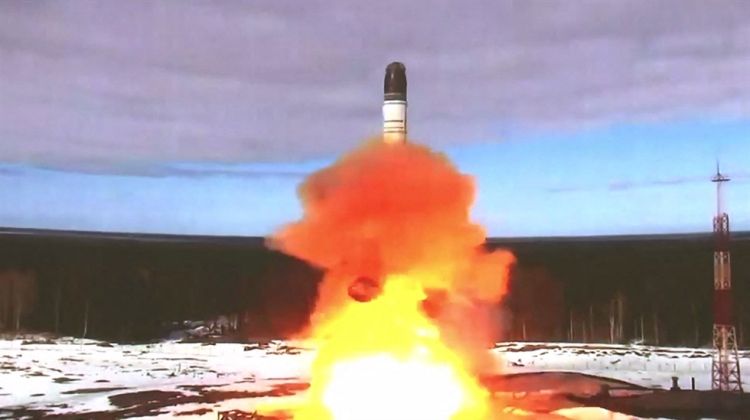
The Russian Armed Forces have invested in fielding a high-low combination of land-based intercontinental range ballistic missiles, and in parallel to Yars are also procuring the Sarmat missile which is approximately four times as heavy and can carry significantly larger warheads in greater numbers. The first Sarmat unit went on combat alert in late October. Delays to bringing the Sarmat into service led the Defence Ministry to invest in modernising silo based RS-18A missiles inherited from the Soviet Union to integrate Avangard hypersonic glide vehicles, which were developed for the Sarmat missile and significantly improve penetrative capabilities. Russia has invested disproportionately heavily in its strategic nuclear forces, which continue to be widely considered the most capable in the world despite the decline in the standing of many parts of the country’s conventional forces.
Russia’s ground-based strategic missile arsenal has remained in a league of its own in its capabilities, although rapid modernisation of the Chinese arsenal and expansion in the number of nuclear warheads deployed has increasingly narrowed the gap. The United States continues to rely on by far the oldest ICBM class in the world, the half a century old Minuteman III, as its sole type in service. Serious difficulties developing a successor to the missile has raised a growing possibility that the U.S. Armed Force will be forced to forego deployment of ground based intercontinental range ballistic missiles entirely, and decommission the Minuteman III arsenal without replacement, cutting its nuclear triad down to just its air and maritime arms. Nevertheless, the Untied States continues to lead in the number of nuclear submarines in service, and in the development of strategic bombers with advanced penetrative stealth capabilities, while its plans to deploy anti-ballistic missiles in space under the Golden Dome program has the potential to threaten the viability of the Russian strategic missile deterrent.
