
U.S. Strategic Command Head Suggests Using Alert Bombers to Replace Costly Nuclear ICBMs
Military Watch Magazine Editorial Staff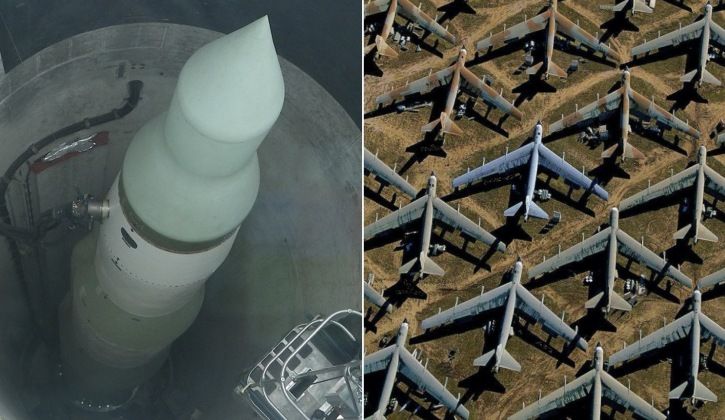
Minuteman III and B-52 Bombers
The U.S. is reportedly considering retiring its arsenal of ground based intercontinental range ballistic missiles (ICBM) - the last of its kind in the Western world - due to the immense cost of replacing the country’s arsenal of Cold War era Minuteman III missiles. The Ground-Based Strategic Deterrent (GBSD) program intended to replace the ICBMs has an estimated cost of $264 billion cost, and a perceived lack of urgency for the program means it could be terminated as the U.S. defence budget comes increasingly under strain. Commander of the United States Strategic Command Charles A. Richard observed in January: “You cannot life-extend Minuteman III… It is getting past the point of [where] it’s not cost-effective to life-extend Minuteman III. You’re quickly getting to the point [where] you can’t do it at all… That thing is so old that in some cases the [technical] drawings don’t exist anymore, or where we do have drawings, they’re like six generations behind the industry standard. And there’s not only [no one] working that can understand them – they’re not alive anymore.”
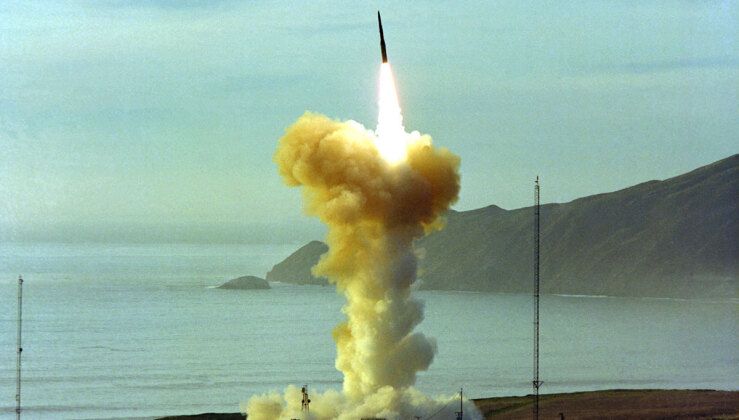
Abandonment of the country’s ground based strategic deterrent would still leave the U.S. with a sizeable arsenal of submarine launched ICBMs, although the head of U.S. Strategic Command, Admiral Charles A. Richard, has suggested that the country’s fleet of strategic bombers could be tasked with compensating for the loss of the ground based arsenal. The disclosure came during a testimony to the Senate Armed Services Committee on April 20th. The current state of the U.S. bomber fleet could seriously complicate such efforts. The country’s B-1B bombers are not currently nuclear capable, and face very low availability rates and growing maintenance issues which are expected to lead to early retirement. The small number of post-Cold War bombers - 20 B-2 Spirits - are too few in number and also suffer from very low availability rates and serious maintenance issues. The third class of bomber deployed, the B-52H, is a Vietnam War era design which is the most reliable and by far the most easy to maintain in service — although the design’s age limits the number of roles it can fulfil. There is a possibility of increasing the number of B-52s in service, with considerable numbers being held in storage and a small number already having been restored to expand the fleet.
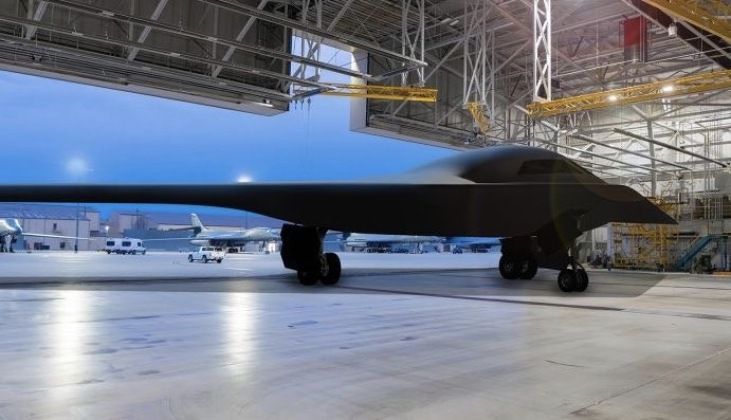
The expected induction of the B-21 stealth bomber in the late 2020s could potentially make plans to retire the Minuteman III arsenal and allocate greater responsibility to the bomber fleet more viable. The new aircraft is expected not only to replace the B-1B and B-2, but also to form multiple entirely new squadrons. Assuming that the B-21 has higher availably rates and is easier to maintain than the B-2, it could revolutionise the capabilities of the American bomber fleet and compensate heavily for the loss of a ground based ICBM force. The diversion of some of the funds which would have been allocated to the next generation GBSD program to the B-21 program also has the potential to ensure that a larger production run which many parties have advocated can be seen through for the new bombers. The fate of the GBSD ultimately remains uncertain, but the current strains on American defence spending and the state of the overall U.S. economy mean that if it is indeed seen through it will come at the cost of multiple other programs.
