Force Multiplier For the S-400: Will Russian Air Defence Systems Soon Integrate Nuclear Warheads?
Military Watch Magazine Editorial Staff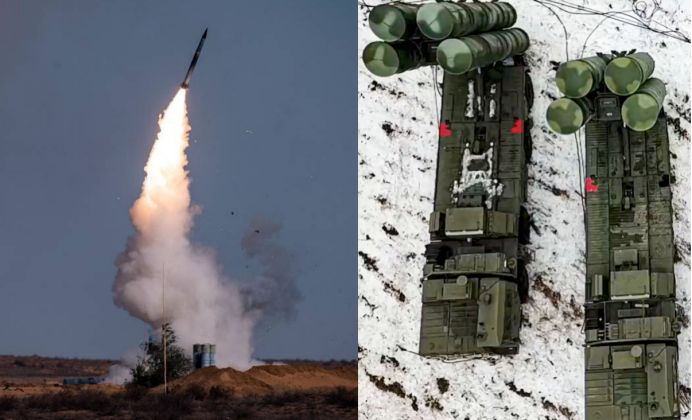
S-400 Missile Launch and Batteries
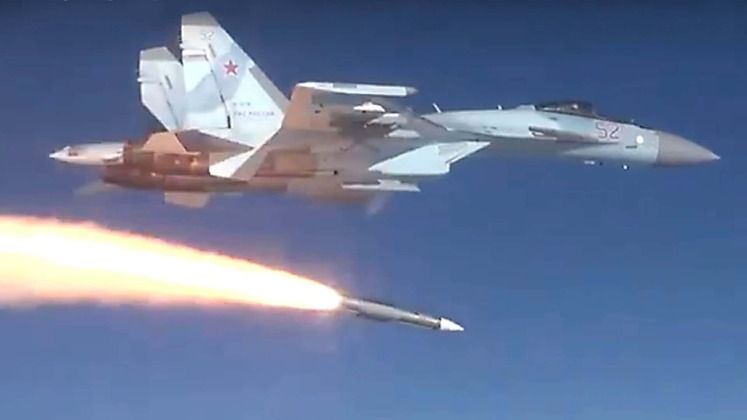
Following the announcement by the U.S. Armed Forces Defence Intelligence Agency that the Russian Aerospace Forces have begun to introduce nuclear-tipped air-to-air missiles into service, the possibility has emerged of the country integrating similar warheads onto missiles used by its long ranged air defence systems. It is widely expected that the air-to-air missile which will integrate the nuclear warhead will be a new variant of the R-37M, which when fired from high speeds and altitudes by MiG-31BM interceptors can engage targets 400 kilometres away carrying a 61 kilogram warhead. The missile achieves such a performance while travelling at Mach 6 speeds, which is considerably faster than the Mach 4-4.5 speeds that are common for other air-to-air missile classes.
The integration of nuclear warheads provides a number of benefits for long range targeting, including allowing a single missile to wipe out large swarms of drones, cruise missiles, or even enemy fighters. The need to prevent MiG-31 interceptors from being overwhelmed by massive salvoes of nuclear-tipped cruise missiles fired by American bombers was a key reason why their R-33 air-to-air missiles were tipped with nuclear warheads from 1981, before these missiles were removed from service after the end of the Cold War. Nuclear-tipped missiles do not require the same levels of precision as those with smaller explosive yields, allowing them to successfully engage targets that would otherwise be difficult to hit due to their stealth capabilities or high speeds without requirements to maintain the same quality of targeting lock.
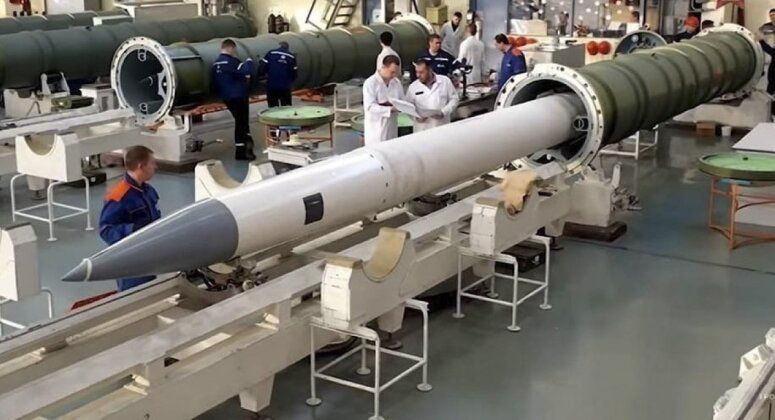
Providing a ground-launched counterpart to the R-37M, the 40N6 surface-to-air missile began to be integrated onto Russian S-400 long range air defence systems in the late 2010s, extending their targeting ranges from 250 to 400 kilometres. The missiles benefit from Mach 14 speeds, and use targeting data from supporting assets such as MiG-31s or A-50 airborne early warning and control aircraft (AEW&Cs) for over the horizon guidance. They follow a unique trajectory, ascending to extreme altitudes before descending towards their targets, while retaining an ability to neutralise them near the limits as low as 5 meters off the ground. The missiles can also be used to strike ground targets. Reports of the missiles’ use in the Ukrainian theatre began to surface in late 2023. 40N6 missiles are used considerably more widely in the Russian Armed Forces than the R-37, and should a variant with a nuclear warhead enter service it would significantly increase the combat potential of the S-400 systems deploying them. The implications of this are particularly significant due to Russia’s much greater reliance on ground based air defence systems than on fighters or interceptors for the defence of its airspace, due to the former’s much lower operational costs and perceived greater cost effectiveness for such roles.