
Belarus Starts Major Nuclear War Drills Simulating Strikes on NATO Members
Military Watch Magazine Editorial Staff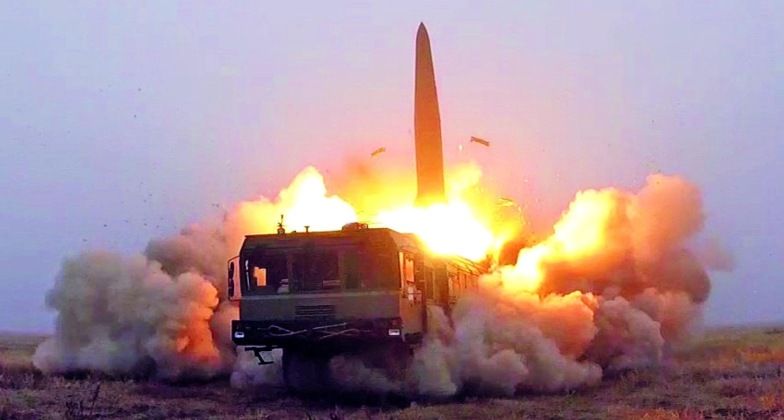
Ballistic Missile Launch From Iskander-M System
The Belarusian Armed Forces have invited large scale military exercises simulating the combat use of nuclear weapons, as well as associated logistical support, at a time of growing tensions between the country and NATO members. Commenting on the exercises, the Belarusian Defence Ministry reported: “In order to raise the preparedness of the armed forces for the use of advanced means of destruction, including special munitions, an exercise has begun today under the direction of the chief of the General Staff, first deputy defence minister of the Republic of Belarus for military units assigned with the combat use of nuclear weapons and nuclear weapons logistical support.” A primary purpose of the exercises is to assess the preparedness of forces for accomplishing the tasks from unprepared areas across the entire territory of the country, it added.
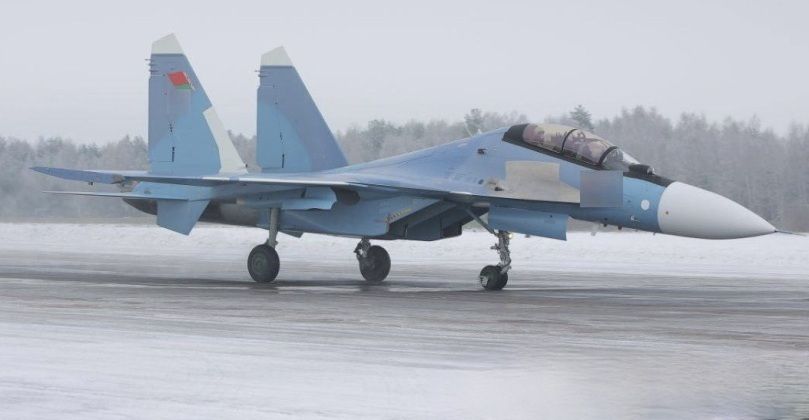
Further elaborating on the exercises, the Defence Ministry reported: “Military units of missile troops and aviation are involved in the exercise. The drills are set to practice the delivery of nuclear munitions and their preparation for use in interaction with the Russian side.” The exercises have placed an emphasis on the interoperability of Belarusian and Russian nuclear forces for launching strikes. They also focus on practicing "stealthiness, movement to considerable distances and calculations for the use of forces and capabilities,” according to the Defence Ministry. Belarus in 2023 entered a nuclear sharing agreement with Russia, and that year began integrating nuclear warheads onto Iskander-M short range tactical ballistic missile systems. The Belarusian arsenal was in December 2025 diversified with the service entry of the Oreshnik intermediate range hypersonic missile.
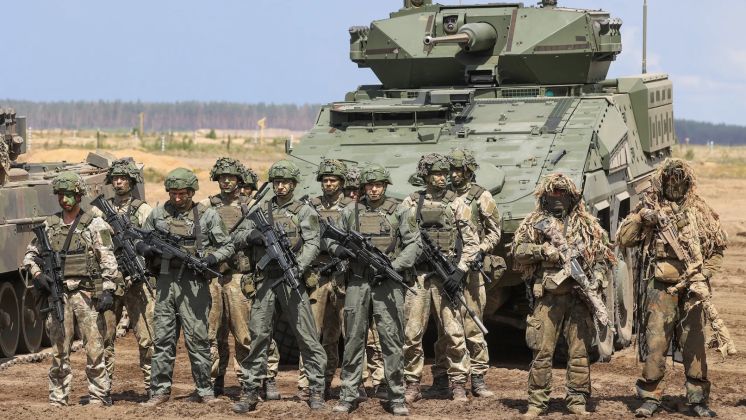
Belarus has faced a rapid expansion of hostile NATO forces across its borders, which have conducted increasingly frequent exercises simulating war with the country. The German Army on May 22, 2025, inaugurated the 45th Armoured Brigade in Vilnius, Lithuania, providing an elite forward deployed mechanised warfare capability within 150 kilometres of the Belarusian capital Minsk. Neighbouring Poland has invested particularly heavily it rapidly modernising its air and ground forces, including procuring large numbers of South Korean K2 and U.S. Abrams tanks, as well as Korean Chunmoo rocket artillery and K9 howitzers, U.S. HIMARS and F-35 stealth fighters, among a wide range of assets that are rapidly expanding Warsaw’s offensive options. In April France and Poland were reported to be preparing to conduct exercises over the Baltics involving French Rafale fighter jets equipped with nuclear warheads, which would simulate strikes on targets in Russia and Belarus. While Germany currently has a nuclear sharing agreement with the United States, the possibility of France and Poland entering a similar agreement has repeatedly been raised.
