
Kill Chain Dominance: China’s is Producing More ‘Flying Radar’ Systems Than the World Combined Under the KJ-500 Program
Military Watch Magazine Editorial Staff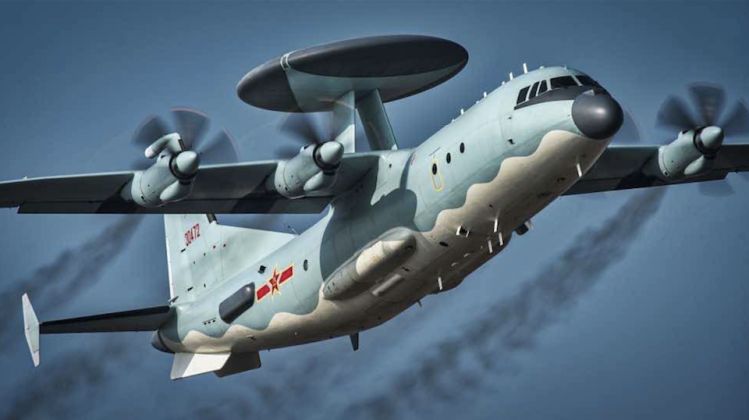
KJ-500 AEW&C System
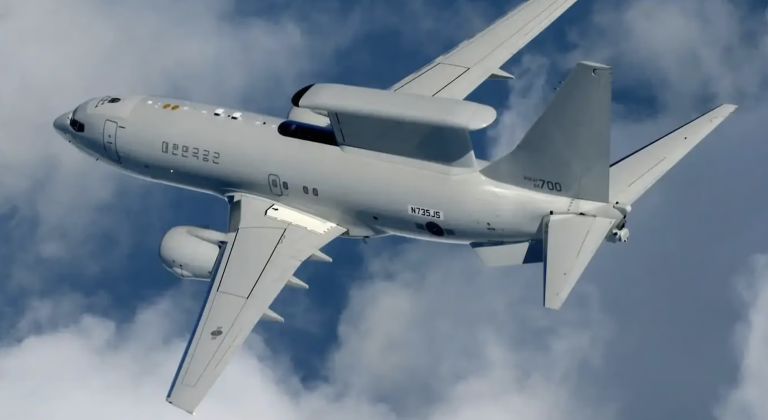
The Chinese People’s Liberation Army has for several years been procuring KJ-500 airborne early warning and control (AEW&C) system on a larger scale than all other countries’ procurements of all other land-based AEW&C systems combined, with the KJ-500 fleet now estimated to have reached over to 50 aircraft making it by far the most fielded system of its kind in the world. Although the KJ-500’s primary rival the Boeing E-7 Wedgetail has been ordered by multiple countries, each has acquired only very small numbers typically between three and seven. The Saab GlobalEye, a much lighter and less capable system, has likewise been built in small numbers, while the Russian A-100 has suffered from major delays and is not expected to be brought into service on a large scale.
The scale at which the People’s Liberation Army has procured the KJ-500 appears to reflect a major difference in military philosophy. Most Western air forces have traditionally viewed AEW&Cs as scarce strategic assets that support fighter operations. Chinese doctrine appears to instead treat airborne battle management as a capability that should be available across multiple theatres simultaneously and at a far larger scale, building a dense network of airborne command-and-control platforms capable of supporting numerous large-scale air operations at the same time. The choice of the Y-9 transport aircraft as the KJ-500's platform has been central to this strategy. Because the airframe is already in large-scale domestic production, China can manufacture AEW&C aircraft far more rapidly and cheaply than countries relying on specialised airliner conversions or imported platforms. This industrial base allows the PLA to sustain a production tempo that no other country can match. The efficiency of Chinese defence production allows KJ-500s to be procured at far lower costs than even many less capable systems produced abroad.
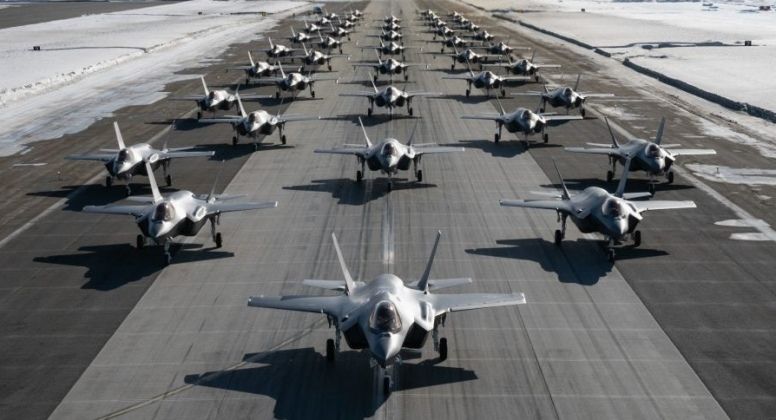
The KJ-500’s procurement scale particularly significant when considering how t complements other Chinese advantages. This includes the integration of much larger and more powerful radars on Chinese fighters than their Western counterparts, and the parallel development and procurement of other AEW&C systems in China such as the KJ-600 and the much larger KJ-3000. AEW&Cs integrate by far the largest airborne radars in the world, and are relied on heavily to strengthen situational awareness, particularly to facilitate long range targeting of aircraft with advanced stealth capabilities such as F-35 fighters. With the People’s Liberation Army procuring stealth fighters on a far larger scale than any other country’s forces, the fact that its procurements of assets intended to track hostile stealth aircraft are also being made on an outstandingly large scale further cement its advantage.
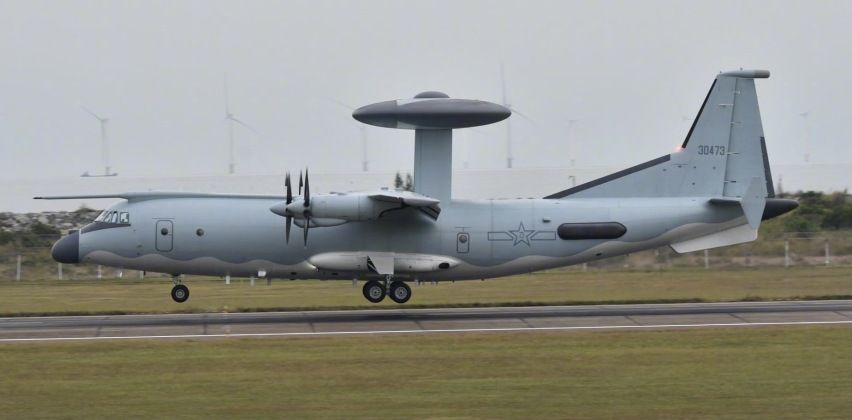
The KJ-500 is widely regarded as one of the most capable medium-sized AEW&Cs in service, with its fixed three-array active electronically scanned array (AESA) radar housed in a circular radome containing three separate radar arrays that together provide continuous 360-degree coverage. Unlike traditional rotating radar dishes, there are no moving parts required to scan the horizon. Electronic beam steering allows the radar to revisit targets more rapidly, improves reliability, and enables simultaneous search, tracking and target management. The system was designed not simply as a radar aircraft but as the core node of the PLA's information warfare architecture, fusing information from airborne radars, ground-based sensors, naval assets, satellites and datalinks into a common operational picture before distributing that information to friendly aircraft. The disruption of the kill chains which the KJ-500 fleet now sits at the centre of is considered to be a leading priority for the U.S. Armed Forces.
