
China Flight Testing the World’s Most Powerful ‘Flying Radar’ System with Advanced Counter-Stealth Capabilities
Military Watch Magazine Editorial Staff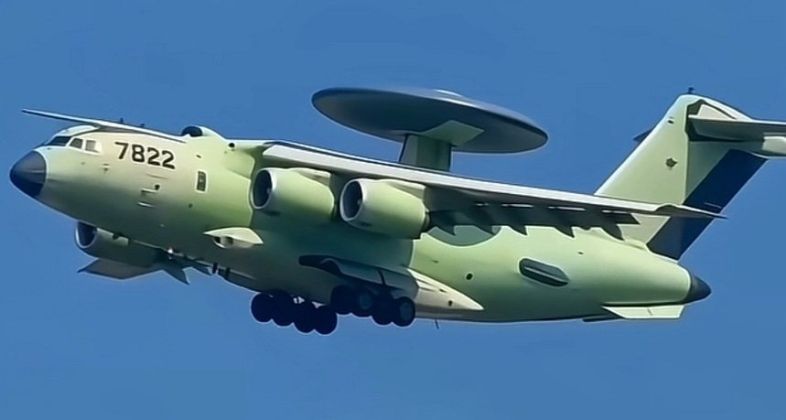
Chinese KJ-3000 AEW&C Prototype
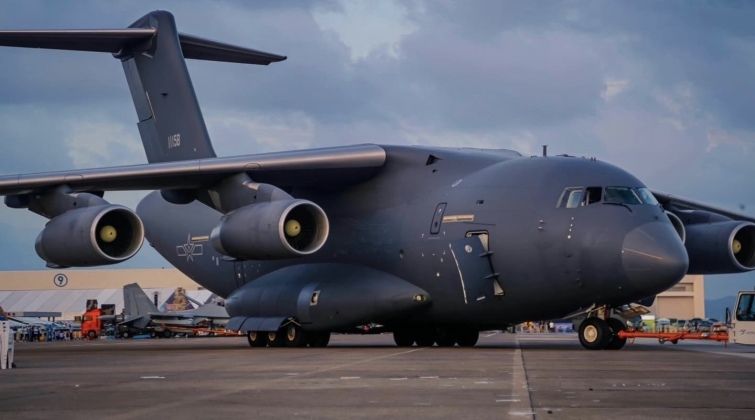
The development of the Chinese KJ-3000 airborne early warning and control (AEW&C) system has caused growing concerns in the Western world, with its potential to further expand China’s already significant advantage in airborne sensor capabilities having been alluded to a recent Pentagon report. The report warned that the KJ-3000’s development represents part of a broader expansion of China’s AEW&C capabilities, as these systems serve as force multipliers and form the backbone of the People’s Liberation Army Air Force’s already formidable aerial kill chains. The KJ-3000 is currently in flight testing with two known flight prototypes, and was developed based in the indigenous Y-20B heavy transport aircraft which is currently the world’s largest military transport in production worldwide.
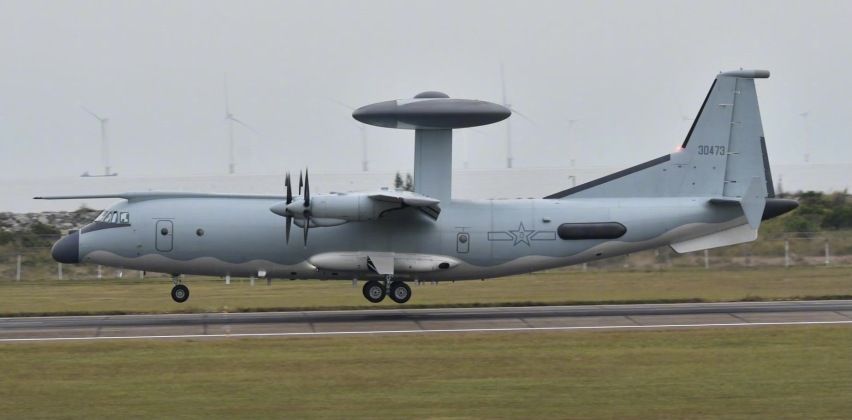
The Chinese KJ-500 AEW&C system is currently already in larger scale production than the next several AEW&Cs combined, and has cutting edge capabilities broadly comparable to those of the E-7 that the U.S. Air Force plans to procure. The current E-3 Sentry AEW&Cs which date back to the Cold War are considered entirely obsolete by comparison, with figures in the U.S. military leadership having repeatedly highlighted that they are wholly inadequate for a modern conflict in the Pacific. The E-7 and KJ-500 are notably smaller than the E-3 and carry smaller sensors, with no similarly sized successor to the E-3 expected to be brought into service due to the immense costs of doing so. The KJ-3000, however, is similarly large and is expected to complement the KJ-500 as part of a high-low combination.
Rather than the traditional three-panel phased array radar system, the KJ-3000’s an advanced conformal digital-array architecture provides true 360-degree coverage with improved sensitivity and processing capability. In contrast to the fixed arrays on the KJ-500, a new hybrid tracking system employing a rotating dome housing AESA radars maximises single aperture antenna size to spot low observable targets at extreme ranges, and allows for 360 degree volume searches while simultaneously focusing on critical sectors using high energy electronic steering. The aforementioned recent Pentagon report noted that the KJ-3000 will also likely be the world's first AEW&C system built around a new digital radar architecture, backed by advanced data links, passive target identification, and sophisticated anti-jamming features. It projected that the KJ-3000 would sit at the centre of China's ever expanding kill web, fusing data from other AEW&Cs, fighters, ships, satellites, and drones into a single picture of the battlespace.
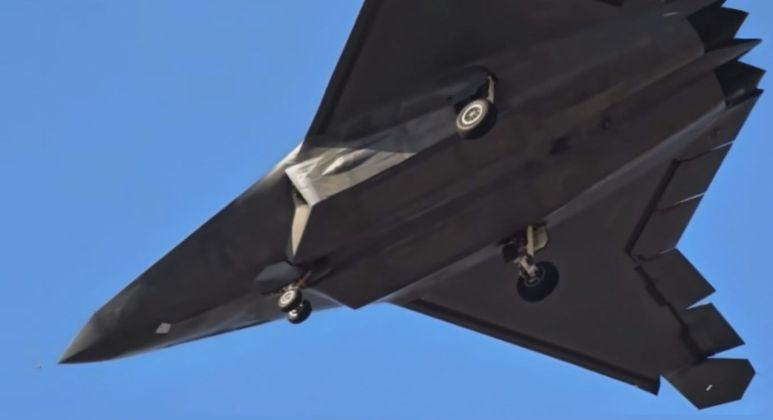
The KJ-3000 will surpass the KJ-500 and foreign systems in range, processing power, command-and-control capability, and above all in the power of its sensors, with the Y-20 airframe not only accommodating more subsystems, a larger crew, and a much larger radar, but also more power for onboard systems. Its integration of an air-to-air refuelling probe is expected to allow for persistent surveillance missions and continuous command-and-control coverage, including far out to see to support carrier groups or long range fighter or bomber operations. One of the primary focuses of the design appears to be detecting low-observable aircraft, with Chinese sources associated with the program having discussed detection requirements exceeding 360 kilometres against stealth targets, which is a substantial improvement over preceding systems. The aircraft’s service entry projected for the late 2020s or early 2030s is expected to be highly complementary to the service entry of the world’s first sixth generation fighters, with China appearing poised to lead the world by over a decade in bringing such aircraft into service.
