
Chinese J-10C Fighters Integrate With KJ-500 ‘Flying Radar’ Aircraft to Enhance Performance in High Intensity Combat Drills
Military Watch Magazine Editorial Staff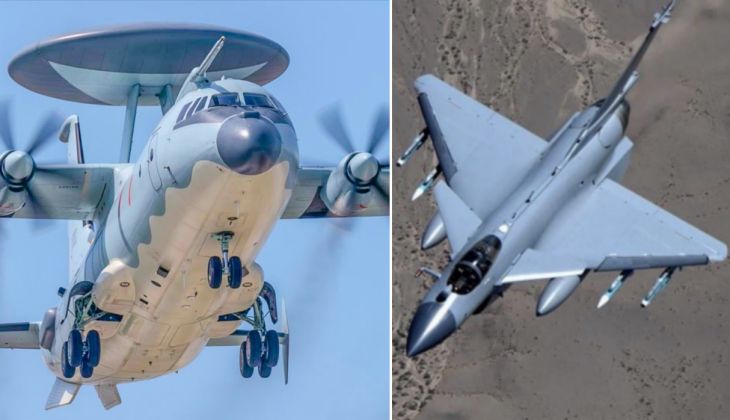
Chinese PLAAF KJ-500 AEW&C and J-10C Fighter
The Chinese People's Liberation Army (PLA) Air Force has deployed multiple J-10C fighter units to conduct high-intensity drills under complex electromagnetic conditions, highlighting their ability to integrate operations closely with both airborne early warning and control (AEW&C) systems such as the KJ-500, as well as with ground-based air defence and electronic warfare units. Observing the exercises, Chinese military expert Zhang Junshe noted when speaking to state media that the J-10’s evolution over itw two decades in service from a standalone platform to an integrated part of routine joint operations, reflecting a broader shift toward system-of-systems warfare. The J-10C is a lightweight single engine fighter, and carries a radar a fraction of the size of those of other PLA Air Force fighter types such as the J-16 and J-20, which makes support from AEW&Cs and ground radars particularly valuable to support operations. It was developed as a heavily enhanced ‘4+ generation’ variant of the original J-10 design, and entered service from 2018.
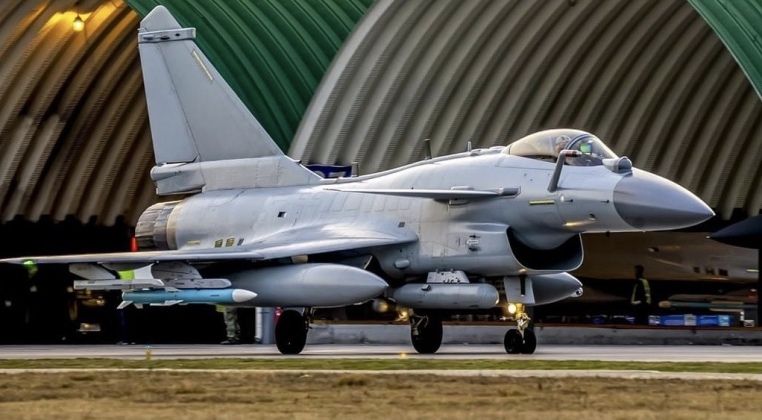
Citing Zhang, the state run Global Times observed regarding the benefits of integrating J-10 operations with AEW&Cs that systems like the KJ-500 “can significantly enhance combat effectiveness. Operating at high altitude, the early warning aircraft can detect aerial targets, including enemy aircraft and missiles, hundreds of kilometres away, and relay their position, speed, and altitude to the fighter via data links.” “With this information, the J-10C can conduct intercept manoeuvres while keeping its radar off or in a low-emission state. Only when approaching the target would it activate its radar to confirm and engage. This model combines the wide-area sensing capability of the early warning aircraft with the fighter's manoeuvrability,” it observed.
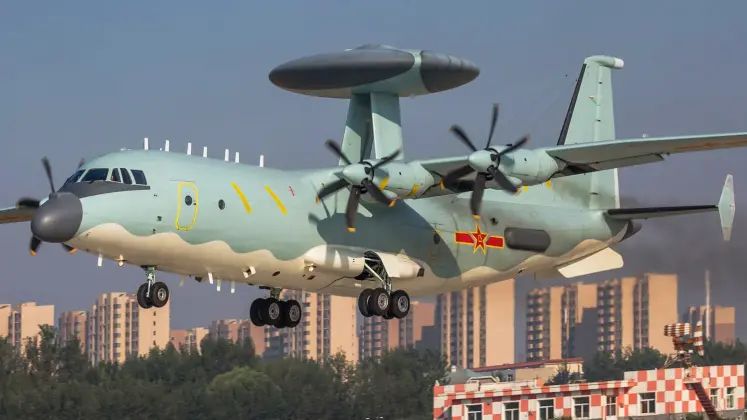
In early August 2025, the J-10C demonstrated the capability to engage targets with cutting edge stealth capabilities when operating with KJ-500 support, with one J-10C pilot credited with achieving a simulated shootdown of a J-20 fifth generation fighter during air-to-air combat exercises, according to reports from multiple Chinese state media outlets. Integrating one of the largest and most powerful airborne radars in the world, the KJ-500 vastly increases situational awareness against stealth targets, and can thus even the odds against targets like the J-20 and U.S. F-35. The J-10C pilot is reported to have simulated an air-to-air missile launch against the J-20, but afterwards could no longer detect the target, leading him to request support from the KJ-500 which allowed the missiles to reach its target.
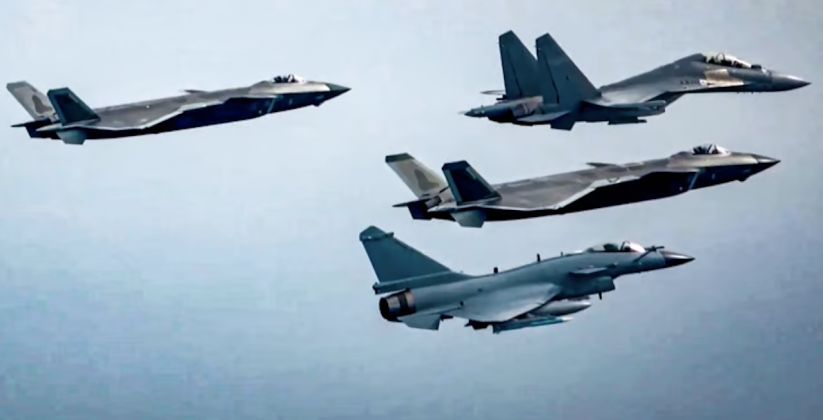
It remains in question how realistic the scenario that saw the J-10C shoot down a J-20 may have been, with aircraft like KJ-500s expected to be made priority targets for J-20 units, and being vulnerable at long ranges due to their large sizes and lack of manoeuvrability. This raises the possibility that a scripted engagement may not have allowed the J-20 to neutralise the KJ-500 before engaging its target, and that conditions had been intended to handicap the newer stealth fighter, which is not being marketed for export, to further increase the J-10C’s appeal to foreign clients. The J-10C has achieved impressive results in multiple exercises in the past, and was reported in 2020 to have consistently outperformed Russian-supplied Su-35 fighters during mock combat engagements in China, while also having reportedly proven capable of going head to head with the J-16,. It is nevertheless considered to be overwhelmingly outmatched by the J-20, which has widely been assessed to be the world’s premier air superiority fighter type.
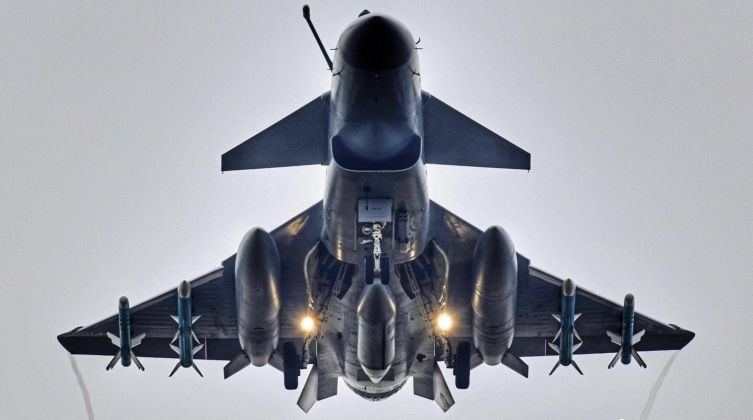
The recent simulated engagements carried out in mid-March, 2026, reportedly saw J-10Cs transition from tracking and lock-on, to high-G manoeuvring, and from beyond-visual-range to mid-range and close-range combat, while also continuously shifting between offence and defence. Beyond support for AEW&C systems, Zhang Junshe noted that coordinated operations between the J-10C and ground-based air defence systems could see ground-based radars assigned to detect low-altitude targets and guide fighters for interception. The J-10C can also share targeting data with ground-based air systems. This data sharing and coordination significantly improves the combat potentials of both J-10s and of ground-based air defence systems.
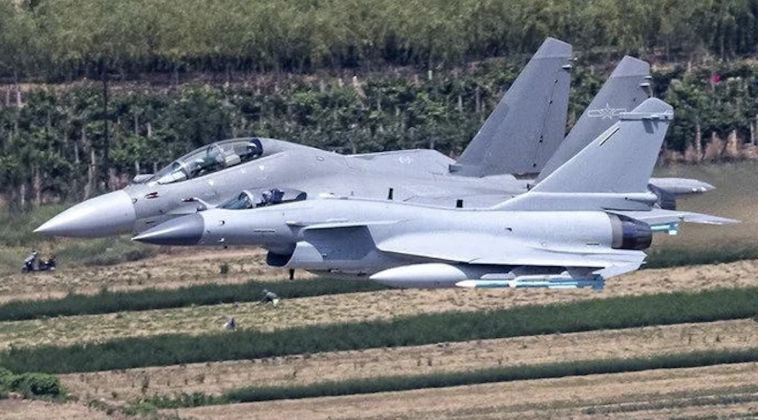
Chinese fighter types are generally far less reliant on support from AEW&Cs, ground radars, and tankers than Western fighter aircraft, as they are on average far larger, longer ranged, and carry much larger sensor suites. The J-16, for example, carries a radar over quadruple the size of of NATO’s two primary fighter type the F-16, and and close to triple the size the new F-35’s radar. The J-10C was developed in parallel to the twin engine heavyweight J-16 and J-20 as a similarly sophisticated, but much smaller, less costly and less maintenance intensive counterpart. The aircraft is much closer in its weight, range, radar size, and engine power to Western fighter types such as the F-16 and F-35, while the Western world has no fighters of comparable size to the J-16 which forms the backbone of the Chinese fleet.
