
U.S. Air Force’s Classified Budget Funds E-7 ‘Flying Radars’ to Track Chinese Stealth Fighters
Military Watch Magazine Editorial Staff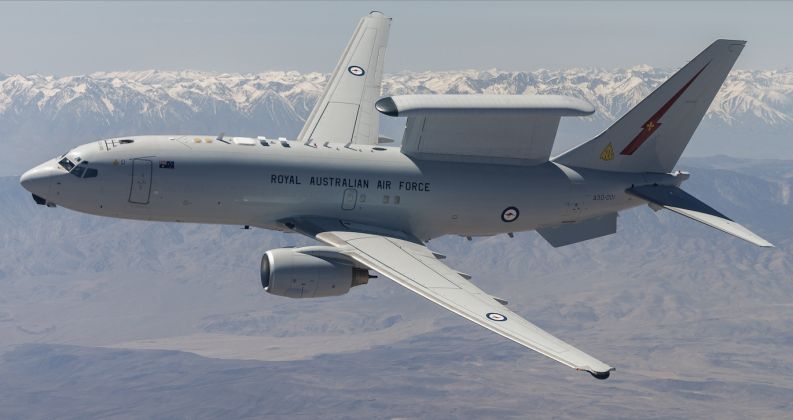
E-7 Wedgetail AEW&C System
The U.S. Department of War has announced plans to finance a $1.55 billion spending plan for the procurement of E-7 Wedgetail airborne early warning and control (AEW&C) systems in fiscal 2027, following controversial efforts by the department to cancel procurement plans in 2025. Air Force Secretary Troy Meink informed the House Armed Services Committee in May that a budget amendment of around $1.5 billion was expected, while more recently there have been indications that funds would include $651 million diverted from the Navy’s Aircraft Procurement account, and $899 million from the Air Force’s Other Procurement account, for a combined $1.55 billion. This fits into a broader trend towards the Navy’s programs recently being deprioritised in favour of those of the Air Force, with the Navy’s urgently needed F/A-XX sixth generation fighter program, which has previously appeared more secure than the rival Air Force program, having been defunded in 2025 to finance the Air Force’s F-47 fighter.
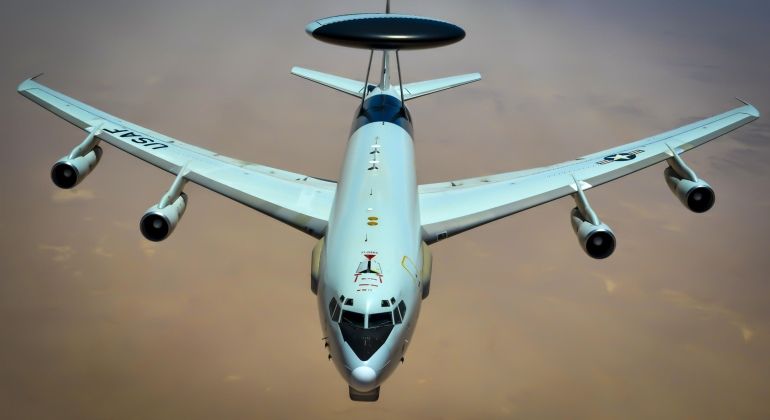
The procurement of the E-7 has been considered particularly vital due to the to growing obsolesce of the E-3 AEW&C system which the Air Force currently relies on, and to the considerable wear on the service’s E-3s which have resulted in very low availability rates and high operational costs. The cutting edge capabilities of China’s own new AEW&Cs, namely the KJ-500 and KJ-3000, have further strengthened the consensus on the need for a more modern AEW&C capability. U.S. fighter units rely significantly more heavily on AEW&C support than their Chinese or Russian counterparts, due to Chinese and Russian fighters on average carrying much larger and more powerful radars. The F-35, for example, carries a radar approximately one third the size of China’s J-15B and J-16 fighters.
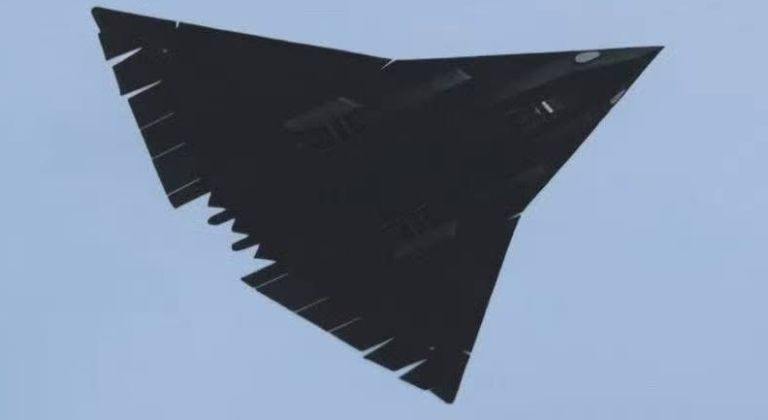
The Air Force first showed significant interest in procuring the E-7 following encounters with Chinese J-20 fifth generation fighters, with senior officers stressing that the E-3 was inadequate to track and support operations against such advanced stealth aircraft. Pacific Air Forces commander General Kenneth Wilsbach stated in March 2022 regarding the first encounter between F-35s and J-20s that E-3s in the region were suffering obsolescence issues, implying that as a result that during the encounter: “our early warning aircraft could not see the J-20…. Those sensors that we rely on the E-3 aren’t really capable in the twenty-first-century, especially against a [stealth] platform like the J-20 or something similar to that. It just can’t see those platforms far enough out to be able to provide an advantage to the shooters… that’s why I would like to have the E-7.” The rapid enhancement of the J-20’s stealth capabilities, and China’s projected fielding of the world’s first sixth generation fighters in the early 2030s, has further added to the urgency of this.
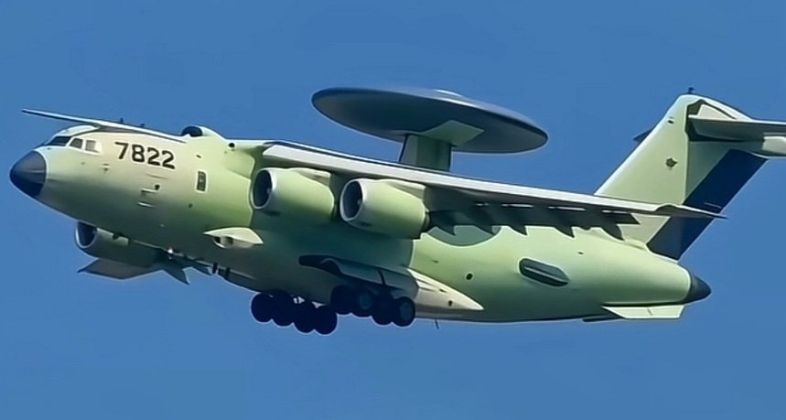
While the E-7 is significantly less costly than then E-3, it notably integrates a much smaller radar, making it comparable in size to China’s medium weight KJ-500 AEW&C system, but significantly smaller than its new KJ-3000 system which has no counterparts abroad. The development of the Chinese KJ-3000 AEW&C system has caused growing concerns in the Western world, with its potential to further expand China’s already significant advantage in airborne sensor capabilities having been alluded to a recent Pentagon report. Rather than a traditional three-panel phased array radar system, the KJ-3000’s an advanced conformal digital-array architecture provides true 360-degree coverage with improved sensitivity and processing capability. In contrast to the fixed arrays on the KJ-500, a new hybrid tracking system employing a rotating dome housing AESA radars maximises single aperture antenna size to spot low observable targets at extreme ranges, and allows for 360 degree volume searches while simultaneously focusing on critical sectors using high energy electronic steering. Considerable strain on the U.S. Air Force’s budget means a counterpart to the KJ-3000 is not expected to be funded.
