
U.S. Responds to Chinese Advances with World’s Longest Ranged Air-to-Air Missile Program
Military Watch Magazine Editorial Staff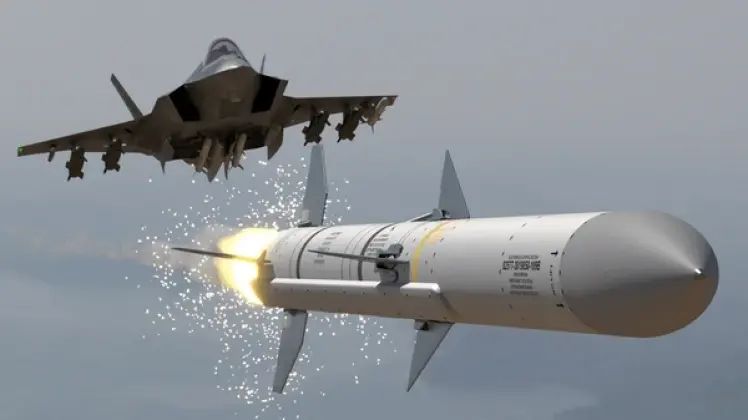
F-35 Launches Air-to-Air Missile - Artwork
The U.S. Air Force has confirmed that it is seeking industry proposals for the Air Force Long Range Weapon (AFLRW) air-to-air missile program, which according to an industry notice released by the Air Force Life Cycle Management Center is required to have a minimum range of 1,850 kilometres. The missile is expected to be developed in two variants, namely one for air-to-air combat and another for air-to-surface strikes. The Air Force has stated that the air-to-air version is its highest priority, reflecting growing concern over the need to engage high-value aircraft such as bombers, airborne early warning and control (AEW&C) systems, tankers and command-and-control platforms from well beyond the reach of current missiles.
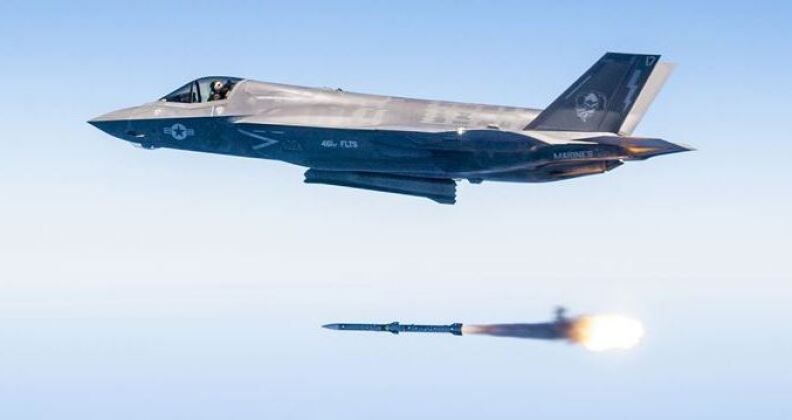
To place the range of the new missile in perspective, the currently longest ranged air-to-air missiles in service are the Chinese PL-17 with a 500 kilometre range, and the Russian R-37M and new U.S. Navy AIM-174 which have ranges estimated at 350-400 kilometres. These three missile types are all outstandingly large, and can only be carried by heavyweight fighters or interceptors like the J-16 or MiG-31 without having a severe impact on the launching aircraft’s flight performance. The only heavyweight fighter type in production in the Western world is the F-15, although its carrying capacity and endurance remain more limited than those of Chinese and Russian fighters. It has been speculated that the missile developed under the AFLRW program may also be intended to be integrated onto B-21 bombers.
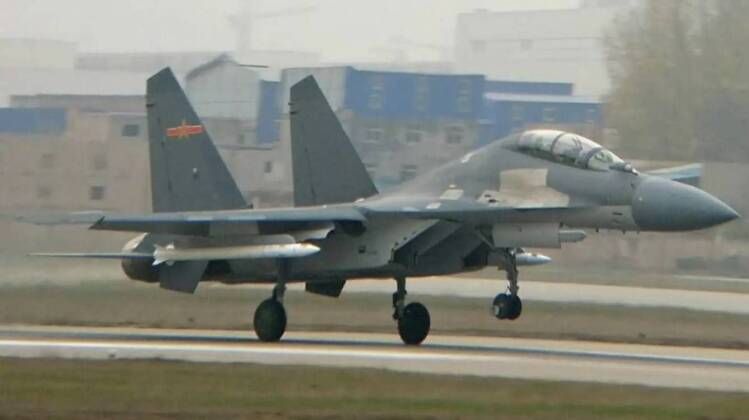
The initiation of the Air Force Long Range Weapon program appears to be, at least in part, a response to two related Chinese advances, including the development of very long-range air-to-air missiles, particularly the PL-17, and China’s rapid expansion of a highly capable airborne sensor network built around the KJ-500 and emerging KJ-3000 AEW&C aircraft. Together, these developments threaten one of the foundations of U.S. airpower: the ability to operate tankers and airborne early warning aircraft relatively safely behind the front line. While the PL-17 currently far outranges U.S. fighters’ own missiles, the AFLRW program seeks to reverse this disadvantage by extending American engagement ranges dramatically with a range well over triple that of the Chinese missile.
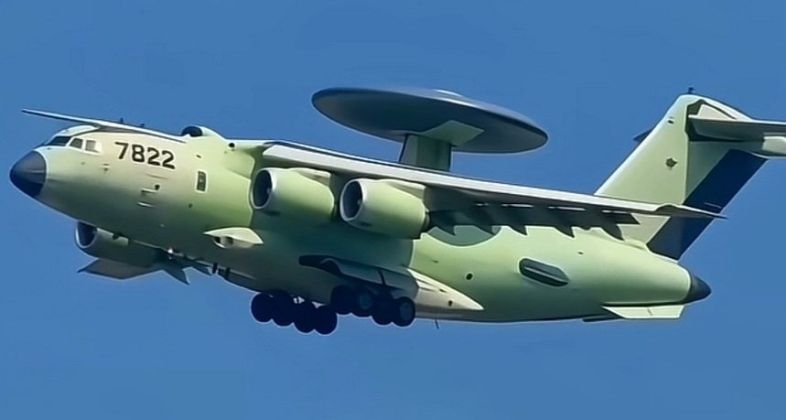
The U.S. has faced a growing disadvantage in its airborne sensor capabilities, with its E-3 fleet considered effectively obsolete, while procurement of new E-7 AEW&Cs has been seriously delayed, and even if entering service would still carrying far smaller and less complex sensors than the Chinese KJ-3000. The aircraft are also not expected to be available in comparable numbers to their Chinese counterparts, with open-source assessments suggesting that China has expanded its fleet around 50 KJ-500s while introducing other platforms such as the lighter KJ-600 in parallel. The AFLRW appears intended to attack this entire kill chain and provide a means of denying Chinese AEW&Cs a means to operate near combat zones.
