
JF-17 Over Baku? How the Sino-Pakistani Combat Jets Could Revolutionise Azerbaijan’s Air Force
Military Watch Magazine Editorial Staff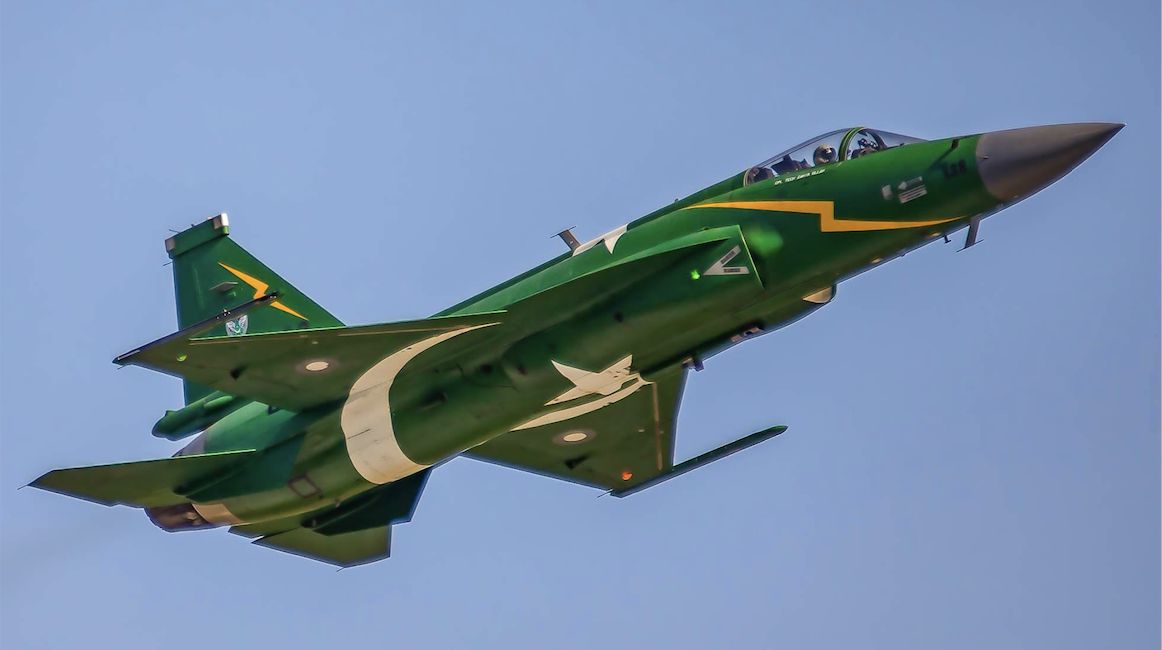
JF-17 Thunder Single Engine Fighter
Azerbaijan’s armed forces have expressed interest in acquiring the Sino-Pakistani JF-17 single engine fourth generation fighter since 2015, and the former Soviet republic could well become the third foreign client for the fighter jet after Myanmar and Nigeria. A number of reports indicate that the Azeri Air Force is set to finalise a contract for the acquisition of up to two dozen of the JF-17 Block II single engine multirole fighters with Pakistan to modernise its warfighting capabilities. While Baku has enjoyed a close defence partnership with Israel, and increasingly with NATO countries and Turkey in particular, these parties are not capable of manufacturing a capable low cost combat jet suitable for the country’s Air Force. With relations relations with Russia remaining far from friendly, and the with the country looking to strengthen its defences against both neighbouring Armenia and Iran, the JF-17 could well be the ideal fighter jet for the country.
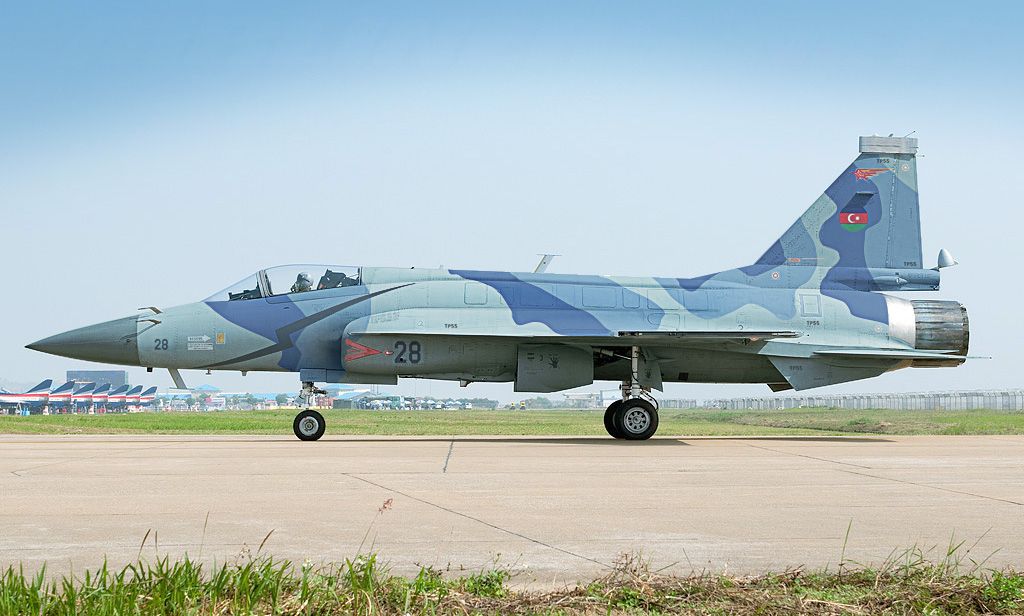
While Azerbaijan’s Air Force has acquired formidable unmanned combat aircraft from Israel such as the Hermes 450, the capabilities of its manned fleet currently retains extremely limited. The country’s fighter fleet is comprised of approximately a dozen MiG-29 jets inherited from the USSR forming a single squadron, with minimal investment in modernisation of these assets. A second mixed squadron of Su-24 strike fighters and Su-25 attack jets is dedicated to air to ground operations, but is in capable of contesting air superiority. Neighbouring Armenia's order for Russian Su-30SM fighters in February 2019, elite platforms decades ahead of Azerbaijan's own jets in their sophistication, have exposed a considerable Azeri weakness in the form of its air to air combat capabilities - with Azeri MiG-29 jets not compatible with modern air to air missiles such as the R-77 and R-27ER due to their age leaving them at an overwhelming disadvantage. Thus the acquisition of even a small contingent of one or two dozen JF-17 Block II fighters, which deploy modern PL-12 long range air to air missiles comparable to the R-77 and provide a robust beyond visual range air to air capability, will revolutionise the country’s aerial warfare capabilities. While the country has acquired Turkish SOM cruise missiles, they are not currently compatible with combat aircraft in the Azeri Air Force - but could potentially be fitted onto the JF-17 to provide a lethal strike capability. The SOM retains a 250km range and a radar cross section reducing profile, and follows a terrain hugging trajectory which makes it extremely difficult to intercept. Alternatively, the JF-17's own Chinese built YJ-12 cruise missiles provide considerably superior capabilities to their Turkish counterpart with a longer range and near hypersonic speed of over Mach 4. The ability to launch early precision strikes from the air can provide effective parity with Armenia’s land based Iskander ballistic missiles and soon to be delivered Su-30SM jets acquired from Russia - the latter which are compatible with a wide array of modern standoff munitions.
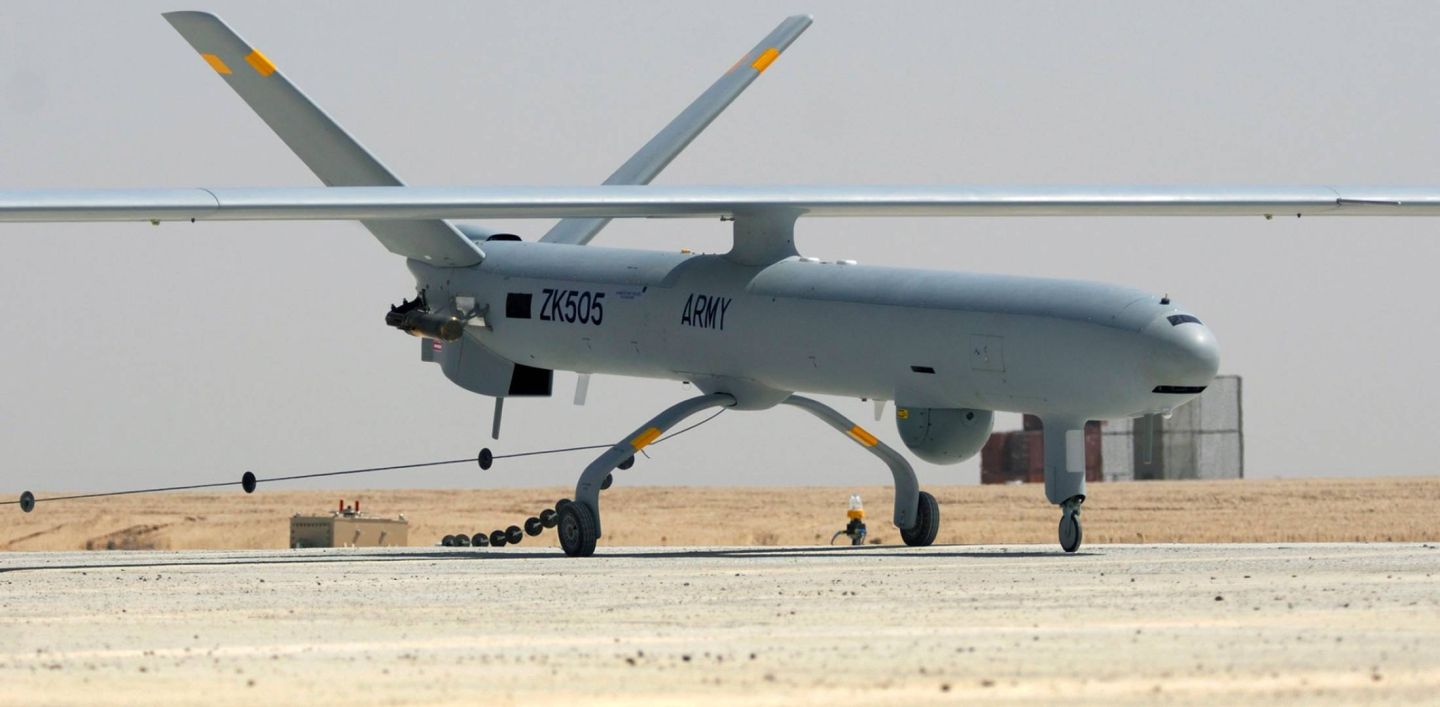
The JF-17 is derived from the Chinese J-7, and inherits the older jet's low maintenance requirements and acquisition costs make it a particularly attractive option for the cash strapped Central Asian state. The fighter is expected to be more than a match for Iran’s indigenous Kowsar fighters - though this remains to be seen and depends heavily on the types of munitions compatible with the Kowsar. To provide the Azeri Air Force with a better chance of countering heavier and more capable Iranian fighters such as the F-4 and F-14, Azerbaijan may well look to make a followup order for the more advanced JF-17 Block III once it becomes available for export in the early 2020s. The fighter is set to deploy an advanced signature reducing AESA radar and a radar cross section reducing profile - while coming at a small fraction of Western manufactured alternatives. With only the F-14 in the Iranian fleet currently deploying advanced long ranged air to air missiles, PL-12 equipped JF-17 squadrons are likely to have a considerable advantage over other units in the Iranian Air Force such as the F-4E, F-5E and MiG-29A which comprise the bulk of its fleet and are inadequately armed.
