
JF-17 Block 3 vs. F-16C: How Pakistan’s New Fighter Will Leave the American Fighting Falcon Far Behind
Military Watch Magazine Editorial Staff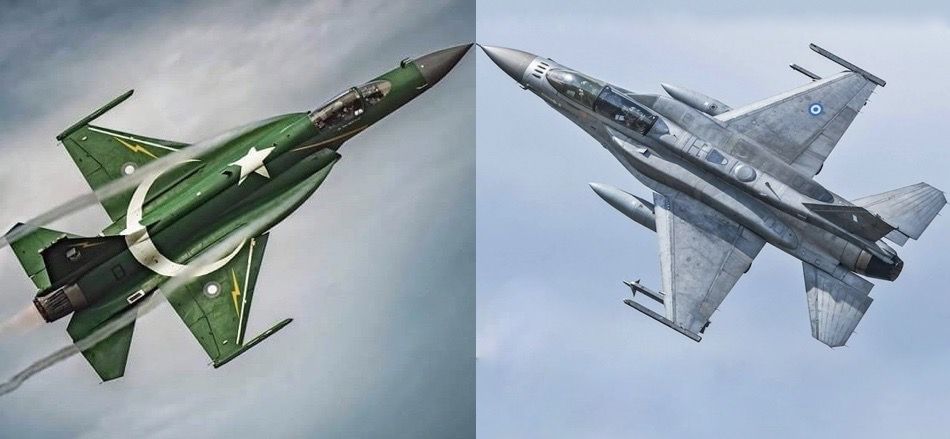
JF-17 Thunder vs. F-16 Fighting Falcon
The JF-17 lightweight single engine fourth generation fighter program, jointly pursued by China’s Chengdu Aircraft Industry Group and the Pakistan Aeronautical Complex, has been at the centre of the Pakistani Air Force’s fleet modernisation plans - with the number of JF-17 fighters set to be fielded expected to exceed 200 aircraft. Where previously the bulk of the Pakistani fleet was comprised of near obsolete Cold War era jets, including several hundred Mirage III and Mirage 5 platforms complemented by an elite of Chinese J-7 aircraft, leaving its only modern fighter the F-16 Fighting Falcon as a small minority, the JF-17 has helped to bring the fleet up to a far more modern standard. Manufacturing the aircraft domestically, and its lightweight design which prizes low operational costs and maintenance requirements - quite possibly the lowest among fourth generation aircraft, make phasing out older and less complex fighters for JF-17 aircraft far more feasible.
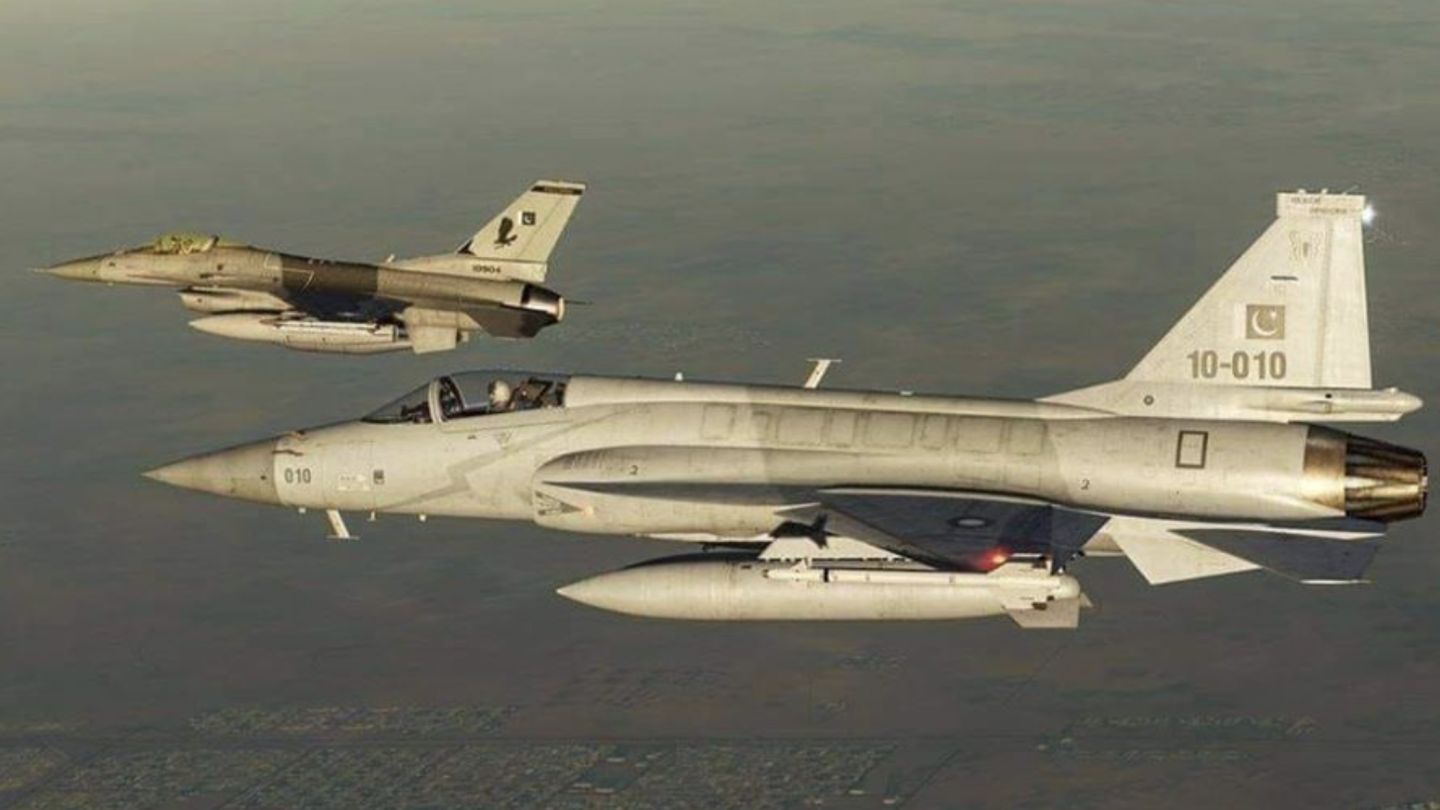
The JF-17 Block 2, the second iteration of the fighter, was considered comparable in its capabilities to the F-16, although the more modern F-16C variants did enjoy some flight performance advantages which came at the expense of higher maintenance requirements and a lower sortie rate. The JF-17 did retain a number of other advantages however, including a higher operational altitude and far superior anti ship capabilities due to the types of munitions it had access to such as the C-802 cruise missile. Of approximately 65 F-16s in Pakistan service however, only 18 of Pakistan’s F-16s are of the more modern F-16C standard - with the remainder being of the older F-16A variant which lack the modern sensors, avionics and electronic warfare systems or the endurance of their successors. Thus the F-16C formed what was arguably the small elite of the Pakistani Air Force, exceeding the capabilities of the original F-16A in beyond visual range combat as well as, by a smaller margin, those of the JF-17 Block 2.
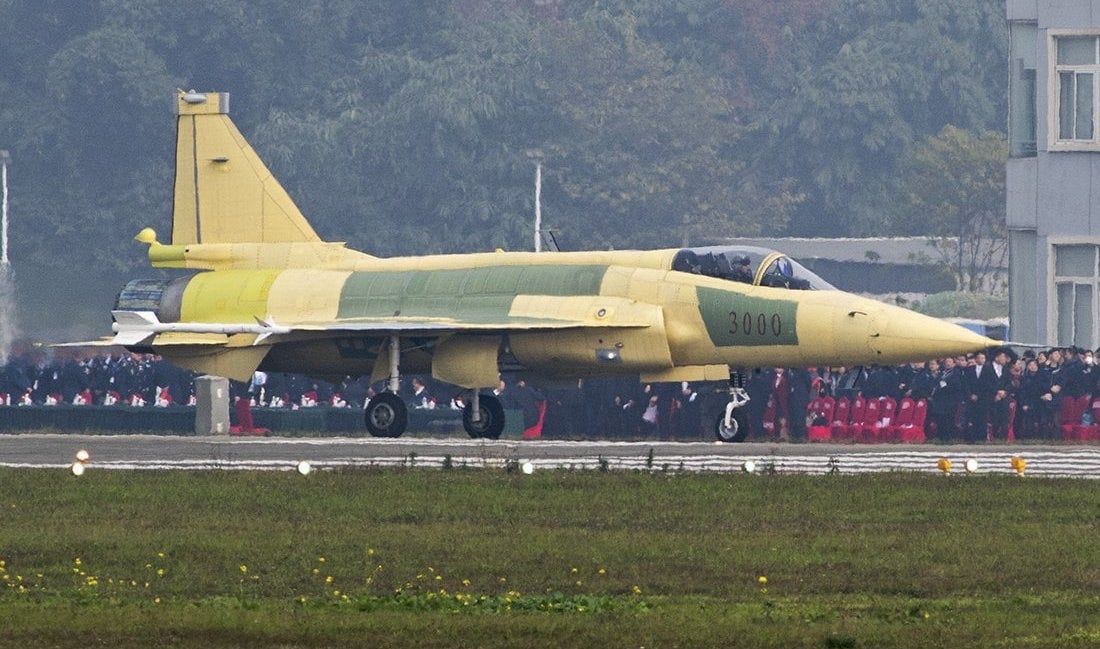
With the JF-17 Block 3 fighter unveiled in December 2019, and expected to enter service from around 2022, the aircraft will outperform all existing Pakistani fighters, the F-16C included, by a considerable margin. While the new aircraft has a new engine and makes more use of light composite materials for a superior flight performance, including the ability to exceed Mach 2 speeds, the platform’s most significant improvements are arguably those made to its beyond visual range capabilities. The JF-17 Block 3’s avionics are nothing less than state of the art, with a heads up display, a full glass cockpit and new single panel multi functional display, and the aircraft also integrates a powerful AESA radar - possibly the KLJ-7A. An AESA radar will be key to the JF-17 Block 3’s performance, and its sophistication will compensate for the relatively small size of the radar the fighter can accommodate and provide the situational awareness needed to make effective use of longer ranged munitions such as the PL-15 air to air missile. This missile has approximately double the range of the AIM-120C used by the F-16C - approximately 200km where the AIM-120 is restricted to around 105km. The PL-15 has been integrated onto China’s new generation of fighters which all integrate AESA radars, the J-20, J-16, and J-10C, and has reportedly begun integration onto older designs such as the J-11B.
Advantages of integrating an AESA radar not only allows the JF-17 Block 3 to detect targets at far longer ranges, and to track and lock onto more targets simultaneously, but its is also less prone to jamming and leaves a far lower radar signature - meaning it is both more reliable and makes the fighter more difficult to detect. Alongside state of the art Chinese electronic warfare systems, and what appears to be a radar cross section reducing profile, a combination of modern avionics, and AESA radar and PL-15 missiles will make the JF-17 Block 3 an extremely lethal fighter for beyond visual range combat considerably more capable than any fighter currently in Pakistani service including the F-16. While some more sophisticated variants of the F-16 can boast capabilities which rival the JF-17 Block 3, namely the F-16E and F-2, only two countries operate these aircraft which have not been made available to the vast majority of clients. Compared to the JF-17 Block 3, the F-16C is expected to have a slower speed, lower sortie rate, lower operational altitude, poorer situational awareness and electronic warfare capabilities, inferior anti shipping capabilities and a considerably lower air to air engagement range. The JF-17 Block 3 is thus expected to form the elite of the Pakistani fleet, and have considerable export success to a range of interested clients such as Egypt and Myanmar. A more ambitious light fighter project is currently under way to succeed the JF-17 Block 3, the Project AZM stealth fighter program, which is also being pursued jointly by China and Pakistan.
