
Islamabad's Mirage Fighters; How Pakistan has Upgraded its Second Generation Combat Aircraft for Modern Warfare
Military Watch Magazine Editorial Staff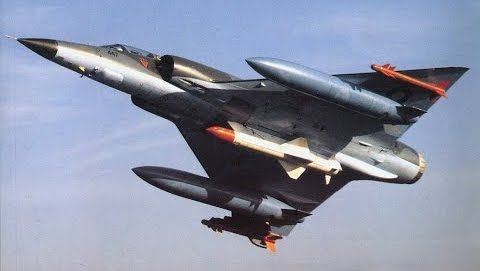
Pakistani Mirage Fighter
Entering active service in the early 1960s, the Mirage III served as the French Air Force’s primary combat jet during the mid Cold War War and was exported widely to a number of Western clients across the world. The fighter was a much cheaper alternative to the elite U.S. F-4 Phantom, and though it lacked the cutting edge capabilities of the lighter and more versatile U.S. F-5 Freedom Fighter it still proved a popular export to a number of states. The French single engine fighter saw action during number of conflicts, most prolifically the Six Day War in Israeli hands, the Yom Kippur War on both sides and the Falklands War. Shortly after its induction, the fighter was developed into the Mirage 5 - an attack jet based on the same airframe. The modification was extremely simple, involving only the replacement of avionics located behind the cockpit with additional fuel to enhance the platform’s range and reduce its cost - but limiting its air to air combat capabilities. While the two aircraft have long since been retired by the majority of their operators, the Pakistani Air Force remains the only operator of the Mirage III and the only major operator of the Mirage 5 - fighters the country’s military has gone to great lengths to modernise and upgrade to keep them viable for modern warfare.
Pakistan acquired its first Mirage III fighters in 1967, the year the fighters stunned the world with their overwhelming victory over an air fleet several times their seize during the Six Day War. Though the Mirage in Israeli hands was less capable than the Soviet made MiG-21 operated by its Arab adversaries, the far superior training and preparation of the Israeli Air Force led it to prevail against overwhelming odds - promoting sales of the French aircraft across the world. Pakistan’s Air Force would use the Mirage III highly effectively during the 1971 Indo-Pakistani War while suffering no losses. While the Pakistani Air Force has since inducted far more capable combat aircraft including the J-7, an advanced Chinese variant of the MiG-21, the U.S. F-16 Falcon, acquired in the late 1970s, and the indigenous JF-17 Thunder produced jointly with China, the service has still sought to keep its Mirage fighters operational as a highly cost effective means of retaining a large air fleet. To prevent these fighters from falling into complete obsolescence, the military undertook an extensive upgrade program - known as Project ROSE.
During the 1990s Pakistan’s ability to modernise its military was seriously restricted. With the country’s strategic importance as a partner of the United States having declined substantially following the Soviet Union’s collapse and the fall of the Democratic Republic of Afghanistan, the United States placed an economic and military embargo on the South Asian state to press the country to give up its nuclear weapons program. With no more deliveries of new F-16 fourth generation fighters, and a shortage of spare parts to service existing jets, Pakistan’s decision to modernise its Mirage fleet was a step towards greater self reliance. The military’s situation seemed particularly dire in light of both its heavy reliance on American infrastructure and weapons, as well as the rapid modernisation of the Indian Air Force which was acquiring some of the world’s most capable fighter jets from the then cash strapped Russian Federation.
Under the refurbishment program, Pakistan’s Mirage fleet was upgraded with third and fourth generation technologies allowing them to remain viable in modern warfare. The program was initiated in 1995, and involved all new weapons, avionics and electronics systems for the ageing fighters. With the Pakistani Air Force fielding approximately 200 Mirage fighters, the military could afford to invest in developing a modernised variant for the fighter to be applied on a large scale. Over 90% of the aircraft were retrofitted at Pakistan’s Kamra Aeronautical Complex, which continues to service them to this day. The program extended the lives of the fighters substantially, and included addition of a heads up display (HUD), hands on throttle and stick (HOTAS) controls, a new multi function displays (MFD) and radar altimeter and a Sagem attack system. The combat aircraft were also equipped with an inertial navigation system, a GPS system, a new radar warning receiver (RWR) and a modern electronic countermeasures (ECM) suite. A Grifo M3 multi mode radar system, which allowed the fighters to engage their adversaries at beyond visual range, was also installed which revolutionised their situational awareness. A basic countermeasure dispensing system, relying on decoy flares and chaff to confuse enemy missiles and radar, was also added. Some fighters were also equipped with in flight refuelling probes of South African origin to allow them to undertake offensive operations more effectively.
Ultimately while paling in comparison to the JF-17 and F-16C, and struggling to contend with even the J-7, Pakistan’s modernised Mirage fighters are nevertheless a formidable asset which enlarge the country’s fleet considerably. While Project ROSE was hardly as extensive as the Chinese and North Korean programs to modernise the J-7 and MiG-21 or the Israeli program to upgrade the F-5 and MiG-21, it nevertheless represents a considerable achievement for the Pakistani Air Force. The country’s Mirage fighters are set to remain in service well into the 2020s, though they will likely be replaced by more capable domestically manufactured JF-17 fighters in the coming years.
