
Israel Approves Major Expansion of Advanced Fighter Fleet with F-15IA and F-35I Orders
Military Watch Magazine Editorial Staff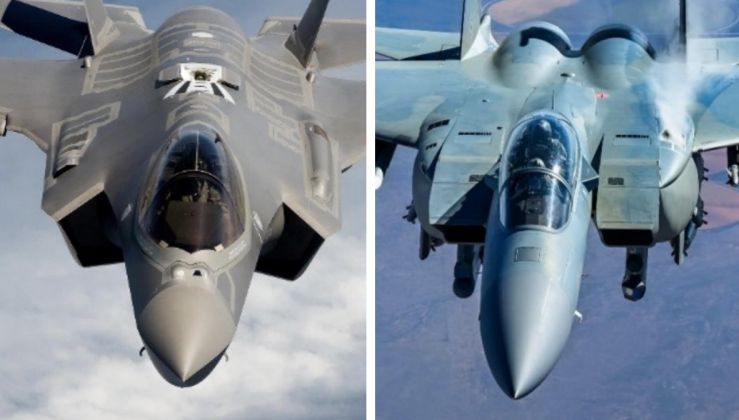
F-35 (left) and F-15 Fighters
The Israeli Ministerial Committee on Procurement has approved the procurement of two additional squadrons of advanced fighter aircraft, namely one each of F-15IA and F-35I fighters, as part of a broader 350 billion shekel ($119 billion) military modernisation plan. The F-15IA and F-35I are modified variants of the F-15EX and F-35A fighters currently being procured by the U.S. Air Force. The procurement is intended to strengthen the Israeli Air Force’s operational readiness over the next decade, with a strong focus on air dominance, deterrence, and improving the capability to launch powerful and rapid strikes. The two fighter types are considered highly complementary, with the F-35’s advanced electronic intelligence and stealth capabilities making it optimal for air defence suppression, while the F-15’s long range, high weapons carrying capacity and large radar make it a capable workhorse for delivering ordinance over long distances and providing high levels of situational awareness to wider Israeli networks.
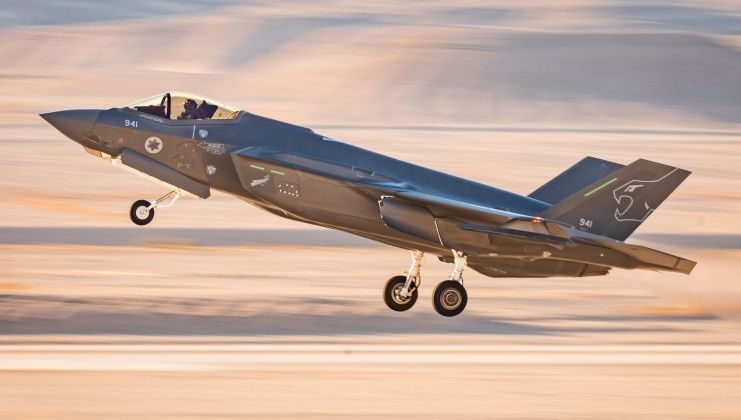
The approval for procurements has been given after the F-35 fighter program’s primary contractor Lockheed Martin was in early April awarded a $11.4 million contract modification to develop additional software for Israel’s F-35 fleet, namely to produce three software data loads referred to as “productionised plus builds.” The timing of the program has fuelled speculation that it may be intended to modify the fighters specifically in response to experience flying them for high intensity operations against Iranian and Lebanese Hezbollah forces, after the U.S. and Israel launched a major military assault against Iran on February 28. The Israeli Air Force is the only foreign service which has gained permission to extensively customise its F-35 fleet and integrate indigenous avionics, which was insisted on by the Defence Ministry largely due to concerns that the aircraft’s stealth capabilities could not be relied on exclusively to ensure survivability in future. Although Israeli personnel cannot fully access or modify the aircraft’s source code, they can ‘plug in’ additional code on top of it, including indigenous electronic warfare systems.
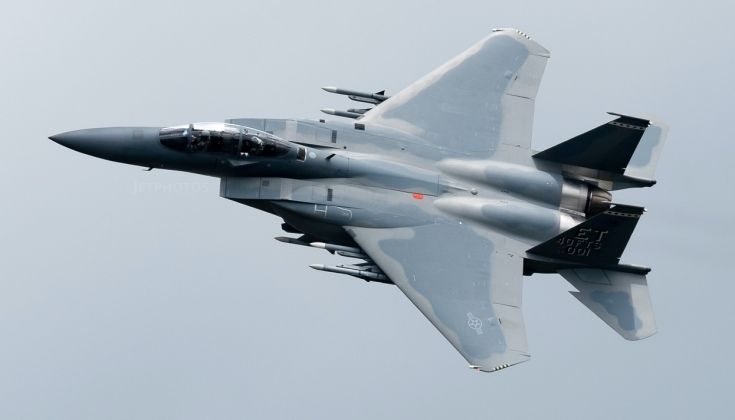
In December 2025 a U.S. Department of War contract notice confirmed that Boeing had received a ceiling $8,577,700,000 award to produce F-15IA fighters to equip the Israeli Air Force. The F-15 is currently the most expensive fighter type on export markets anywhere in the world, and the only long range fighter type in the Western world. Although it is by far the oldest fighter type still in production anywhere in the world, the F-15 has been modernised considerably largely with Saudi and Qatari funding to allow new variants to remain viable. The F-15EX and F-15IA’s primary improvements over older F-15 variants include the integration of a fly-by-wire control system which significantly improves flight performance and expands the aircraft’s weapons payload, as well as the integration of the new AN/APG 82(V)1 active electronically scanned array radar, which is by far the most powerful integrated onto a Western fighter type.
The U.S. Armed Forces’ fleets of F-35s operated by the Air Force, Marines, and Navy have continued to suffer low availably rates, which the Defense Department’s Office of the Inspector General’s latest report revealed remained at just 50 percent. The prioritisation of Israel by multiple F-35 program members in the Western world to receive spare parts, however, has allows the Israeli Air Force to maintain higher availability rates for its fleet. This prioritisation reflects the country’s perceived status as a key frontline actor working to secure broader Western Bloc interests in the Middle East region. The F-35’s relatively short airframe lifetime of just 8000 hours, compared to 20,000 hours for the F-15EX, makes it particularly prone to seeing maintenance requirements and sustainment costs rise significantly over its lifetime.
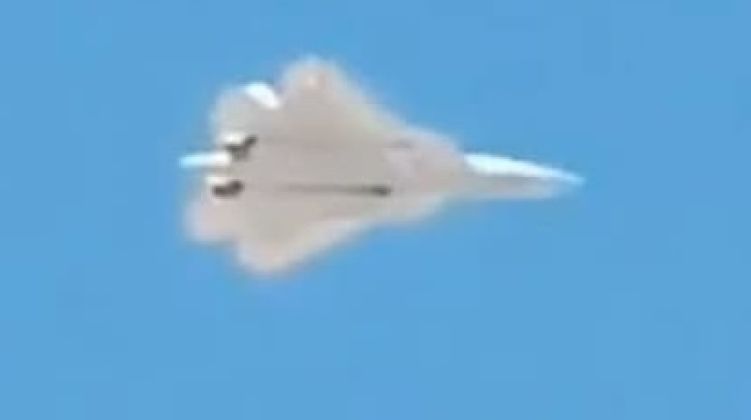
The Israeli F-35 and F-15 fleets are expected to face growing challenges to their air dominance, as Russia begins to export advanced ‘4+ generation’ and fifth generation fighters to Iran and Algeria, which remain the only state actors in the Middle East and North Africa region outside the Western sphere of influence. The Algerian Air Force was confirmed to have received its first Su-35 air superiority fighters in February 2025, and subsequently its first Su-57 fifth generation fighters in November that year, making it the first export client for a fifth generation fighter type other than the F-35. Following confirmation in 2025 that the Iranian Defence Ministry had ordered 48 Su-35 fighters, and in January 2026 that the country’s air force begun to receive Mi-28 attack helicopters, in early February Russian Industry and Trade Minister Anton Alikhanov announced that contracts had been signed in the Middle East for the export of the Su-57. Although Iran was not named specifically, it is considered the only likely client for the aircraft in the region.
