
Iranian Army Receives New Batches of Russian Mi-28 Attack Helicopters as U.S. Attack Looms
Military Watch Magazine Editorial Staff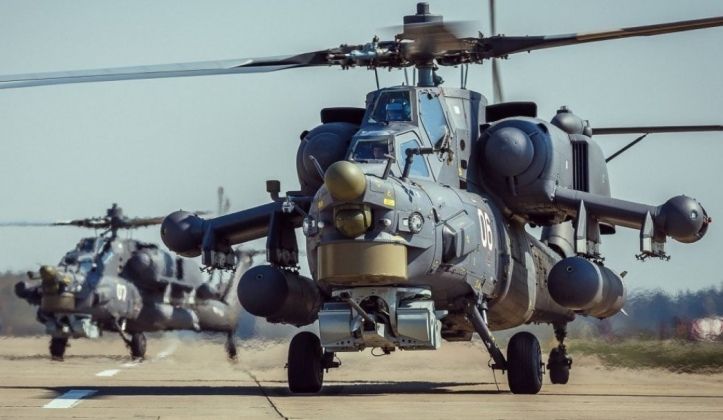
Mi-28 Attack Helicopters
The Iranian Army has reportedly received multiple new batches of Russian Mi-28 attack helicopters, following confirmation in January that the first of the new aircraft had been delivered. The operationalisation of the Mi-28 marks the first significant improvement to the Iranian attack helicopter fleet in over half a century, with the aircraft expected to replace a fleet of approximately 50 Vietnam War era AH-1 Corbras that were supplied by the United States in the 1970s. The possibility has also been raised by analysts that the new attack helicopters could also be used to equip the Revolutionary Guard Corps Aerospace Force, which deploys Su-22M4 strike fighters and a range of unmanned combat aircraft. The Mi-28 is the first post-Soviet combat aircraft which Russia has delivered to Iran.
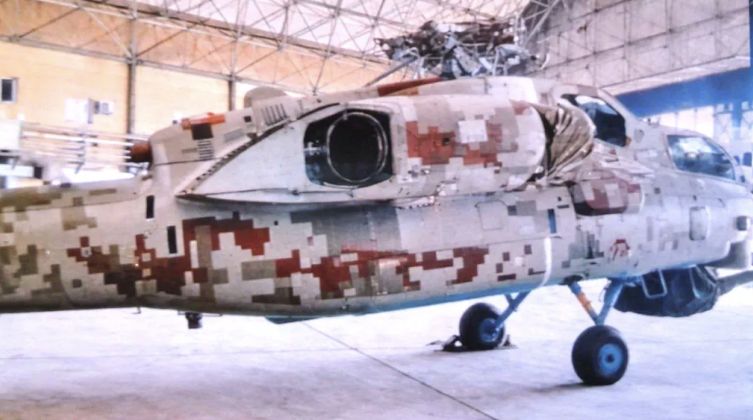
Iranian Deputy Defence Minister Brigadier General Mehdi Farahi in November 2023 confirmed plans to introduce the Mi-28 and the Su-35 air superiority fighter into service, with the service entry of the Su-35 expected to significantly strengthen Iranian air defences, providing highly complementary capabilities to the current ground-based air defence network. With the Su-35s having yet to arrive in the country, however, Iran has since January faced a major buildup of U.S. forces in the Middle East. While the Mi-28 is considered among the world’s most capable attack helicopter types, the expected heavily reliance on aviation and missile assets for a potential U.S. attack on Iran will likely limit its utility. With Western-backed paramilitary units in Iran have extensively targeted the country’s critical infrastructure and its air defence systems, however, which was acheived Western and Israeli supplied weaponry, the Mi-28 could provide an invaluable rapid response capability against such attacks within Iran. The aircraft may also prove valuable for anti-drone duties, particularly after U.S. forces made an unprecedented use of loitering munitions during attacks on Venezuela on January 3.
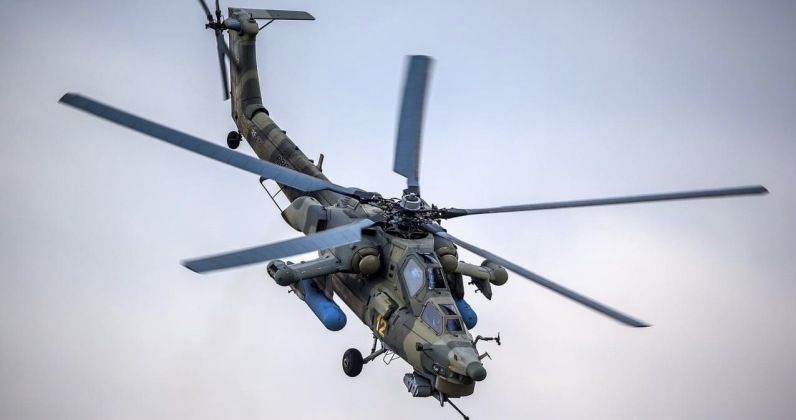
The Iranian attack helicopter fleet has long been considered underwhelming in its capabilities, and suffered overwhelming losses in the Iran-Iraq War when engaging the Iraqi Army’s Soviet-supplied Mi-24 attack helicopters in large scale air battles. The procurement of the Mi-28 could represent a turning point in this regard, with Iranian forces having gained experience operating alongside the new helicopters against various Islamist terror groups, both in Iraq with support of Iraqi Army Mi-28s in the 2010s, and in Syria where Russia deployed Mi-28s to support counterinsurgency efforts. The latest variant of the Mi-28, the Mi-28NM, was first combat tested in Syria from 2016, with its performance in the theatre thought to have been a major factor influencing the Russian Defence Ministry to sign contracts for the supply of 98 more aircraft by 2027.
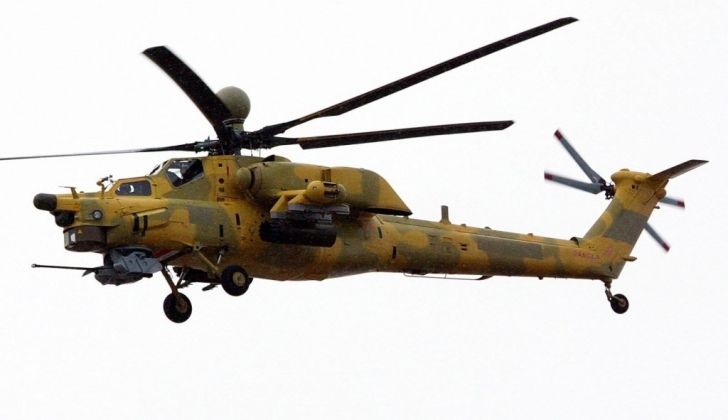
The Mi-28’s design has pioneered outstandingly high levels of crew protection, with its titanium cockpit protected by armoured glass and ceramic plates capable of withstanding hits from 20mm rounds. The helicopters are exceptionally agile despite their heavy armour, capable of a roll angle of up to 70 degrees, compared to just 45-60 degrees for the preceding Mi-24. The Mi-28’s ability to handle a vertical load factor of 2.8G, compared to just 1.8G for the Mi-24, also allows for tighter turns, with the aircraft’s unique light performance characteristics allowing it to perform aerobatic manoeuvres like loops, and to fly in ways that confuse air defence systems, such as flying sideways and backwards at high speed. Integrating the LMUR anti-tank missile, the helicopters can engage targets at safe distances of up to 25 kilometres away.
