
Boeing Beginning Work on Israel’s Most Expensive Fighter: What Will the New F-15IA Do For its Air Force?
Military Watch Magazine Editorial Staff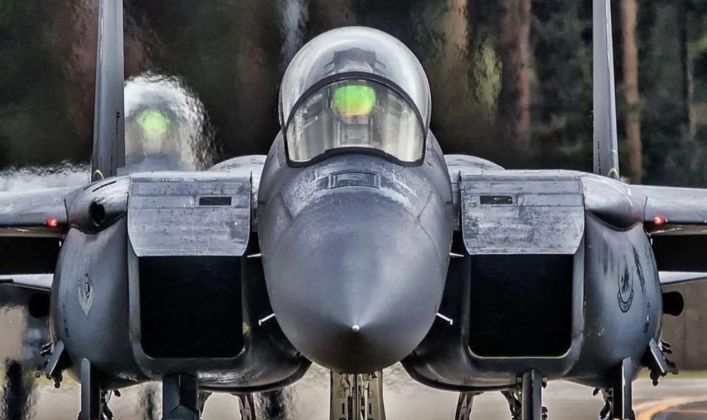
F-15 Fighter
USAF
A U.S. Department of War contract notice has confirmed that Boeing received a ceiling $8,577,700,000 award to produce F-15IA heavyweight fighter aircraft to equip the Israeli Air Force. The effort covers the design, integration, instrumentation, test, production, and delivery of the fighters, with the option for the production of 25 more. Israel is the first country to place an export order for the F-15 in over eight years, since Qatar procured 25 F-15QA fighters in 2017, with the aircraft having since been ordered only by the U.S. Air Force, which is acquiring the F-15EX variant. Although the F-15 is by far the oldest fighter type still in production anywhere in the world, it is also by far the heaviest and longest ranged in the Western world, and the most costly currently in production. Israeli procurements of an expected 50 fighters will allow it to phase its older F-15A/B and F-15C/D fighters acquired from the mid-1970s out of service, which are by a significant margin the oldest F-15s operational anywhere in the world.
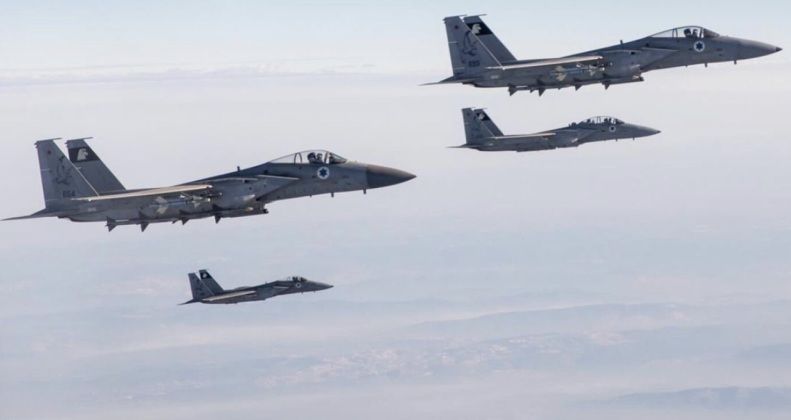
The F-15IA is closely based on the F-15EX, which saw most of its research and development work financed by Saudi and Qatari orders for the F-15SA and F-15QA in the 2010s. Primary improvements over older F-15 variants include the integration of a fly-by-wire control system which significantly improves flight performance and expands the aircraft’s weapons payload, as well as the integration of the new AN/APG 82(V)1 active electronically scanned array radar which is the most powerful carried by any fighter type in the Western world, and approximately 50 percent larger than the F-35 fighter’s AN/APG-81. Customisation for Israeli requirements is expected to centre around the integration of indigenous avionics, primarily electronic warfare systems, and possibly indigenous armaments such as Python 5 visual range air-to-air missiles and Delilah air-launched cruise missile.
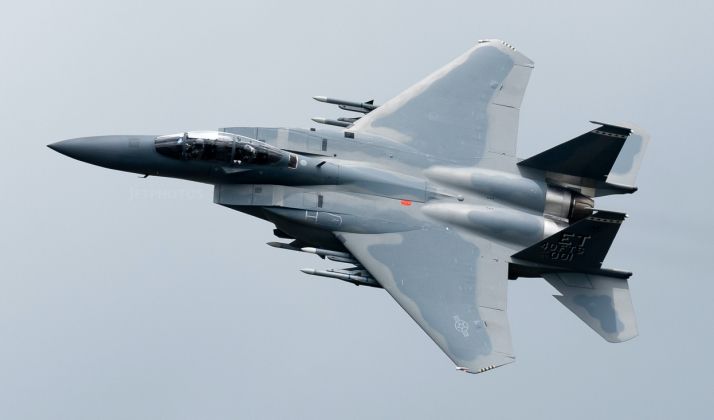
One of the most outstanding features of the F-15EX is its unprecedented longevity, with the fighter having ben designed to operate for 20,000 hours before requiring life extension or retirement, compared to just 8,000 hours for the F-35A and the older variants of the F-15. This will not only significantly reduce maintenance needs, ensuring the aircraft become worn out much more slowly, but also makes the fighters a much more cost effective investment in the long term, allowing them to serve into the 2070s and beyond. Thus although the fighters are considerably more costly than the F-35A both to procure and to sustain, this is counterbalanced by their 150 percent longer service lives.
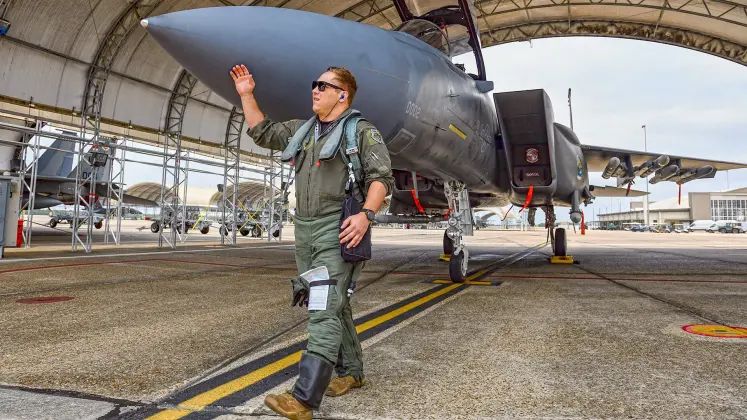
The F-15 has long competed for funding with the F-35, and while Israel has ordered 75 F-35s, the possibility was raised repeatedly throughout the 2010s that the urgent need for more F-15s could lead to delays in F-35 procurements. Although lacking the F-35’s stealth capabilities and many of its advanced avionics features, the F-15IA’s advantages include its far longer range, higher weapons carrying capacity, and more powerful radar. Its range is particularly critical as the Israeli Air Force has been deployed for operations to strike targets over long distances in Africa, Yemen, and Iran, which are more challenging for the F-35 to reach. Iran’s use of drone swarms to respond to Israeli attacks has further made the F-15’s ability to carry large numbers of air-to-air missile per sortie highly valued. There has been significant speculation that the F-15 will also be one of the first Western fighter types to integrate laser weapons systems, which would be optimal for counter-drone operations.
