
U.S. Initiates Major Upgrade For Israeli F-35 Stealth Fighters Amid Ceasefire with Iran
Military Watch Magazine Editorial Staff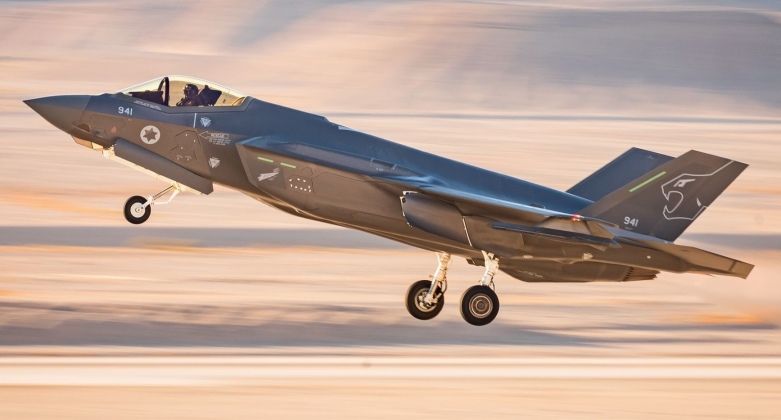
Israeli Air Force F-35I Fighter
The F-35 fighter program’s primary contractor Lockheed Martin has been awarded a $11.4 million contract modification to develop additional software for Israel’s F-35 fleet, namely to produce three software data loads referred to as “productionized plus builds.” These are to be developed off existing enterprise software baselines, with work falling under Israel’s System Development and Design Phase II effort, which encompasses both software development and systems engineering activities. The timing of the program has fuelled speculation that it may be intended to modify the fighters specifically in response to experience flying them for high intensity operations against Iranian and Lebanese Hezbollah forces, after the U.S. and Israel launched a major military assault against Iran on February 28.
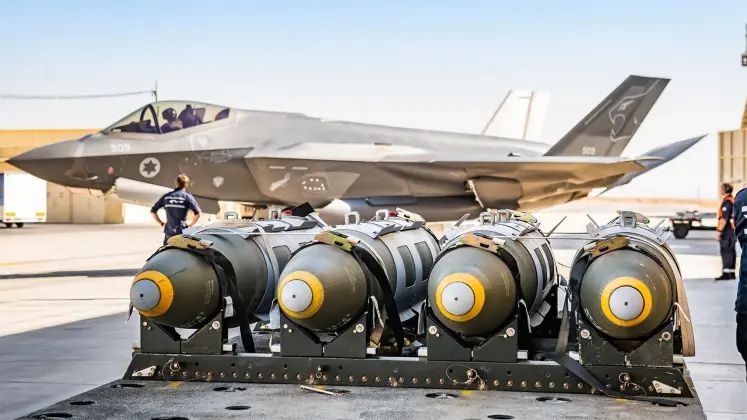
The Israeli Air Force is the only foreign service which has gained permission to extensively customise its F-35 fleet and integrate indigenous avionics, which was insisted on by the Defence Ministry largely due to concerns that the aircraft’s stealth capabilities could not be relied on exclusively to ensure survivability. Although Israeli personnel cannot fully access or modify the aircraft’s source code, they can ‘plug in’ additional code on top of it, including indigenous electronic warfare systems, making the aircraft unique. The Defence Ministry ordered the first batch of 19 F-35s on October 7, 2010, with subsequent orders in February 2015 and August 2017 bringing the number to 50, which was sufficient to equip two squadrons based at Nevatim Airbase.
The process of customising F-35s for Israeli requirements was summarised by General Manager of the Lahav Division at Israel Aerospace Industries, Benni Cohen, as follows: “It's open architecture, which sits on the F-35's central system, much like an application on your iPhone. So it doesn't change anything in the aircraft itself, but it gives the Israel Air Force the most advanced and adaptable processing capabilities with relative independence of the aircraft manufacturer.” This “introduces a new level of freedom for the IAF [Israeli Air Force], as it paves the way for additional advanced capabilities to be embedded in the F-35I in the future,” he concluded. Israel’s F-35s have required unique software to be developed both domestically and in the United States, as well as the production of a specialised test aircraft to support local software modifications.
Israeli F-35s have been extensively tested under combat condition, although their lack of Block 4 software due to ongoing delays has limited their viability for high intensity combat. During operations against Iran in 2025, they primarily served to provide intelligence to older fourth generation fighters using their unique sensors and data links. Without Block 4 software the fighters cannot employ air-to-surface missiles, including the AGM-88 anti-radiation missiles that are vital for air defence suppression operations. Israeli F-35s were previously unchallenged in the Middle East and North Africa region, with no other fighters of their generation in service, although this changed in late 2025 when Algeria operationalised Russian Su-57 fighters. Following the announcement by Russian sources that a Middle Eastern state had ordered the Su-57, there has been considerable speculation that Iran may be the client in question.
