
Iran Orders 12 Second Hand Russian Su-30SM2 Long Range Fighters For Delivery in 2027
Military Watch Magazine Editorial Staff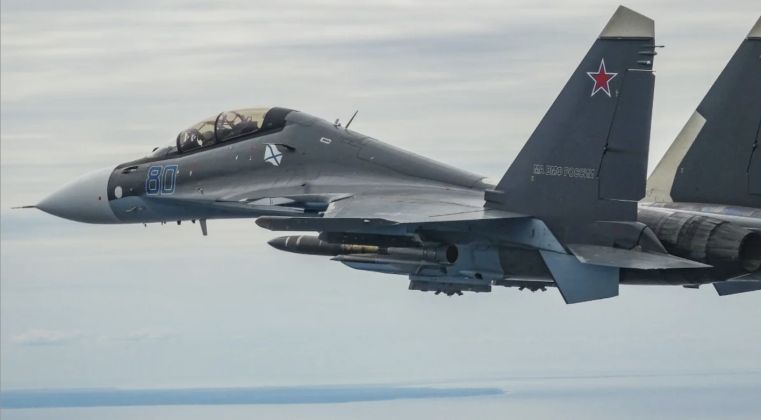
Russian Navy Su-30SM2 Fighter with Kh-31 Missile During Engagement with Rafales
Russian sources on June 4 widely reported that the Iranian Defence Ministry had signed a counteract to procure a battalion’s worth of 12 Su-30SM2 fighter aircraft from Russia, with the aircraft to be delivered second hand after reportedly having accumulated very few flight hours. The aircraft are scheduled to begin deliveries in mid-2027, and complete deliveries by the end of the year, with preparations to provide Iran with the necessary infrastructure set to begin in the near future. The deal has been signed as Iran is engaged in continued hostilities with the United States and a number of its strategic partners in the Middle East including Israel, the United Arab Emirates, Qatar and Saudi Arabia among others.
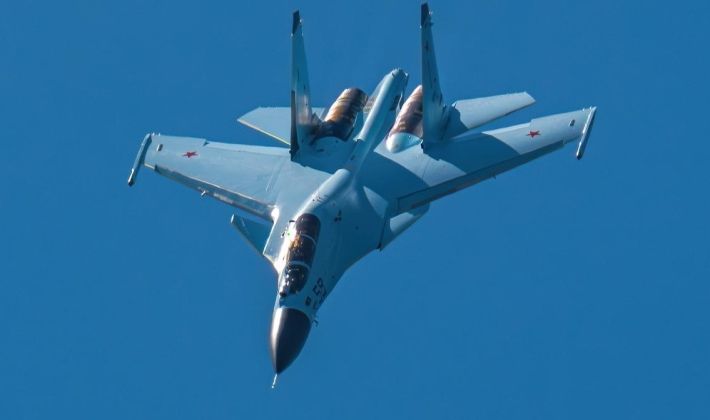
In late 2025 leaked Russian government documents showed that Russia was scheduled to deliver of 48 Su-35 fighters to re-equip the Iranian Air Force, following years of reports beginning in 2022 that an order had been placed for the aircraft. A number of reports indicate that the Iranian Defence Ministry is planning to increase its orders 64 Su-35s, and possibly significantly more, to phase out a greater portion of its close to 300 obsolete Vietnam War era fighters. The Su-30SM2 uses the same AL-41F-1S engine as the Su-35, and has significant maintenance and operational commonalities, with both being heavily enhanced derivatives of the Soviet Su-27 air superiority fighter. The Su-30SM2 is approximately 40 percent less costly than the Su-35, and is far simpler to maintain and easier to operate, although it lacks many of the fighter’s advanced features including wing root mounted L-band radars. The Su-30’s much lower cost and maintenance needs and broadly comparable performance has made it significantly more popular on export markets.
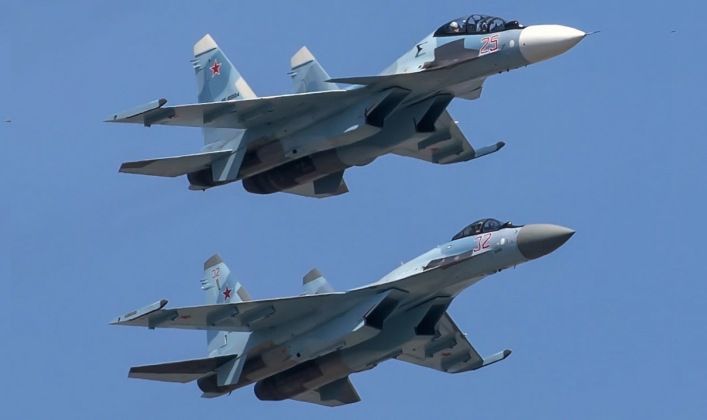
The Su-30SM/SM2 is one of four fighter types currently being produced to equip the Russian Aerospace Forces, alongside the similarly priced Su-34M strike fighter, the Su-35S air superiority fighter, and the Su-57 fifth generation fighter which costs well over twice as much to procure. In early February Russian Industry and Trade Minister Anton Alikhanov announced that contracts had been signed in the Middle East for the export of the Su-57. In mid-April the Russian defence export conglomerate Rosoboronexport confirmed that multiple countries had now placed orders for Su-57. This has fuelled speculation that Iran is likely to have also ordered Su-57s, with no other Middle Eastern country considered a likely potential client. It is thus highly possible that Su-30SM2 fighters are intended to serve as part of a mixed fleet alongside Su-35 and Su-57 fighters, potentially in large part as trainers due to their twin seat configurations. It is likely that the speed with which the Su-30s can be delivered was a major factor leading the Iranian Defence Ministry to reach a deal, as the country currently remains in a state of conflict.
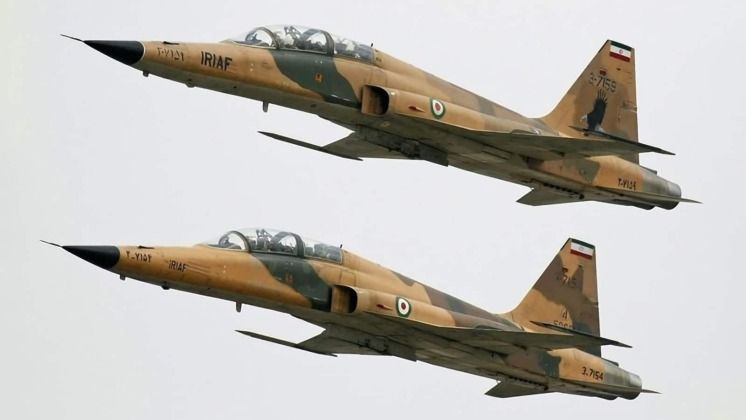
Although the Iranian Air Force currently operates one of the most antiquated fighter fleets in the world, comprised primarily of Vietnam War era F-4D/E and F-5E/F fighters procured in the 1970s, it has achieved significant results operating them offensively. This has included using F-4s to carry out air strikes on Western-aligned non-state groups in Iraq, and even flying F-4s and F-5s for deep penetration strikes into heavily defended airspace in Saudi Arabia and Kuwait. The failures of the U.S. and its regional partners’ air defences to counter such attacks have raised serious questions regarding the extent to which they can defend against strikes by modern fighters like the Su-30SM2, which are considerably faster and more manoeuvrable, integrate modern electronic warfare systems, and use precision guided weaponry that allows them to launch strikes far more effectively.
