
Iran’s 50 Year Old F-4 and F-5 Fighters Evading U.S. Defences with New Strike Tactics
Military Watch Magazine Editorial Staff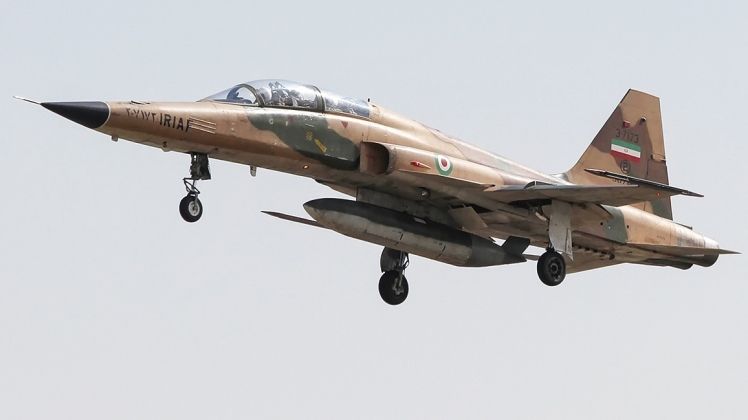
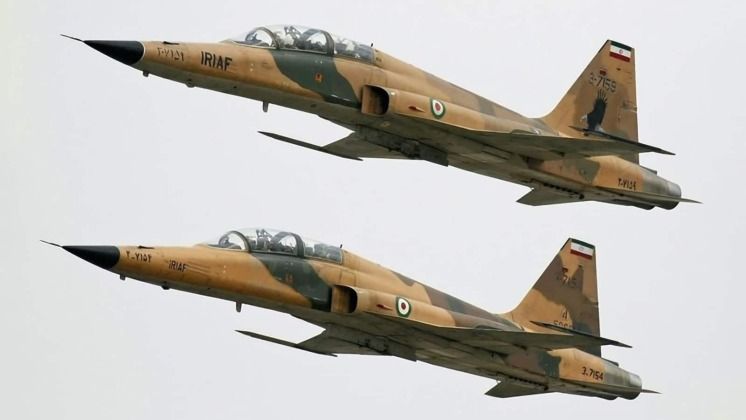
Iranian Air Force F-5F Fighter
In late April it was confirmed that an Iranian Air Force F-5E third generation fighter had successfully conducted a bombing run against Camp Buehring in Kuwait, penetrating multi-layered U.S. and U.S.-supplied Kuwaiti air defences, and raising serious questions regarding the limitations of these defences. Subsequently in early May it was confirmed that the F-5’s heavier and longer ranged counterpart in the Iranian Air Force, the similarly obsolete F-4E, had been used to launch a successful penetration strike over Saudi Arabia. This operation became known only because it resulted in an engagement between the F-4 and at least one U.S. Air Force F-16CJ fighter, in which the F-16s failed to shoot down the Iranian aircraft, allowing them to return to Iran. The report raised the possibility that F-4s may have been launching penetration strikes more widely.
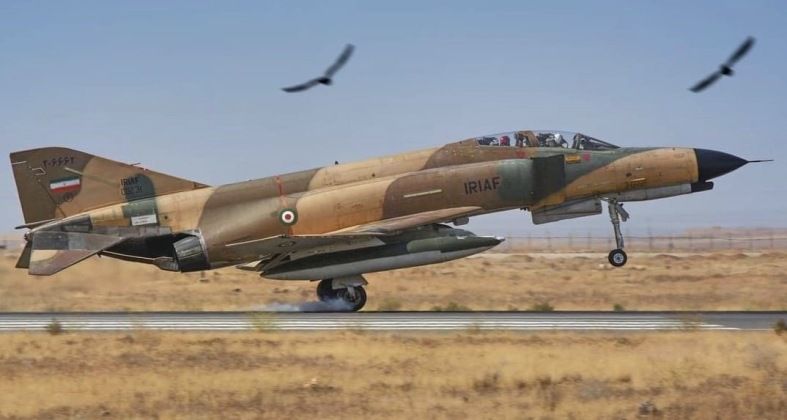
Iran operates some of the least capable fighter aircraft anywhere in the world, with the F-4 and F-5 that form the backbone of its fleet having been procured in the 1970s, and being Vietnam War era aircraft more than two generations behind the cutting edge. The inability of the U.S. and its strategic partners to counter then despite concentrating hundreds of billions of dollars’ worth of aerial warfare equipment around Iran has raised serious questions regarding their viability. Iranian fighters’ ability to penetrate these defences are likely a result of a combination of multiple factors, and could have a significant impact on the course of the war as the fighter fleet complements the capabilities of the country’s more formidable drone and ballistic missile arsenals.
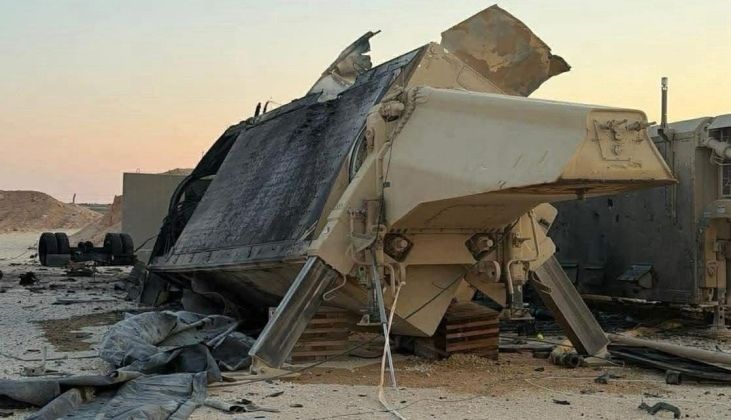
One significant factor which has likely significantly improved Iranian fighters’ ability to penetrate hostile airspace is the destruction of U.S. and allied early warning radars, which has amounted to several billion dollars’ worth of equipment. This includes the world’s only AN/FPS-132 Block 5 Upgraded Early Warning Radar outside the United States, as well as three AN/TPY-2 X-band mobile radar systems each valued at an estimated $700 million to $1.1 billion, and multiple smaller systems. While it has been confirmed that the destruction of this radar network significantly improved the success rate of Iranian ballistic missile strikes, it has likely also very considerably diminished the U.S. and its strategic partners’ ability to monitor allied airspace. Efforts to compensate for this by surging flights of U.S. Air Force and Royal Saudi Air Force E-3 Sentry ‘flying radar’ systems in the region have been limited in their success.
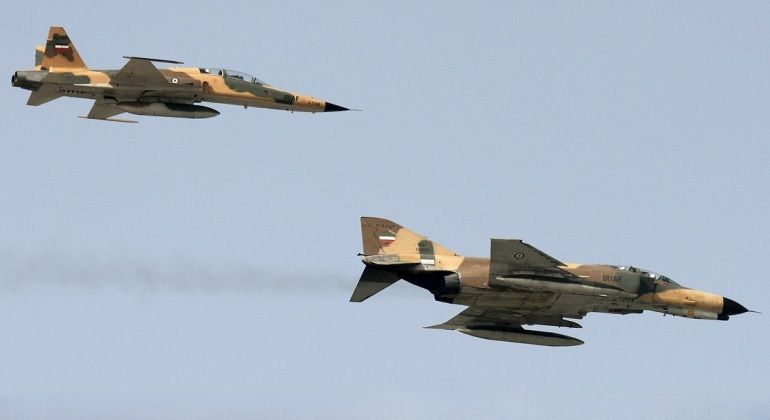
Beyond the limitations of U.S. and allied defences, further factors in the successes of Iranian penetration strikes may reflect efforts by the Iranian Air Force to compensate for the shortcomings of its fighters. One of these, which is frequently trained for by air forces across the world to compensate for fighters’ lack of stealth capabilities, is to adopt terrain-following profiles, flying at low altitudes to avoid long range detection. The F-4 and F-5 lack terrain mapping capabilities, which makes this much more challenging, but with effective piloting it remains possible. A further factor is that the vastness of Saudi and broader gulf territory could allow aircraft to be vectored in and out quickly while avoiding ground-based systems and leaving insufficient time for hostile aircraft to respond. This could be particularly effective due to the destruction of air defence radars, which limits the ability to detect fighters earlier on.
A further significant possibility is that despite a lack of comprehensive modernisation of its Vietnam War era fighters, Iran may have enhanced them with advanced modern warfare system to mask their presences. This would be far from unprecedented, with the Indian Air Force having used electronic warfare pods to shield its ageing MiG-21 fighters from detection by U.S. Air Force F-15s during exercises, while Russian Su-34 strike fighters used similar pods over Syria to reportedly disappear from the radars of Western aircraft. While Iran’s ability to produce advanced electronic warfare system remains in serous question, it highly possible that they have been obtained from strategic partners such as North Korea or China.
A further factor in the favour of the Iranian fleet is that the reported loss of three U.S. Air Force F-15 fighters to friendly fire over Kuwait near the beginning of the conflict may have resulted in greater caution when engaging fighters, particularly at beyond visual ranges, thus significantly widening the windows for penetration strikes to be launched. Iranian strikes represent the most significant employment of third generation fighter aircraft in high intensity combat conditions in an era where such aircraft are fielded by very few countries, and at a time when the world’s first sixth generation fighters are poised to begin entering service in China in the early 2030s. The implications of these Iranian operations are significant and wide ranging, and raise very serious questions regarding the ability of the U.S. and its strategic partners to counter more capable fleets with advanced fifth generation fighters. Iran’s orders for advanced Su-35 ‘4+ generation’ fighters, and multiple indications that it has ordered more advanced Russian Su-57 stealth fighters, raise the possibly that its fleet will soon be able to exploit the weaknesses of its adversaries’ defences much more effectively.
