
Iranian F-4 Engages U.S. F-16 Fighter During Penetration Strike Over Saudi Arabia
Military Watch Magazine Editorial Staff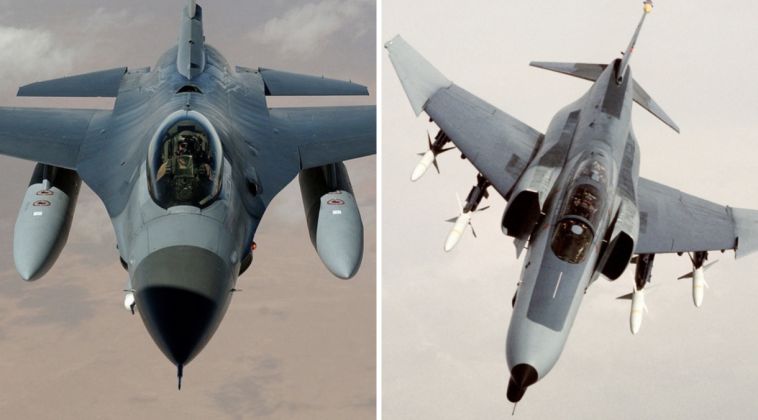
F-16 (left) and F-4 Fighters
An Iranian F-4E Phantom II fighter aircraft and a U.S. Air Force F-16CJ fighter engaged one another during an Iranian penetration strike over Saudi Arabia, which resulted in the F-4 making a hard landing in Iran, possibly after taking limited damage. The incident has highlighted the serious limitations of the U.S. and its strategic partners’ air defences, with the F-4 and lighter F-5 that form the backbone of the Iranian fighter fleet being obsolete Vietnam War era aircraft, but still proving to being able to evade some of the most capable Western air defences in the world. The incident follows confirmation in late April that an Iranian Air Force F-5E successfully conducted a bombing run against Camp Buehring in Kuwait, penetrating multi-layered U.S. and U.S.-supplied Kuwaiti air defences.
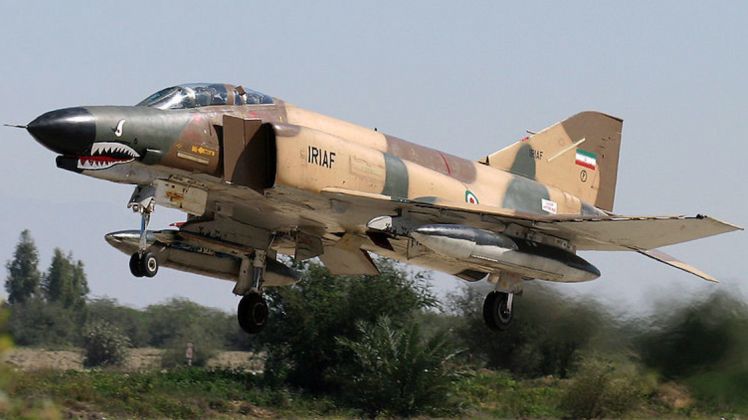
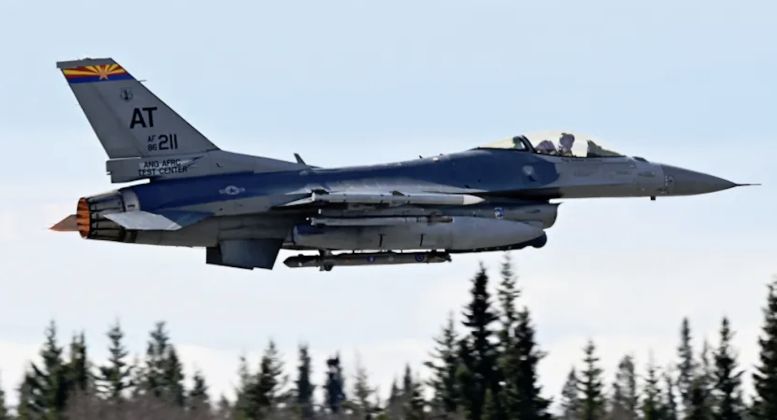
The U.S. Air Force in February deployed two squadrons of F-16CJ fighters from bases in the U.S. and Europe to the Middle East, with their location in the region remaining unknown at the time, but later indicated in unconfirmed reports to be in Saudi Arabia. A primary difference from baseline F-16C is that F-16CJ aircraft are wired and certified for the AN/ASQ-213 HARM Targeting System, a pod mounted on the side of the intake that passively locates hostile radar emitters and provides accurate targeting data to AGM-88 HARM anti-radiation missiles. The aircraft were prioritised for deployment based on the assumption that Iran would have very limited air power, but a highly formidable ground-based air defence network, preceding the initiation of U.S. and Israeli attacks on February 28. The F-16C is a lightweight fourth generation fighter that is considerably more advanced than Iranian Air Force F-4E third generation fighters, although the little to no damage suffered by the F-4 indicates that the F-16 was far from successful in intercepting it.
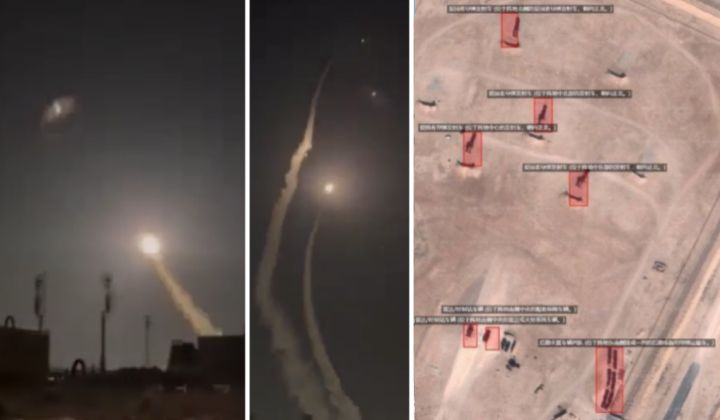
It remains uncertain on what scale the Iranian fighter fleet has succeeded in launching penetration strikes into the airspace of U.S.-aligned states. The Iranian ballistic missile arsenal has achieved a high success rate in launching attacks, which rose very significantly as U.S. and allied early warning radars were destroyed, and as inventories of anti-ballistic missiles were rapidly depleted. the Iranian Air Force’s ability to use Vietnam War era fighters for penetration strikes, however, is cause for considerable embarrassment, and raises serious questions regarding the viability of U.S. air defences against other adversaries such as China, which field cutting edge fifth generation fighter aircraft that are incomparably more difficult to intercept. The F-4 and F-5 have no advanced electronic warfare systems to mask their presences, let alone stealth capabilities, making them relatively straightforward to detect for a capable air defence network.
A primary advantage of the F-16CJ in engagements with the F-4 include its much longer range, more powerful radar, superior electronic warfare capabilities, and integration of AIM-120 and more modern variants of the AIM-9 air-to-air missiles. The F-4 is a much faster fighter type that can operate at much higher altitudes, although it is likely to have penetrated Saudi airspace at low altitudes to mask its presence. While Iranian F-4 and F-5 fighters lack precision guided bombing capabilities, which limits the amount of damage they can inflict during penetration attacks, their overflights are expected to negatively effect U.S. and allied morale, and may contribute to friendly fire incidents, as was possibly seen shortly following an F-5E overflight of Kuwait.
