
U.S. Air Force Deploys Two Specialised F-16CJ Air Defence Suppression Units to the Middle East Amid Iran Tensions
Military Watch Magazine Editorial Staff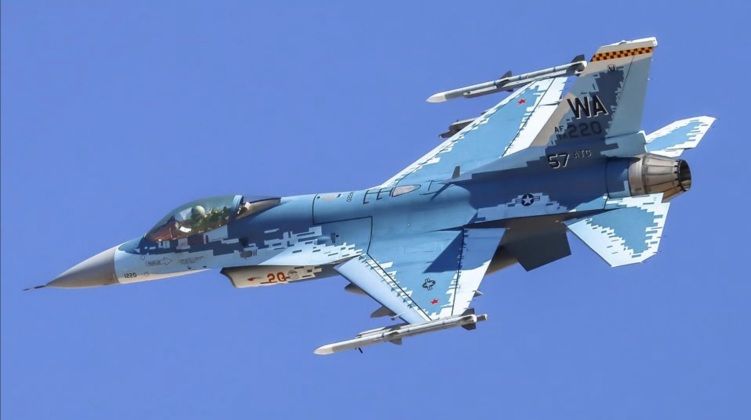
U.S. Air Force F-16
The U.S. Air Force has redeployed two squadrons of F-16CJ fighters from bases in the U.S. and Europe to the Middle East, with their location in the region remaining unknown. Open-source tracking data and related reports indicate that 36 F-16s were flown to bases in the region on February 19, around 24 of which were F-16CJs, with this reflecting part of a much wider military buildup being staged against Iran. A primary difference from baseline F-16C is that F-16CJ aircraft are wired and certified for the AN/ASQ-213 HARM Targeting System, a pod mounted on the side of the intake that passively locates hostile radar emitters and provides accurate targeting data to AGM-88 HARM anti-radiation missiles. The AGM-88 is the U.S. Armed Forces’ primary weapon for targeting air defence systems.
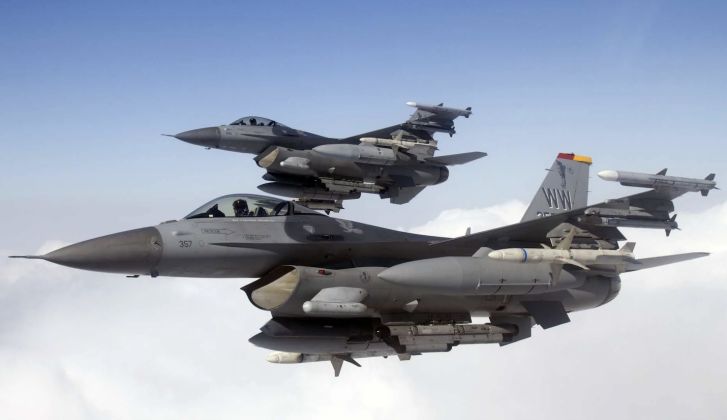
The F-16CJ can use the HTS pod to build a real-time picture of hostile radar coverage, providing the intelligence needed to engage priority emitters with anti-radiation missiles. The AN/ASQ-213 also allows pilots to cue their AGM-88 missiles using passive detection, without activating the fighters’ own radars. The fighters also integrate electronic warfare pods to provide greater survivability by interfering with adversaries’ radar guidance. This remains a relatively basic modification, unlike the EA-18G, an electronic warfare derivative of the F-18F fighter which integrates an extensive passive sensor array throughout its airframe among other major design changes. The F-16CJ is currently being phased out of service, with the type’s highest priority deployment under the 35th Fighter Wing at Misawa Air Base in Japan being brought to an end as the aircraft are replaced with F-35A fighters.
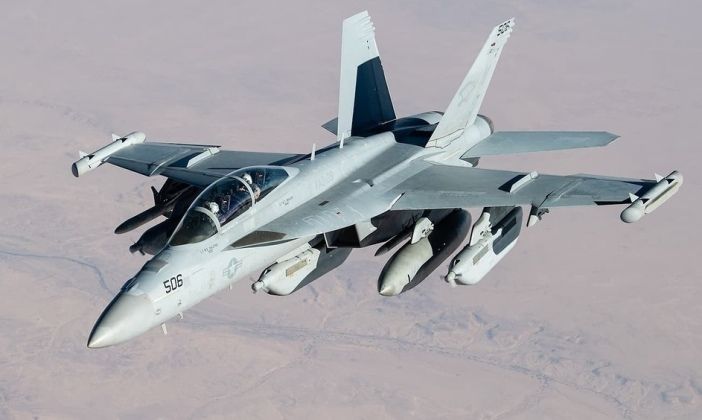
Alongside the F-16CJ, the U.S. Air Force and Marine Corps has deployed F-35 fifth generation fighters which are integrate sizeable arrays of passive sensors that can be used to gather valuable intelligence on enemy radars, and deploy powerful electronic warfare suites to disrupt radar targeting and detection efforts. With the F-35 continuing to lack Block 4 software, however, they remain unable to employ AGM-88 anti-radiation missiles to home in on adversary air defence systems’ radar emissions, ensuring that the F-16Cj retains an important role in the Air Force. The Navy’s EA-18G Growlers, however, are expected a more central role, with the service having at the end of January made a rare deployment of six EA-18Gs to a base on land, namely to Muwaffaq Salti Air Base in Jordan, while also deploying EA-18Gs on the aircraft carriers USS Abraham Lincoln an USS Gerald Ford in the region.
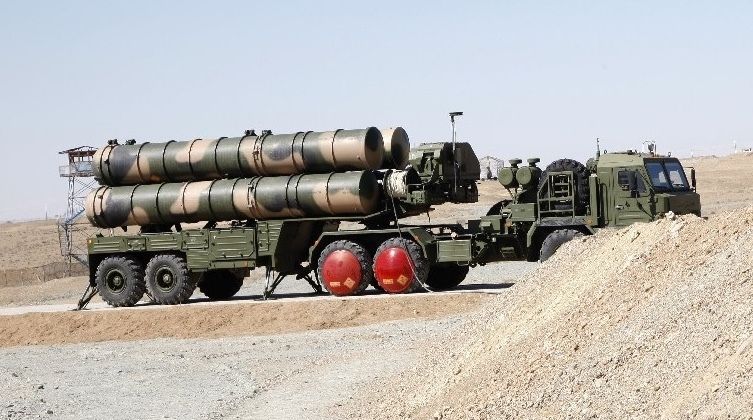
The F-16 is one of the shortest ranged fighter types in service in the world, with the U.S. Air Force having deployed considerable numbers of KC-135 tankers to the Middle East to extend the ranges of its aviation assets. Air defence suppression assets are considered particularly critical for a potential war with Iran, as while the country has not invested in procuring modern combat aircraft, and fields an obsolete predominantly Vietnam War era fighter fleet, its ground-based air defence network has proven to be highly capable. The network is built around multiple long range systems including multiple variants of the indigenous Bavar 373 and Khordad 15, as well as the Russian S-300PMU-2, the Soviet S-200D which has been domestically modernised, and according to some reports new Chinese systems delivered in 2025, possibly the HQ-9B. These are supported by multiple short and medium range systems such as the 3rd of Khordad and Tor.
